Politics & Government
Bipartisan Heroin Crisis Bills Signed Into Law
Proposals by the Joint Task Force on the Heroin and Opioid Epidemic were approved and signed into law by Gov. Hassan today.


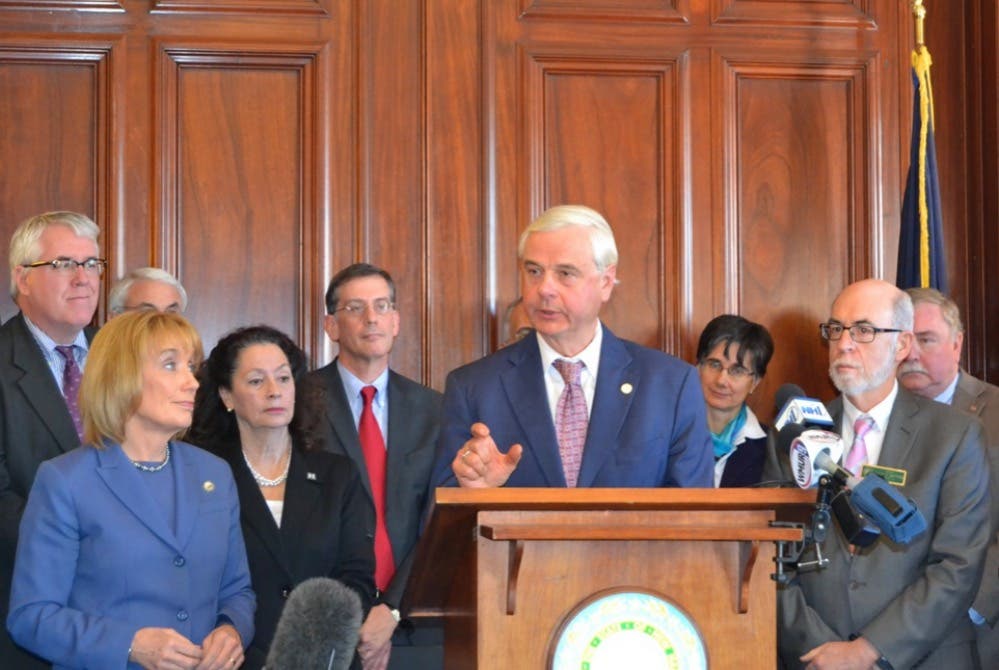
CONCORD, NH - Proposals recommended by a joint task force assigned to come up with ideas to combat New Hampshire’s deadly heroin and opioid crisis were signed into law at the Statehouse on Jan. 21, 2015.
The special session task force – which was requested by Gov. Maggie Hassan, D-Exeter, and the Republican-controlled Executive Council – held numerous meetings to come with bipartisan measures to immediately deal with the problem. Many of the measures in SB 576 and SB 447 were proposals put forth by Hassan; others were written by Republicans in the House and Senate.
Some of the measures include increased penalties for illegal fentanyl sales, streamlined access to treatment, better prescription drug monitoring, Narcan use expansion, and adding a pain management specialist to the state’s Board of Medicine.
Find out what's happening in Concordfor free with the latest updates from Patch.
“The heroin and opioid crisis is the most pressing public health and public safety issue facing our state, and these measures will help give patients, providers, parents and law enforcement better tools in the fight against heroin and opioid abuse,” Hassan said in a statement. “This includes cracking down on fentanyl, streamlining access to treatment and strengthening our prescription drug monitoring program, and I thank the legislature’s task force for its hard work over the last few months, as well as all of the members from both parties who came together to support this important legislation. The collaboration that made this expedited legislation possible represents the bipartisan approach that we must continue to take as we work to stem – and reverse – the tide of this horrible epidemic.”
State Senate Majority Leader Jeb Bradley, R-Wolfeboro, said while the proposals would not solve the drug epidemic, it would help the medical and law enforcement communities, as well as families, giving them more tools.
Find out what's happening in Concordfor free with the latest updates from Patch.
“These bills establish a coordinated approach to increase drug and substance abuse prevention efforts, treatment, and recovery in order to curb the heroin and opioid crisis in the state of New Hampshire,” he said.
Bradley’s Senate colleague – Democratic Leader Jeff Woodburn – agreed.
“This is a first, good step to combat the opioid epidemic,” he noted. I want to thank Governor Hassan for coaxing the legislature to act and working cooperatively with us and our Republican colleagues to get this done on a faster timeline than was originally proposed.”
House leaders also heralded the signing of the legislation, with House Speaker Shawn Jasper, R-Hudson, saying he was proud that members kept their commitment to getting it approved “despite the governor’s lack of faith in the legislative process” and ability to act on the proposals.
House Majority Leader Dick Hinch, R-Merrimack, said while members were working on numerous bills to address the crisis, they understood the importance moving proposals forward as fast as possible.
“This is an evolving public health crisis and the Task Force was never intended to be a one-shot solution,” Hinch said, “just as the set of bills we acted on today won’t make the problem disappear. We will take action as appropriate and move forward on a broader set of initiatives as our legislative session continues in 2016.”
Hassan and Democrats continue to push for the reauthorization of Medicaid Expansion in the state – New Hampshire Health Protection Program – which began offering behavioral health services in August 2014.
Caption: Senate Majority Leader Jeb Bradley speaks at the Join Task Force bill signing event on Jan. 21, 2016. Courtesy
Get more local news delivered straight to your inbox. Sign up for free Patch newsletters and alerts.