Health & Fitness
A Final Thought on the Vote to Approve the Complete Streets Project
Thanks to all who have followed and commented on my Complete Streets project blogs.
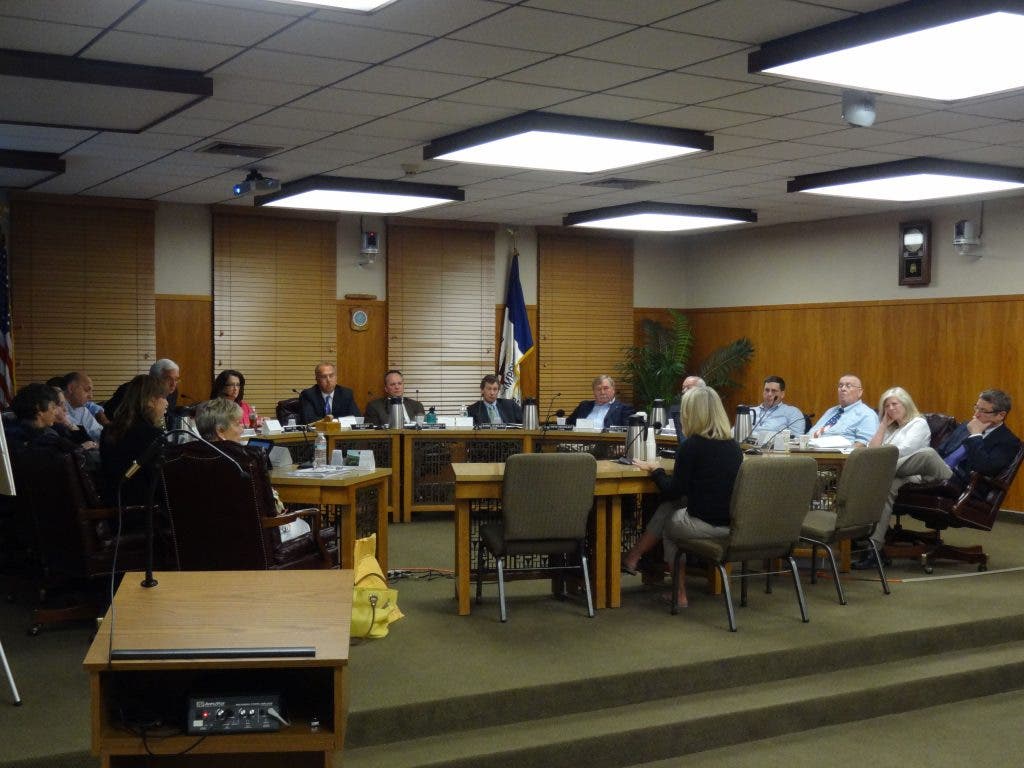
The vote last night was 14-1 to approve the Complete Streets project. Councilor Liz Blanchard was the only dissenting vote in what was a very brave and principled stand.
And while they voted to go forward with the project, there are still a number of loose ends. Deciding how and who pays for the construction and maintenance. Will Concord Steam be able to heat the streets and sidewalks? How to deal with the above street power lines. The hiring of a new consultant for the design and placement of signage and kiosks.
For those of you who have been reading my blogs and commenting on them, thank you. My goal from day one has been to encourage the city to design the best possible project for our city. And while I don’t think this has happened and I believe there are many pitfalls that must still be navigated, I hope I’m wrong. I hope that in a couple of years we have a beautiful, functional and economically successful downtown.
Find out what's happening in Concordfor free with the latest updates from Patch.
What follows is my very long testimony to the city council last night:
“...enhancing the economic vitality of downtown through reliable and safe transportation systems, increasing retail activity and decreasing vacancies among storefronts, and the development of upper store space...”
Find out what's happening in Concordfor free with the latest updates from Patch.
While those could be my words they aren’t. They’re from the TIGER grant’s project description on page 4 of the grant application.
I have always considered the economic vitality of the downtown to be the yard stick to be used to measure the success of the Complete Streets project. I am pleased to see that our city engineer also feels that if it is not the most important component, it is one of the projects overarching goals. So without a significant level of confidence that this project will add to the economic vitality of our community, it is necessary to question the project itself.
On page 6 of the grant it states: “The “Rethinking Main Street” project was accepted by the City Council at a public hearing in July, 2011, which included the community consensus design and placed it in the out year of the City’s 10-Year Capital Improvement Program (CIP)....”
Let’s be clear about this. The city council accepted the report. At no time before the grant was written or submitted did the city council ever accept the Rethinking Main Street project.
“...nothing will happen without every opportunity for members of the community to share exactly their thoughts what they think about this proposal...” That’s part of a statement that the mayor made at the July 11, 2011 city council meeting to assure the city council and the public that the Rethinking Main Street project would not go forward without public testimony. Here’s how the mayor closed his remarks regarding public comment related to this project. “...So hopefully, I think I’ve repeated myself too many times already but everyone get the point, we’re just accepting it, and we’ll have the opportunity to speak about policy changes later if you wish.”
Let me be clear about what actually happened. Not once but twice the city engineer submitted grant applications to fund the Rethinking Main Street project. Not once but twice the council voted to instruct the city engineer to apply for the TIGER grant. And not once but twice did the city Council not allow any public testimony regarding the grant applications for this project.
In fact there was never any public testimony until after the grant had been approved and dead lines related to the Complete Streets project had been established by the terms of the grant and the city’s acceptance of the grant.
On page 6 of the grant application it states: “The Concord Downtown Complete Streets Improvement Project also has very strong support from City officials and stakeholders...”
Really. What about the 70 merchants who signed a petition due to concerns related to the Rethinking Main Street Project. Specifically concerns abut parking and interruptions to their businesses during construction. What about the response from the Rethinking Main Street principals who viciously attacked the petitioners and claimed in a supplemental report to the city that those who signed had been coerced and intimidated into signing. Seventy downtown merchants signing a petition expressing their concerns about how the project would impact their businesses certainly doesn’t sound like ‘very strong support’ to me.
On page 13 of the grant it states: “...Of the 75 privately owned properties within the project area, over 50% of those properties have depreciated in value due to vacancy or undeveloped upper store space. Through a conservative approach, we expect that the benefits derived from the complete street project will increase property values through the life of the project by over 8%...”
And it is stated again on page 25: “Based on studies as well as that experienced in Concord on other major public infrastructure projects, downtown property values are expected to increase 8% over the life of the project...”
You heard that right. Over 20 years the value of Main Street properties are projected to increase 8%. If you bought a house today, over 20 years in a normal economy you can expect the value of that house to double in value two times.
On page 10 of the grant application under Revenue for Long Term Operations and Maintenance it states: “...project’s future operations and maintenance costs savings over a 20-year service life is $599,097....” We now know that it will cost over $500,000 in new maintenance costs just for the first two years after the project is completed. Oops.
And here’s how that paragraph ends: “...The City of Concord is committed to maintaining targeted funding sources, including annual maintenance and operation funds, and major capital project funds for its upkeep.”
This statement was made before the council even accepted the project and before there was any public testimony related to this project or grant. I wasn’t aware that the city’s engineering office was able to determine for and commit the city to expenditures for the next 20 years.
Another interesting tidbit taken from the grant application. The grant committed the city not only to paying for maintenance, but it explained in detail how the project would be paid for. Again, without any public input or city council approval.
And before I move onto more current issues related to this project, this from pages 28 and 29 of the grant application: “The City of Concord is prepared to obligate the $3,140,000 balance through appropriation of general obligation bonds, and transportation impact fees (currently approved and programmed in the City’s FY2016, FY 2017, and FY2018 CIP program) and partnership sources including a Main Street Tax Increment Finance (TIF) District.”
“...If awarded a TIGER 2012 grant this project will schedule the obligation of grant funds for final design and permitting no later than July 2012, with obligation of the grant funds for construction no later than April 1, 2013.”
So once again we see a commitment to spend money and abide by a timeline before any public testimony - as promised by the mayor - and any vote to accept the project by the council.
So where does that leave us today? Let’s remember the Mayor’s three promise. Nothing happens without public comment; No parking will be lost; Concord will not only meet accessibility requirements for the disabled we will strive to far exceed them.
I’ve addressed the public comment promise. Let’s move onto the parking issue. At every juncture of this project, from the first Rethinking Main Street meetings right on through to the public testimony, charettes and the council's work sessions, parking has been at the forefront of all discussions.
So a simple question. Why did our almost $1 million consultants never provide a design that would have shown what a redesigned Main Street would look like with head in parking on both sides of the street.
Why did the city council wait until after the eleventh hour to finally direct staff and the consultants to come back with a plan that showed an additional 5 spaces by reintroducing head in parking on a small section of the west side of Main Street. And why did the consultants and staff set all kinds of caveats to this redesign, claiming that at this juncture there wasn’t the time to properly develop a plan with head in parking on both sides. That the design they could come up with would be unsatisfactory and not meet the goals of the design team.
I know why. They never wanted the community to be able to consider a design that would retain head in parking on both sides. That’s why.
When we look at the timeline the city was committed to once the city council voted to accept the funding from the TIGER grant it was clear from that moment on that there would be no time to test alternate and innovative designs to improve our Main Street. What we are left with are bits and pieces from other communities. Maybe it will work for Concord, maybe it won’t. We just don’t know.
I have said from the onset of this project, that provided the time to test out new parking, traffic and pedestrian options, it is likely that we could have come up with a plan that is both unique and works for Concord. Given the time we may have even been able to replace parking on Main Street with adjacent alternatives, allowing for many of the design elements that were sacrificed because there has been no empirical data to show that these more innovative designs would have functioned in our community. Given more time, folks who shop, work and own businesses and buildings in our downtown would have had the opportunity to receive and provide feedback on those new design alternatives.
This is more than just people averse to change. This is about a project that can not and has not shown that the design they are proposing has a reasonable chance of being successful in our community. This is about a design that is mostly supported by those who have hired the consultants to design it and the consultants who have prepared the design.
At a recent council meeting you heard testimony relating to the concerns of sixty nine downtown merchants. Your response to this information was to attack the messenger. The same tactic that was used by the principals of the Rethinking Main Street report. When you didn’t like the answers to the questions the merchants responded to, you challenged first the manner in which the questions were asked, next the timing and finally it was asked which plan they were responding to. The one that was available to the public or the one which had only been made available to the council the night of your meeting.
This line of questioning is the same type of abuse those with concerns about this project have been subjected to since the informational meetings at the Red River Theater and in the supplemental Rethinking Main Street report that the city council accepted.
You say there has been plenty of opportunity for input from the public and for those who will be most impacted by this project. And while I have challenged the time frame as being inadequate, what can not be challenged is the fact that you are not listening to the vast majority of Concord residents who still have concerns about parking, how the project is going to be funded, where the funds will come from for maintenance and how this project will have any real impact on improving the economic vitality of our city.
While I will only briefly mention accessibility it appears it is just one more causality of the final design.
Add this to the promise of heated sidewalks and curbing, the only component of this project that everyone agreed on. And now not only are the heated sidewalks doubtful, but we need to ask if the buildings using steam will be heated if Concord Steam goes belly up. So do we spend that $3.17 million on making the downtown look prettier or in setting up a revolving loan fund to insure heat for the downtown.
And let’s not forget the fact that the most important component won’t be decided on until after you have voted to move forward with this project. How and who pays for it. We have seen a number of plans for payment. Starting with the grant application that outlines a tif district. Today there is talk of limiting the amount the downtown pays for construction, but piling on when it comes to maintenance. The assurance by city staff that a Business Improvement District wouldn’t encompass costs the downtown is paying for today rings hollow. Any costs - including those paid by paid the city today - that are above and beyond what the rest of the city pays for can be part of what a Business Improvement District pays. So for this council to say that those costs will not be the responsibility of by the downtown sometime in the future is false. This council can not encumber future councils’ actions. So should the city find itself in another financial bind in the future the odds are those services the city is paying for today can and very likely will be shifted to the downtown.
You are asking the merchants to pay for this project three times. You are asking them - and you may be requiring them - to pay for elements of this project they have told you time and time again they do not support.
Like many in our community I would love to see our downtown flourishing with successful businesses, commercial entities and residences filling the upper floors, a bustling downtown and funky shops lining Low Avenue. Parking and traffic patterns that meet the needs of those shopping and working downtown and pedestrian and bike lanes that are safe and convenient to access and use.
I can’t state this strongly enough, but I will do my best. This is a project that was never given the time needed to develop a plan for Concord. No one in this room knows whether this project will be a success or a failure. In fact this is a project that was never given the time to be successful. At every juncture when it was asked or suggested to try an idea out or to have a study, we heard the same answer - not from me - but from staff. Not enough time.
So if you didn’t and don’t have enough time to determine what will and won’t be successful, if you don’t have enough time to determine how much parking we need and where it should be located, if you don’t have the ability to determine how the project will be funded before you approve it, how is it that you are able tonight to decide there is enough information to determine that this project will be successful.
And knowing this, and knowing that there is just as much of a chance that his project will fail as it will succeed and not knowing how you are going to pay for this project, how can this city council vote to move forward with this project at this time.