Health & Fitness
Board of Ethics Claims No Jurisdiction Over Concord City Council
Board says: No comments allowed.
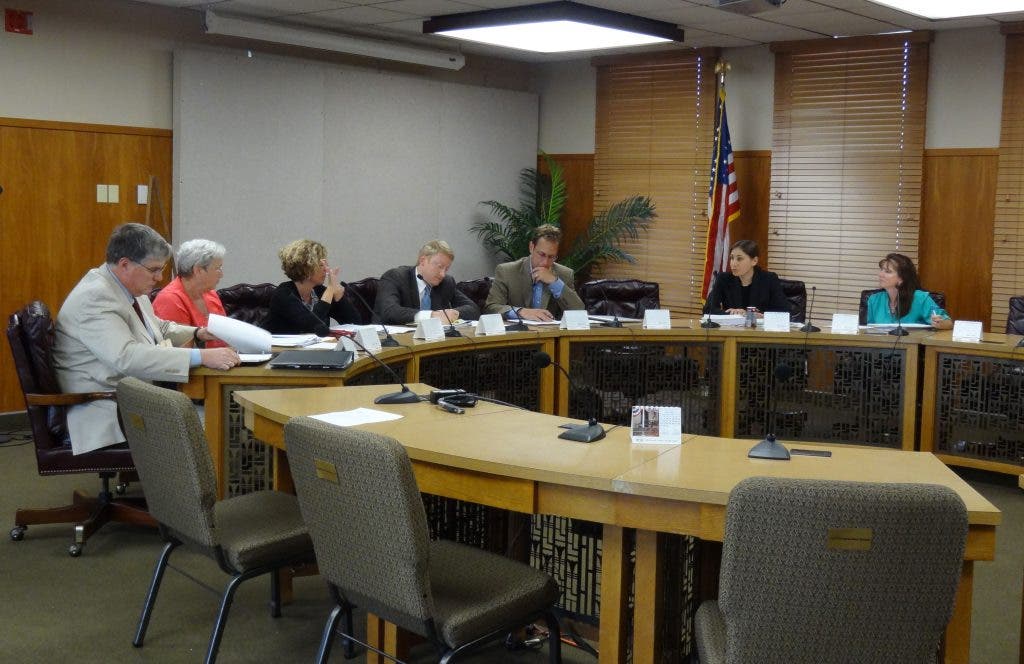
The at their first meeting for hearing complaints stated on numerous occasions that they didn't have jurisdiction over the . They stated that if the council has ruled on a conflict, that they shouldn't be second guessing the council’s opinions or rulings. HUH?!
While the council makes the determination to accept or reject the rulings, the board is still an independent body. It has its own rules (approved by the council) and it is governed by the city's charter, not the city council. It seems exceedingly odd to me, that an independent board would refuse to review the actions of the body that they were empowered to oversee, regarding conflict of interest issues.
Why do we even have a separate if they refuse to rule on issues that they deem to have been settled by the council? Isn't their job to determine if the council has acted in an ethical manner? If the council determines there is no conflict, does that preclude any opportunity for the board to determine that there should be a hearing?
Find out what's happening in Concordfor free with the latest updates from Patch.
Why should anyone even bother to file a complaint if the city’s Board of Ethics has already determined the city council is the supreme authority on all matters regarding ethics? Certainly a strange position for an ethics board to take.
The City’s Code of Ordinances 30-3-29 - Board of Ethics (a) (1) states:
Find out what's happening in Concordfor free with the latest updates from Patch.
“The complaint shall be in writing, sworn to before a justice of the peace or notary public, specific and to the point. Complaints submitted to the City Clerk shall be forwarded to the Clerk of the Board.
(2) The Board shall review the complaint and determine if it merits the scheduling of a hearing. The Board shall have 45 days to determine whether a hearing should be scheduled once the matter is referred to them. Should the Board decide a hearing is warranted, one shall be held in a timely manner.”
I filed my complaint and kept it specific and to the point. I also worked on a more detailed account of my complaint for the determination hearing. Here’s what they didn’t tell me: While I was only able to file a specific and to the point complaint there was no such restriction for the respondent. Even though there is no provision for the respondent to file until after a determination to go forward with the complaint has been agreed upon by the board.
To make matters worse, the board allowed no testimony, no clarifications and no ability by me to add to the record or respond to concerns of the board. In my more detailed complaint I was prepared to present to the board definitions of apparent conflicts, similar cases and articles outlining the the higher ethical threshold for elected officials.
Further, I cited a case from Massachusetts that referenced a situation similar to the one I brought before the board. In the Massachusetts case it was determined that a councilor violated the state’s conflict of interest law even though he asked for and received guidance from the city solicitor. The report from the Massachusetts’ State’s Ethics Commission reads in part
“...Reliance on a city solicitor's advice is a defense to a conflict of interest charge only if the opinion is in writing and has been submitted to and approved by the Commission. Had Villiotte submitted his opinion to the Commission, it would have been reviewed for accuracy. Because Villiotte did not submit his opinion, your s.19 violation is mitigated but not excused by reliance on the city solicitor's faulty written advice...”
Unfortunately for Concord, our deferred to council’s ability to self police themselves and refused to review the matter.
Had my complaint been allowed to proceed to a hearing here is synopsis of what I would have submitted to the Board:
I am providing you with an article written by Stuart C. Gilman Ph.D., with Joshua Joseph and Cheryl l. Raven, for the Ethics Resource Center’s website titled “Conflicts of Interest: Balancing Appearances, Intentions and Values”. www.ethics.org/resource/conflicts-interest-balancing-appearances-intentions-and-values
They open by stating: “Corruption - in both politics and business - is one of the premier issues of the 21st Century.” When discussing conflicts of interest they state: “...it is also true that public servants, especially in democracies, are generally held to higher standards than their private sector counterparts.”
And, “Appearance is a difficult standard...........In fact most democracies hold their public officials to much higher standards than the average citizen........Elected and appointed government officials are expected to serve the people, not only their supervisor or agency. In addition the prohibition against private gain, they are expected to remain impartial in all decisions.”
I find it interesting that Concord’s Code of Ordinances specifically excludes a financial interest when defining an apparent conflict of interest. The codes I have reviewed that oversee government employees, elected officials and those in the private sector do not exclude financial interest in determining an apparent or perceived conflict.
The City of Concord, by adding an apparent conflict of interest to its ethics code and defining it as one that “does not effect a person’s financial interest,...” results in setting a very high ethical standard. Concord’s Code of Ethics says to me, that even lacking a financial interest the perception of a conflict must not be tolerated.
The complaint I filed, is precisely the type of conflict that our city’s ethics code goes out of its way to define. I believe one of the reasons the public has lost confidence in their elected officials is precisely because these types of conflicts were not addressed in the past. The concern by many of our citizens that ‘it’s a done deal’ is only reinforced when these types of conflicts are ignored.
My intention in filing this complaint and bringing it to your attention is to provide the Board of Ethics an opportunity to offer guidance to our city councilors on this matter. If I may be so bold, I would suggest that the Board request the City Council to give the Board the authority to offer an opinion on conflicts prior to council hearings. Should the Council provide the Board with the authority to act in an advisory manner, I believe it would mitigate many future issues of conflict, lessen the potential filing of future complaints and help to restore the public’s confidence in our city’s government.
I believe the Mayor , like myself wants what’s best for our city. While we have huge policy differences, here’s hoping that we can agree on at least one issue: I would urge the mayor to have our city council affirm and have it put on record as part of the city’s code of ordinances that the is an independent board.