Politics & Government
Chiasson Says Concord City Council Needs Grandma’s Commonsense
Ward 4 Special Election: Financial services professional points to better transparency while also preserving small-town, historic culture.


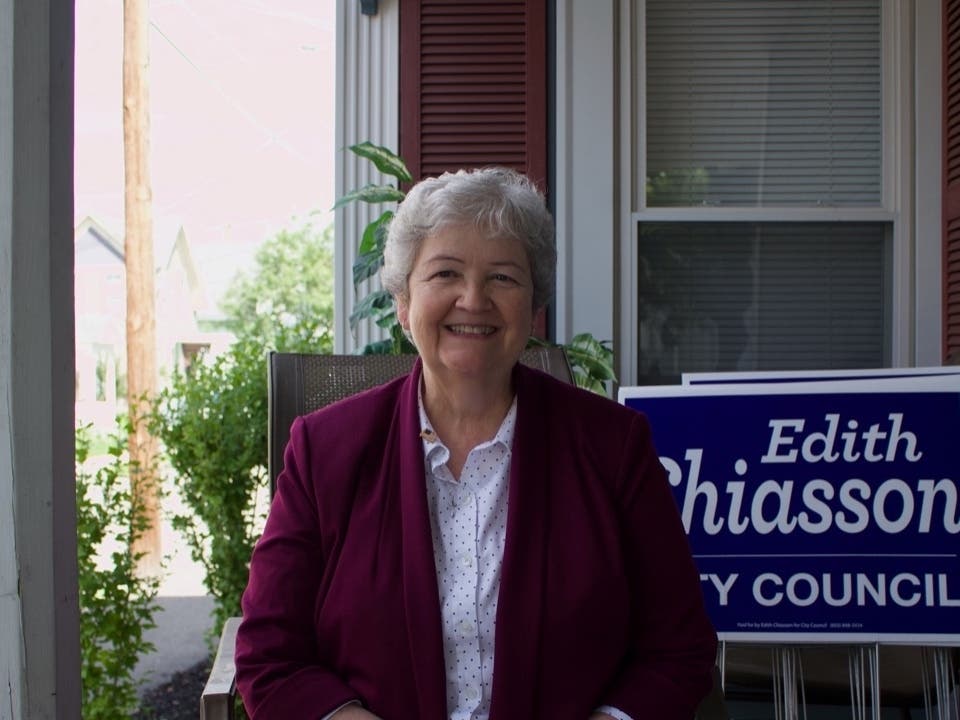
CONCORD, NH — Candidates who run for office, especially in small city and town campaigns where those who are elected are essentially volunteers, have to be a glutton for punishment sometimes. It is hard to run and takes a lot of work. But the desire to participate and contribute, to make things better, can be a drive that is never satisfied.
Some even go back to college to learn more. For Edith Chiasson, that is exactly what she did.
A long-time state employee, mostly in financial services and customer support, she went back to school to earn a master’s degree in public administration — so she could learn more about what needs to be done at the city level. Chiasson has run two prior races for the council — including the special election for Ward 4 in 2019, where she placed third. This race, however, is different: A lot of new people have come forward to support her campaign with a number of them saying, after meeting her, that she is overqualified for the position.
Find out what's happening in Concordfor free with the latest updates from Patch.
While out and about door knocking and speaking to voters, asking for support, many of the same issues have been raised in this campaign as the one two years ago: Traffic, parking, crime, the skyrocketing cost of basic housing outpacing incomes, preparing for new development and an expanding city while preserving the intimacy Concord has always had.
“This is my community,” she said. “I have been here over 30 years. I care about what is happening and the decisions being made and the consequences that occur to us, as a ward. And I am really concerned about a lot of things.”
Find out what's happening in Concordfor free with the latest updates from Patch.
Housing is on the mind of everyone these days due to the city having few apartment vacancies and those that are available are very expensive. At the same time, single-family homes are priced much higher than they have been in the past which is good for current owners who are enjoying their higher home values or might be interested in selling but not so great for homebuyers. Chiasson said a lot of long-time residents in her neighborhood are being priced out. As more development progresses, there could be a strain on city services for residents. Nearly all of the new development is outside of Ward 4 — which is the heart of the city and already pretty built up. Traffic, even without the new development, is burdensome now, especially on some of the city’s narrower streets, Chiasson said. During the last three decades, a lot of traffic has been funneled through the ward.
“I have a hard time getting in and out of my driveway,” she said. “I have a hard time, just getting off the street, because of the volume of traffic and parked cars that you can’t see around.”
Chiasson said these changes were contributing to the loss of the “small-town, city culture that we’ve always had.”
Another problem facing a lot of residents in the ward is the homeless issue.
With both The Friendly Kitchen and the Coalition Shelter in the ward, a number of residents, even ones who supported the organizations, have raised concerns about the behavior of some of the city’s homeless population, as well as safety and crime. Chiasson said both the city and the state are working hard to solve the problems and offer services to those in need, especially through mental health services, remedying addiction, and food, too. At the same time, “we’re not protecting the people who live in those areas.” There need to be changes, she said. If elected, Chiasson would commit to working to improve loitering ordinances, “giving a little more teeth to law enforcement so they can move people along, to more appropriate places, and not someone’s backyard.” This, she thought, would make residents who live closer to downtown feel safe in their own homes and on their property.
Dealing with absentee landlords, too, is another issue voters have raised.
“There are just so many things,” she said. “It’s really hard to pinpoint … ‘What three things are you going to run on?’ Well, there’s a lot that have ramifications to those that live here. It isn’t about one thing in particular.”
Chiasson said, the quality of life in the city, whether it is a homeowner, renter, or law school student, “is really what’s at stake.” She had knocked on doors on every single street in the ward. She has had short conversations and long ones, too, with voters. But it can sometimes be hard to get to know everyone in short periods of time.
“I don’t want to see our small-town city culture turn into a place that has all the big city problems,” she said. “Our council is trying to model us after the larger cities in the state and I think that is really not the right way of thinking. We need to preserve who we are — we are a lovely combination of state offices, residential, and downtown businesses, and all of those things really need to blend and complement each other. They shouldn’t be at odds with each other.”
Chiasson said the city was at “a critical point” with housing, too, with a need for reasonable cost options. But it was also important to preserve historical structures while engaging in practical community development. This would require more discussions with engineers and developers while also roping in city services, like the water department, to ensure there was capacity — especially with potentially hundreds and hundreds of new housing units. It is really looking at the entire picture, she said. Councilors should also be focused on maintaining generations of individuals and families respectfully sharing knowledge, experience, and innovation, Chiasson said, and not just rely on the same people for information.
She asked, “Who else is out there? Is it better? What do they have to offer?”
Most of the ward is already built up so any role Chiasson plays will be focused on protecting ward residents. A lot of eyes are on the development at Lincoln Financial, which was just purchased by Brady Sullivan, and how it will affect residents since it is adjacent to the ward. But Chiasson said the property has historically had hundreds of employees on the site. It will never be as busy as it once was before. The four-way stop posted years ago, too, has improved traffic flow, slowing drivers down.
“I think that will be more of a benefit than a deterrent,” she said.
Public safety, too, is an issue in the city, from the escalating crime to allowing children to cross the street to get to White Park, which is in the heart of the ward. Residents, she said, need to be serviced well by law enforcement when they are needed. Chiasson said she supported funding the police and giving the department the tools it required to keep residents safe. She also said city employees should be held accountable if they are not performing their jobs well, the same as it is in the private sector. Chiasson said hands need to be “untied” and there should be “less protection for bad apples.”
Chiasson readily admitted that she was not an expert, jokingly referring to herself as a “jack of all trades, master of some.” But that also means she has an open mind and can look beyond the way things have always been instead of always listening to the same people and the city insiders, she said. Chiasson likened her concept of serving as offering “grandmother commonsense.” Many of the same issues facing Ward 4 are the same issues facing the entire city — the interests, she said, were all the same. The key will be to develop solutions “in a positive way.”
A lot has been said in recent years about young people and how they fit in with life in the city and New Hampshire, and its future. Chiasson said part of the stay, work, and play strategy is to ensure both residents who want to stay and raise a family and those who want to stay during retirement have the same opportunity to thrive. She said there was a presumption with younger residents and voters that older ones do not understand what they are going through. That was not true, Chiasson said: She is seeing the same problems younger residents have with her own children, and her friend’s and neighbor’s children, how do they save to buy a home and raise a family, and other issues. The concerns are no different from the children who grew up here and want to stay here as the ones who move into the city from other places. Finding a balance, though, requires thinking “about all of that and how it integrates,” Chiasson added.
“It is not one cause ... it is all of it. And that takes years of experience,” she said.
“I have the ability and commitment to observe, listen, reflect, and make tough decisions to improve the fiscal well-being of individuals and small businesses,” Chiasson said. “I believe we can find balance in the range of interests in our community and remove restrictions that create discrimination and undue hardship.”
Got a news tip? Send it to tony.schinella@patch.com. View videos on Tony Schinella's YouTube.com channel or Rumble.com channel. Follow the New Hampshire Patch Politics Twitter account @NHPatchPolitics for all our campaign coverage.
Get more local news delivered straight to your inbox. Sign up for free Patch newsletters and alerts.