Politics & Government
Conspiracy Theories Drive Bill Targeting New Hampshire Coalition Against Domestic And Sexual Violence
Rep. Ellen Read (D-Newmarket) denied film producer Claire Best had a role in drafting her bill; critics noted it echoes Best's allegations.

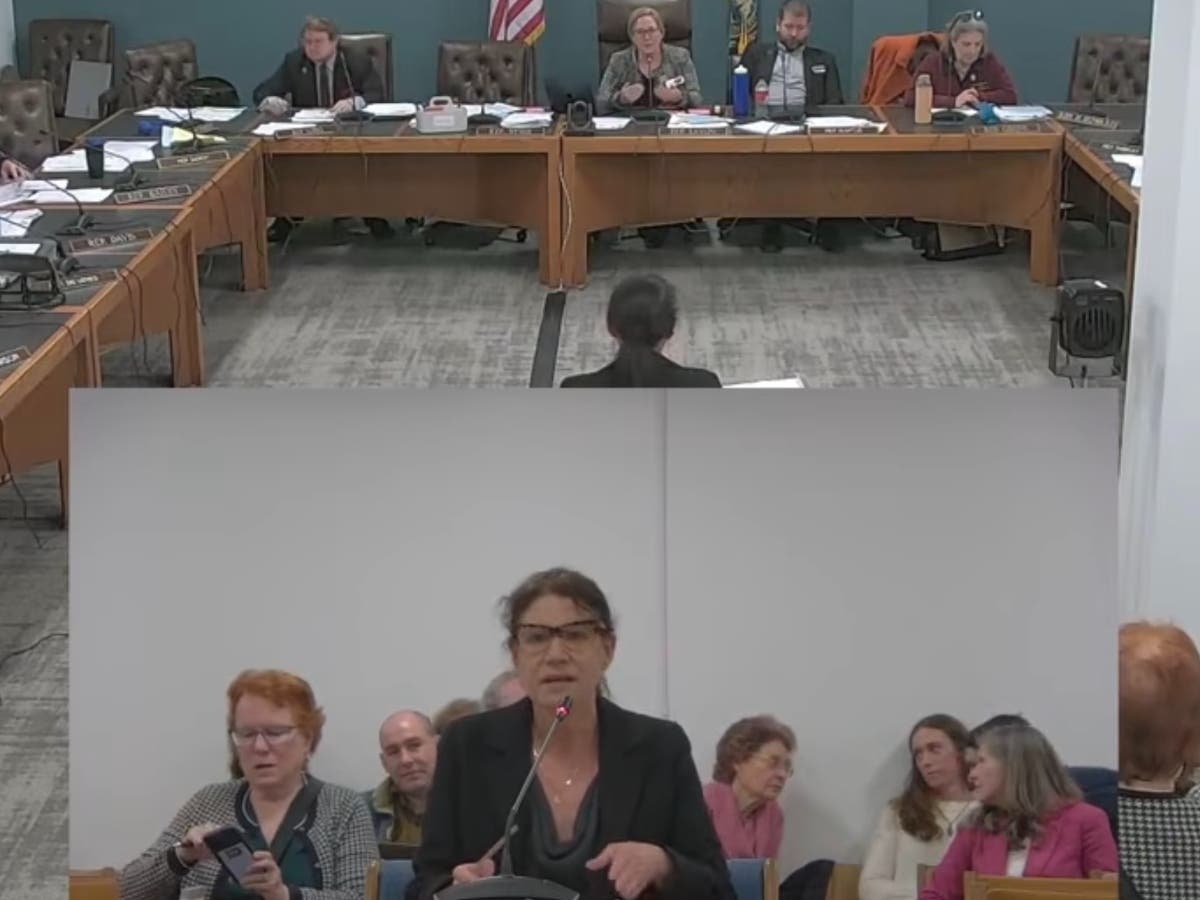
The attack on the New Hampshire Coalition Against Domestic and Sexual Violence took center stage Wednesday as Rep. Ellen Read (D-Newmarket) introduced legislation to investigate the nonprofit based on what Coalition supporters call unproven conspiracy theories.
“I am not sitting here saying that I am a detective or a lawyer, that I have adjudicated this, and I’m judge, jury, and executioner. But they say that where there is smoke, there is fire, and there’s a lot of smoke here that I think someone needs to look into,” Read told the House Executive Departments and Administration Committee.
Find out what's happening in Concordfor free with the latest updates from Patch.
The bill would halt all state funding for the Coalition while a newly formed House committee investigates allegations promoted by activist Claire Best.
Lyn Schollett, executive director of the Coalition, said the legislation is the latest step in what she described as a years-long harassment campaign by Best.
Find out what's happening in Concordfor free with the latest updates from Patch.
Best is a California-based film producer and the founder of an international talent agency who has become a prominent and controversial figure in New Hampshire politics and legal activism.
“That campaign has included repeated false reports to law enforcement, defamatory public claims, and conspiracy-driven attacks. Each time those efforts failed, the goal shifted. This latest strategy is to weaponize the legislative process to create headlines,” Schollett said in a statement.
“None of the fantastical allegations made against the Coalition — including published claims of trafficking children, embezzlement, evidence tampering, or sabotage of public buildings — has ever resulted in any finding of wrongdoing because they are ludicrous and entirely false. When the harassment failed, the tactic became legislation,” Schollett said.
Read spoke for more than an hour, outlining her disputes with the Coalition, including its opposition to her previous legislation dealing with sexual assault issues. She testified that the organization’s opposition prompted her to begin “asking questions.”
The Coalition, Schollett said, is already subject to extensive state and federal oversight.
“We fully support appropriate nonprofit oversight — including our own. We have a decades-long, unblemished record of compliance, clean internal and external audits for 25 consecutive years, and rigorous monitoring by state and federal agencies, including the U.S. Department of Justice. This bill does not strengthen oversight. It attempts to single out one nonprofit for punishment without due process,” Schollett said.
Read denied Best had a role in drafting the legislation, though critics note the bill echoes Best’s allegations. Neither Read nor Best presented evidence to substantiate the claims.
Best argued that the absence of law enforcement investigations into her accusations suggests a broader conspiracy.
“When you find something wrong in the system, it’s your civic duty to speak up to the appropriate authorities. I did this. I did it in 2019. I did it in 2020 and in 2021. I did it to the City of Concord, to the AG’s office, to the IRS, the FBI, (I) put it to everybody. And I kept on, sometimes I got some response, but always very vague,” Best testified.
Best said she concluded law enforcement would not investigate because of the Coalition’s relationship with authorities.
“I suddenly realized that, in effect, to be, at least, the lay person, the Coalition appears to be a lobbyist for the AG and the police departments. And that’s strange,” Best said.
Best began publicly targeting the Coalition following the 2015 sexual assault conviction of former St. Paul’s School student Owen Labrie. She has family ties to the school and developed a relationship with Labrie while he was incarcerated.
Her allegations include claims that the Coalition profits from lawsuits against elite institutions such as St. Paul’s School and Dartmouth College, while also covering up abuse at the Sununu Youth Development Center. She has also claimed Rev. Gordon MacRae, who is serving a 33- to 67-year sentence after being convicted of sexually assaulting one boy and pleading guilty to assaulting three others, is innocent and the victim of a conspiracy.
Lawmakers from both parties expressed skepticism about Read’s proposal.
“This is not appropriate for this House. All the innuendos that have been thrown around here today, there’s no real evidence,” said Mo Baxley, a former Democratic state representative from Laconia.
Rep. Jennifer Rhodes (R-Winchester) said the Coalition’s opposition to Read’s past bills reflects its advocacy role.
“So just because the bill says domestic violence or sexual assault doesn’t mean that it’s a good bill. And that is the advocacy that the victims are counting on that does directly affect… and give them assistance,” Rhodes said.
Rep. Alicia Gregg (D-Nashua) warned that the bill would harm survivors by suspending funding before any investigation is completed.
“I have a hard time thinking that this is a good-faith bill when it takes away funding before an investigation is done,” Gregg said.
The Coalition supports New Hampshire’s 12 independent domestic violence and sexual assault crisis centers. About 80 percent of its funding goes directly to those centers. It also trains law enforcement and prosecutors, operates the Sexual Assault Nurse Examiner program, and runs anti-trafficking, prevention, and housing programs for survivors. All would lose funding under Read’s proposal.
This story was originally published by the NH Journal, an online news publication dedicated to providing fair, unbiased reporting on, and analysis of, political news of interest to New Hampshire. For more stories from the NH Journal, visit NHJournal.com.