Politics & Government
Governor: DeVos Did Not Write New Hampshire School Reopening Plan
Sununu signs some bills, will veto others; self-employment CARES Act grant applications due; outbreaks end in two long-term care facilities.


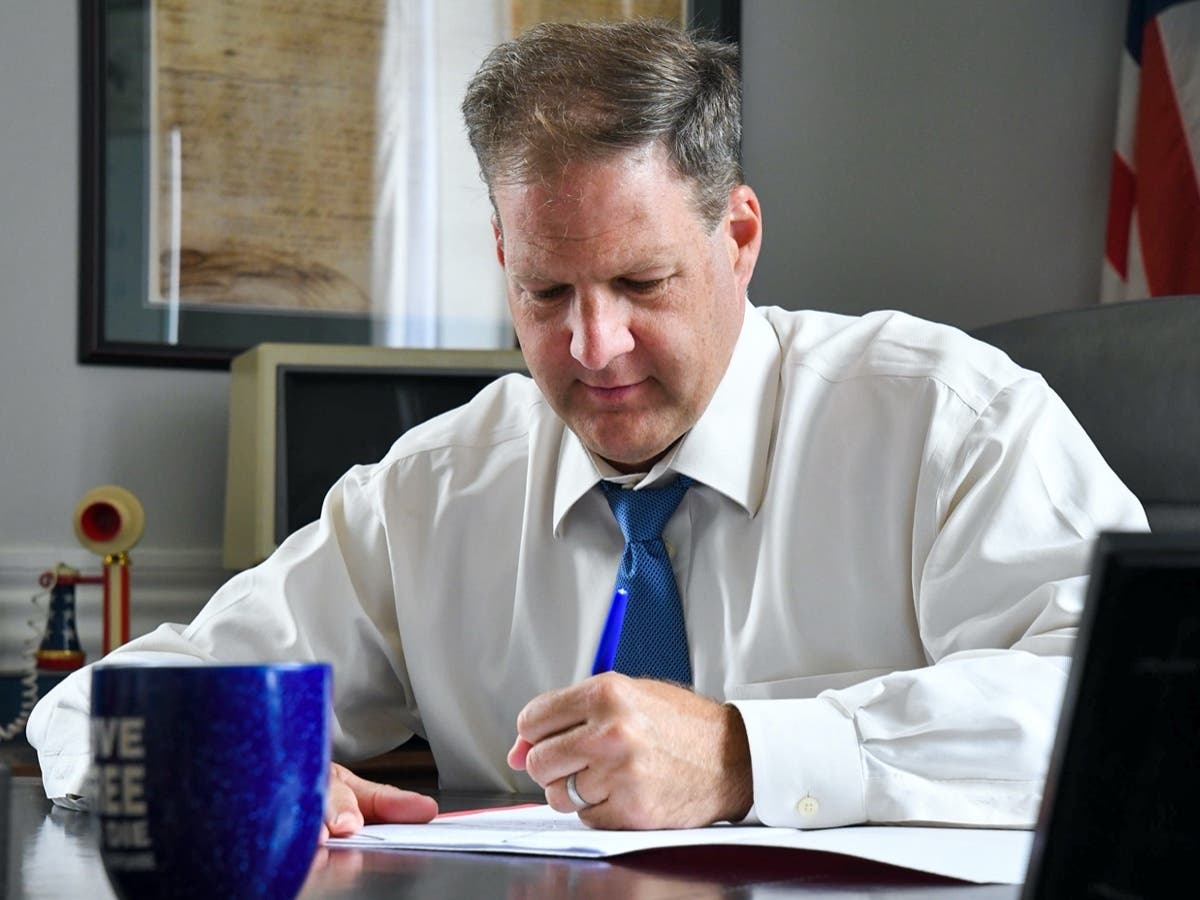
CONCORD, NH — New Hampshire's governor denied political attacks from his opponents on the other side of the aisle claiming the recently released COVID-19 school reopening plan was written by the federal government, contractors, or U.S. Department of Education Secretary Betsy DeVos.
Gov. Chris Sununu was questioned about the claim Thursday during his biweekly press conference that covers a range of issues but is mostly focused on new coronavirus updates.
During the last 48 hours, two Democrats hoping to challenge Sununu in November, Andru Volinsky, the executive councilor for District 2, which represents Concord, and state Sen. Dan Feltes, D-Concord, launched attacks against the governor, the New Hampshire Department of Education's plan, and its commissioner, Frank Edelblut, concerning the state's school reopening plan. Both candidates, in their own ways, said the plan wasn't strong enough, didn't have mask mandates, lacked money, and was written by the American Institutes for Research (AIR), a nonprofit that has been running Comprehensive Centers and assisting education departments since 2005, that they said was connected to DeVos.
Find out what's happening in Concordfor free with the latest updates from Patch.
"How do I even answer that?," Sununu said. "Betsy DeVos' staff did not write our education guidance documents … at all."
Sununu said AIR had been providing technical assistance to New Hampshire and other states for decades via "comprehensive centers," and the nonprofit's services were approved during the last three presidential administrations. The services cost the state nothing. According to AIR, it uses the federal grants to build technical assistance to both states and school district "design and implementation of evidence-based policies, practices, programs, and interventions that improve instruction and student achievement and outcomes."
Find out what's happening in Concordfor free with the latest updates from Patch.
A search of both the AIR website as well as a Google search yielded no known connection between DeVos and the firm — beyond the approval of more federal grants by DeVos for the centers in 2019.
When creating the School Transition Reopening and Redesign Taskforce, the department of education reached out to AIR to assist with the coordination of group discussions, surveys which generated more than 56,000 responses, and other processes. The department listed the nonprofit as part of the task force's plan in May.
However, AIR did not write any content for the plan, the governor said.
"The content was written by the department of education, right here in New Hampshire," Sununu said. "That's why it's so flexible; that's why it's all about local control. The federal government did not write our document at all. I want to be very clear about that."
About an hour after the end of the press conference, Feltes sent out a fundraising email again claiming the plan was "outsourced … to be written by" DeVos' "D.C. consultants."
While his opponents were calling the reopening plan "chaos," Sununu was asked if the state should reconsider local control in the 21st century? The governor said, No, local control "works … and ours works better than most and it's why our education system is so good."
Sununu also wondered why his opponents did not have more faith in school teachers, officials, and others to find solutions and make decisions for themselves when it came to face coverings and other issues. Mandates also do not take into account that many school districts around the state are in communities with few or no active COVID-19 cases.
"I have all the faith in the world that the teachers and the parents and the principals know how to manage those classrooms," he said. "Not a governor sitting in the corner office … I don't know why they don't have faith that other folks, other than themselves, might have some answers and solutions in this process."
Sununu also added that Dr. Benjamin Chan, the state epidemiologist, had the final say about the school reopening task force guidelines and approved of its release.
Public Health Update
Dr. Beth Daly, the chief of the Bureau of Infectious Disease Control, said New Hampshire was seeing approximately 25 new infections each day.
Two long-term care facility outbreaks at Bedford Hills and Holy Cross in Manchester had ended and only three facility outbreaks remained in the state.
Daly said health officials would continue to watch what is going on in the rest of the country and stressed residents to maintain social distancing, wear a mask when you they could not social distance, wash hands frequently, stay at home if you do experience symptoms, and get a test, too.
Financial Updates
Sununu said applications for the state's new self-employment fund will close Friday but interested parties could go to Revenue.nh.gov to file a claim. So far, about 7,000 applications have been accepted into the system.
A third fund, which will be run by the business finance authority, will use $30 million to fill in the gaps of the CARES Act fund to small businesses and the self-employed. The organization will use its discretion to determine opportunities and businesses that may have fallen through the cracks. More information about the fund and application process will be released on July 21.
University and college students are also going to be able to access more money. The governor said $19 million in funds will be given to the university system to offset student costs while another $6 million will be granted to the community college system for student support in the community college.
Foster care parents and guardians will also be able to access stipends for up to $500 per child for foster care givers to assist in offsetting the cost for day camps and other socialization opportunities for the kids since they have such limited opportunities and may be going through tough time, he said, adding nhfapa.org had more information.
In the near future, Sununu will be eyeing more task force studies dealing with the coronavirus, health inequities, and police accountability.
Signing Bills
The governor signed both HB 1645, a multi-issue criminal justice reform bill, and HB 1280, addressing prescription drug costs, into law Thursday. The drug bill will help New Hampshire have the lowest cost insulin in the country, Sununu said.
He was asked about some of the bills coming across his desk and said, while there were a lot bills with good stuff in the mix, because they were pushed through as omnibus bills, he wasn't too happy. Sununu said the bills should have been split up.
The governor said he had not made all his decisions about legislation but did chastise a new unemployment bill, calling it, "beyond horrible." It would cost hundreds of millions and would cause a complete rewrite of the state's laws, Sununu said.
Other Questions And Answers
The governor was asked why he wasn't more forceful on face coverings and said the school reopening process had to be flexible and practical and parents, teachers, and administrators were the go-to people when making that decisions. The task force recommendations were designed to keep students "in school, long-term" and the process had to be "manageable."
"God forbid, we should have another surge," he said.
But if it does happen, or there are spikes and waves of infections, it would not happen across the state, at one time, he said. That was one thing health officials had learned — and nearly three-fourths of the state has not had more than 20 cases during the entire pandemic. Forcing a school in the North Country where there have been few infections to do the same things as city schools that had more risk did not make sense, he said.
The governor was asked about day care centers and whether there had been any outbreaks and he said there had not been even though "hundreds of centers" had remained opened. That data, he said, was keeping the state ahead of the game compared to other states. Sununu added most of the outbreaks across the country, however, were due to bars, restaurants, and young people, hanging out in places without proper ventilation and not children in day care centers.
Sununu added there had been no evidence of outbreaks at beaches or other locations where a lot of people have been congregating.
On reusable bags, Sununu said, "We're still not there."
The governor said he had not looked at it in a few weeks but would. He said the state was in a good place and did not want to "open up the floodgates" to everything just yet.
Sununu was asked about the state of the state of emergency and he said he would renew it Friday.
"We're going to be (in it) for quite a while," he said.
Sununu was also asked about the average turnaround time for COVID-19 tests and said he was "frustrated" because New Hampshire test results, which were around two to three days before, were now seven to 10 days, due to the increases in testing across the country. The majority of New Hampshire's tests are still checked outside of the state.
Sununu said the state was looking to purchase more devices and the university system was also looking into purchases. Dartmouth, he added, had a device that can test 1,000 specimens a day. Reagents, too, would need to be ordered along with the two million swabs the state has in its possession.
"We're still on par with everyone else in the country," he said.
Daly was asked to revisit the child infection data and whether or not she knew what percentage of those children infected, about 100 kids, had attended day care centers. She said it was "a very small portion," less than 10 percent, and "maybe two handfuls" of cases. Daly said the state had not seen a center with three or more cases (the definition of an outbreak) and children who were exposed were often exposed to siblings or family members.
Children in day care centers that stayed open often were the kids of essential workers — like first responders, health workers, etc., meaning they had a greater danger, possibly, of infection, due to the jobs of their parents. Daly was asked, how does the state's experience with day care centers fit into the fears that some parents may have with the new reopening school advisory?
She said, when the schools reopen, there would be some risk but children with infections or parents who became infected and need to be quarantined would be able to shift to remote learning in order to control the spread within a school. Contract tracing and public health monitoring would also assist in keeping children and families safe.
Got a news tip? Send it to tony.schinella@patch.com. View videos on Tony Schinella's YouTube channel.
Get more local news delivered straight to your inbox. Sign up for free Patch newsletters and alerts.