Politics & Government
Governor And Legislators Argue Power Of Coronavirus Purse
Democratic legislators seek to block Republican Gov. Chris Sununu from spending funds to combat COVID-19 without legislative oversight.

By Garry Rayno, InDepthNH.org
MANCHESTER, NH —Does a governor have such expansive power under a state of emergency that he can bypass the Legislature’s constitutional “power of the purse?”
Find out what's happening in Concordfor free with the latest updates from Patch.
That question was argued for two hours in a court hearing on Monday. Democratic legislative leaders are seeking a preliminary injunction to block Republican Gov. Chris Sununu from spending unappropriated federal and state money to combat the COVID-19 epidemic without legislative oversight.
At issue is more than $1.25 billion in federal CARES Act funds to help offset costs associated with the coronavirus pandemic that has infected nearly 1,500 state residents, killing 42. Half of the money arrived Friday, and half will arrive this coming Friday, but the state has yet to receive federal guidance on spending the funds.
Find out what's happening in Concordfor free with the latest updates from Patch.
After two hours of legal arguments, Superior Court Judge David Anderson said he would make a decision as quickly as possible, including if the four lawmakers suing Sununu, Senate President Donna Soucy, House Speaker Stephen Shurtleff, Senate Finance Committee Chair Lou D’Allesandro, and House Finance Committee chair Mary Jane Wallner, have standing to bring the suit.
Sununu’s attorneys argue they do not have standing, but the legislators’ attorney said there is a long history of legislators and taxpayers suing governors over similar issues.Sununu established the Governor’s Office for Emergency Relief and Recovery to determine where the money would be spent, with a non-binding legislative advisory committee, but legislative leaders, argue it bypasses their constitutional authority to appropriate money.
At the Hillsborough Superior Court North hearing Monday, Solicitor General Daniel Will argued the state of emergency statutes envisioned the kind of extraordinary situation that the global coronavirus pandemic presents today threatening the well-being of the state’s citizens.
Under those statutes the governor is granted extremely broad powers to prevent harm and damage including accepting and spending unappropriated federal and state funds, Will said.
Under the statute the governor has the power to “secure the protection of the civilian population,” Will said. “It is broad language, it is hard to imagine anything more broad.”He said when the crisis began state officials had to act quickly to prevent the spread and to help the health-care system prepare.
Will said the Legislative Fiscal Committee process is too cumbersome and takes too long when immediate action is needed.
He cited court documents stating Department of Safety Assistant Commissioner Perry Plummer missed an opportunity to purchase personal protection equipment because he discussed it with his colleagues for 15 minutes.“In many instances, to wait an hour is to lose an opportunity,” Will said, “and in many instances to wait 10 or 15 minutes is to lose an opportunity.” B
ut attorneys for Democratic legislative leaders said the Fiscal Committee is able to meet whenever necessary to review spending requests but cannot be legally bypassed as the governor intends.The Democrats’ attorneys focused on a 2002 law passed after the Sept. 11 terrorist attacks that requires the governor seek the “advice and consent” of the Fiscal Committee.
Senate Legal Counsel Gregory Silverman said the statutes cited by the governor’s counsel allow him to accept federal funds in an emergency not spend them.
But Will maintained the 2002 law governs only civil emergencies while the statutes have two separate paths for civil emergencies and state of emergencies.“How do they look different,” asked Anderson. Will said it is up to the governor to decide which one to invoke but invoking one does not invoke the other.“They may look the same, but that does not mean they are the same,” he said, noting the state of emergency has a higher threshold.
“There is the contention that (the statutes) are in conflict,” Will said. “They contemplate two different things they are not somehow linked.”But Silverman said there is nothing in the state of emergency statute that gives the governor powers beyond what he is granted in the Constitution.
In reviewing the legislative history of the statutes, “I have not seen anything in those documents that the legislature intended to relinquish the power of the purse to the governor or executive branch in a state of emergency.”Silverman said in one section of the statute the legislature was careful to make a specific exception to Fiscal Committee review, not a general exception as the governor claims. The plain language of the 2002 statute states the governor cannot spend funds for any other use but what they were appropriated for by the legislative branch, he said.
You cannot read the statute to give the governor a choice to either involve the legislature, Silverman said, or usurp their power over appropriations.“The governor has created a false choice between saving lives and restraining the governor from overreaching,” Silverman said, when he can manage the emergency and still follow the constitution and state statutes.Anderson noted there is a wide gulf between the two arguments.“Is there some middle ground,” Anderson asked, where legislators would allow the governor to make some quick decision “but not give the governor carte blanch to spend $1.25 billion as he chooses.”Will said the COVID-19 expenses are not included in the state’s two-year operating budget. The federal money is intended to help people from March 1 to Dec. 31.
“The funds are designed not to go to the state, but to the people who need them,” Will said. “There is general oversight and accounting to the federal government for the use of those funds. They are not without strings attached to them.”
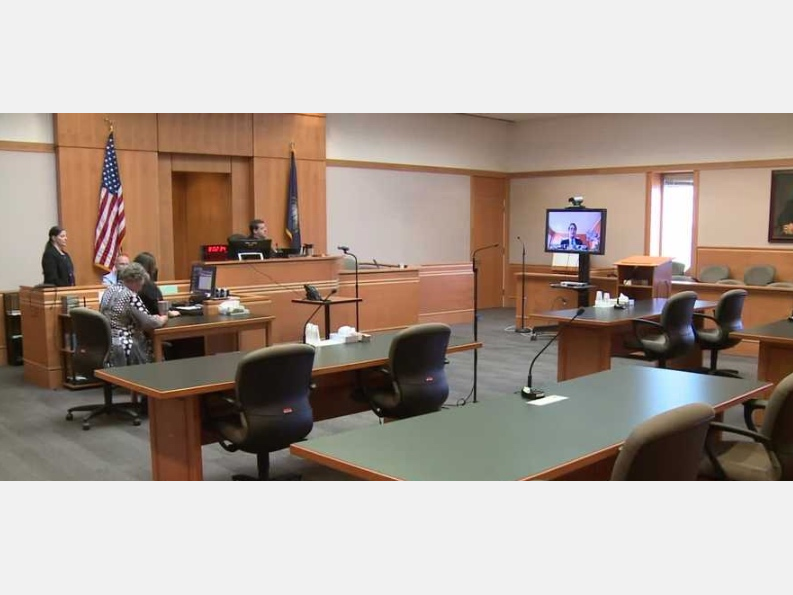
Near the end of the hearing, which was conducted in a Manchester courtroom with the attorneys and plaintiffs appearing electronically, Anderson said he has begun reading the legislative blurbs on Senate and House bills on the emergency statutes.
The bills restrain the power of governor, he noted, “I did not see much to increase the power of the governor.”
Will said the judge should not focus on the legislative history, noting the statues are not ambiguous. “They could not be more clear or more broad,” he said.
Silverman said he also reviewed the legislative history for the state of emergency legislation as well.
“I have not seen anything in those documents that the legislature intended to relinquish the power of the purse to governor or executive branch in a state of emergency,” he said.
The Democratic lawmakers are not requesting the state recoup the unappropriated money that has already been spent or obligated but seeks to force the governor to seek Fiscal Committee approval going forward.
After the hearing, Gov. Sununu sent the following email to news outlets: “Solicitor General Dan Will did a fantastic job laying out the well-founded legal arguments that support the merits of our case. In this unprecedented public health emergency we will continue to focus on getting relief out to New Hampshire families in rapid fashion.”
Garry Rayno may be reached at garry.rayno@yahoo.com.
This story was originally published by InDepth NH.