Politics & Government
Grenier: The North Country Can't Afford EPA's Ozone Rule
Mayor of Berlin: We are excited about new things happening but progress can easily be halted with bad decisions by our national leaders.



By Paul Grenier
While there are some bright spots in our economy, it is no secret that our area needs more jobs. Too many people are suffering from long-term unemployment or underemployment. Wages are not high enough. Economic growth is sluggish at best. We are excited about new things happening in Berlin, but progress can easily be halted with bad decisions by our national leaders.
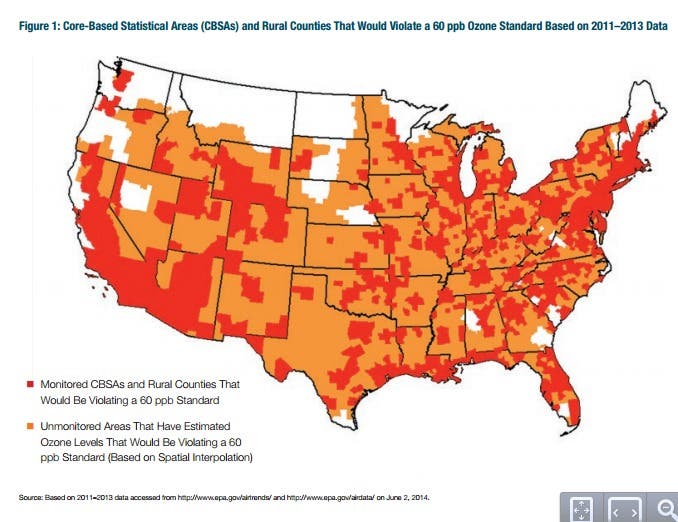
We need federal policies that will deal with our challenges logically. Unfortunately, the Environmental Protection Agency (EPA) is considering a new regulation that is said to be the most expensive regulation ever. This agency’s proposal to lower the standard for ground-level ozone is one that will destroy jobs and harm our economy. It is the exact opposite of what the people in Berlin need.
Find out what's happening in Concordfor free with the latest updates from Patch.
The EPA wants to lower the ozone standard from 75 parts per billion (ppb) to between 65 and 70 ppb. The current standard has only been in effect for seven years – a relatively short amount of time when it comes to federally mandated environmental regulations. Many places around the nation still have not been able to meet the current standard. In many cases, this is due to the fact that the levels of naturally occurring ozone already put them at or very near the 2008 standard.
Considering the struggles to meet the current standard, I fail to see the wisdom in enacting an even stricter regulation. The EPA knows that achieving compliance with its latest proposal will be very difficult. In fact, the agency hasn’t been able to identify many of the technologies needed to attain compliance. It has admitted that many places will have to use “unknown controls” to come into attainment.
Find out what's happening in Concordfor free with the latest updates from Patch.
Experts who studied this proposal have concluded that it will have a grave impact on the economy and consumers. It could, for instance, mean that New Hampshire will lose more than 6,000 jobs every year. Households in this state will also take a hit of $960 per year. In the North Country, where unemployment is much higher than the statewide average, that could have devastating consequences.
In 2011, President Obama directed the EPA to withdraw a similar regulation. At the time, he said that he did so because of “the importance of reducing regulatory burdens and regulatory uncertainty, particularly as our economy continues to recover.” I hope that the president treats this new proposal with the same level of caution and skepticism.
This is an acknowledgement that a lower ozone standard will impose significant regulatory burdens and uncertainty. It will impede economic growth and development. Given our weak economic recovery over the past seven years, there are still too many people out of work. The president’s reason for rejecting these rules is just as strong today as it was in 2011.
Like every other American, I too want clean air. It’s great that air quality has been improving dramatically since the 1970s, and it continues to improve year after year. I certainly support the goal of making our air even cleaner. My concern is that this proposed regulation is the wrong way to achieve this goal.
Put simply, the current standard has been in place for less than a decade, and is strict enough that many areas around the country are still having difficulty coming into compliance. By allowing us more time to comply with the current standard, there will be continued improvement in ground-level ozone levels as more communities work to achieve the current standard, without damaging our economy the way the proposed standard would.
A stricter ozone standard will hurt our economy at a time when we really cannot afford it. From my perspective, it seems like a far better idea to keep enforcing the current ozone regulations instead of enacting new ones. The residents of Berlin will be better served by this prudent course of action.
Paul Grenier is the mayor of Berlin.
Get more local news delivered straight to your inbox. Sign up for free Patch newsletters and alerts.