Politics & Government
Hassan Proposes $11.5B Budget, 6.4% Increase
New Hampshire governor's FY16-17 budget both praised and panned.


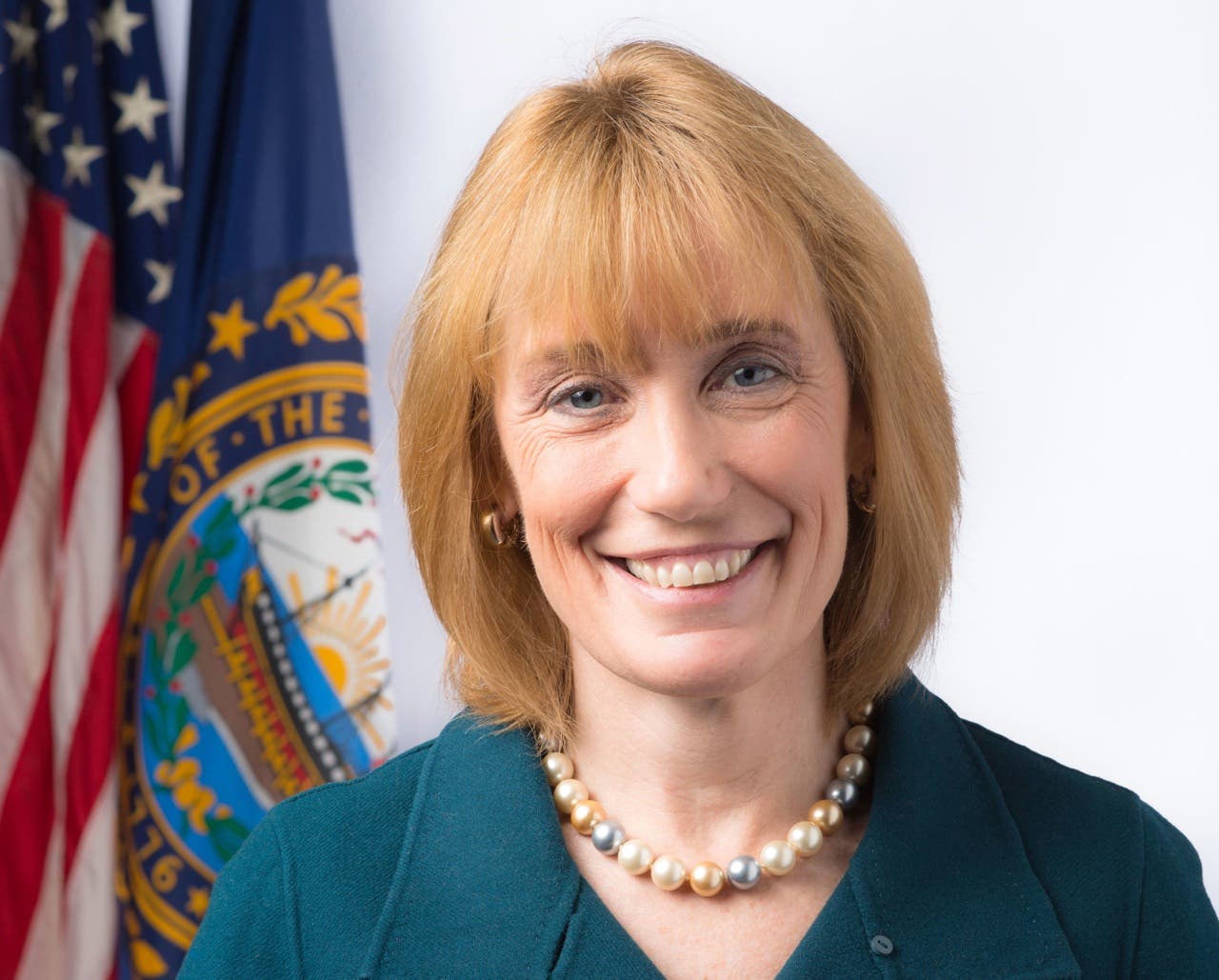
Gov. Maggie Hassan, D-Exeter, issued her two-year budget on Feb. 12, to a mix of fanfare and fault.
The budget proposes a more than six percent spending increase across two years but also requests more than $1 billion worth of reductions to departmental requests.
Reaction to the budget proposal was mixed.
Find out what's happening in Concordfor free with the latest updates from Patch.
New Hampshire Democratic Party Chairman Ray Buckley called the budget “fiscally responsible” and added that it would ”lay the foundation of a new generation of economic growth, proving once again that Granite Staters are in good hands under the Governor’s strong bipartisan leadership.” He also called on Republicans to stop using gimmicks that mislead the public.
“Instead of resorting to their usual dishonest budget stunts and efforts to mislead voters about the Governor’s common-sense problem solving, I call on Republicans in the legislature to return to a serious budget conversation and support this responsible, common-sense budget that will get results for our people, businesses and economy.”
Find out what's happening in Concordfor free with the latest updates from Patch.
State Senate Democratic Leader Jeff Woodburn, D-Dalton, added that the budget “presented a strong, fiscally responsible plan for how we can build on our bipartisan progress over the past two years and seize our state’s full economic potential, without a sales or income tax ... the Governor’s plan makes tough decisions and smart investments.”
However, Senate Republicans were critical of the proposal.
State Senate President Chuck Morse, R-Salem, said the GOP had been “very clear that we will live within our means, and certainly not support the Governor’s Billion Dollar spending increase. We will not support increasing taxes as the Governor proposes on businesses, driver, and smokers.”
Senate Majority Leader Jeb Bradley, R-Wolfeboro, said lowering the state’s “high business tax rates” not raising other taxes and relying on gambling money was “the strongest step we can take to boost New Hampshire’s economy and attract new jobs to our state.”
Senate Finance Committee Chairwoman Jeanie Forrester, R-Meredith, added that she appreciated Hassan’s willingness to protect dedicated funds in the next budget and thanked her for agreeing with that approach. However, she added, Forrester said she didn’t agree with the call for higher taxes to pay for a $1 billion budget increase.
New Hampshire Republican State Committee Chairman Jennifer Horn called the tax increases in the budget “reckless” and stated that the proposal showed the Hassan was being fiscally irresponsible.
“Two years ago, Governor Hassan was embarrassed when her budget proposal fell apart after the Legislature rejected gambling revenue that she had hoped would cover her reckless spending increases,“ she stated. “Hassan’s decision to include more imaginary gambling revenue in her latest proposal proves that she didn’t learn her lesson and that she is out of new ideas to balance the budget.
There was both praise and concern from state organizations, too.
Mike Rollo, the director of government relations in New Hampshire for the American Cancer Society Cancer Action Network (ACS CAN), praised Hassan’s “commitment to improve public health and increase revenue for New Hampshire through an increase in the state’s tobacco tax, as well as her proposal to include premium cigars and electronic cigarettes under this tax umbrella.”
In a statement, he added, “We encourage the governor to ensure the tax rate of electronic cigarettes and premium cigars is in parity with the tax rate for cigarettes and other tobacco products. Both of these proposals would reduce tobacco use and, therefore, save thousands of lives in New Hampshire from tobacco-related diseases.”
Jeff McLynch, the executive director of the New Hampshire Fiscal Policy Institute, a group that calls itself non-partisan, non-profit, and independent but has promoted a number of left-of-center political policy initiatives, while commending the governor, stated that the budget “neglects other opportunities to reform New Hampshire’s rickety revenue system, such as extending the state’s interest and dividends tax to include capital gains.”
The governor’s full press statement
Building on the bipartisan progress of the last two years to lay the foundation of a more innovative economic future, Governor Maggie Hassan today presented a fiscally responsible, balanced FY 2016/2017 budget proposal that keeps total spending increases to 6.4 percent – far below historic averages – and allows New Hampshire to continue to make progress on key priorities.
In her budget address to a joint session of the legislature, Governor Hassan outlined her fiscally responsible, balanced budget plan that focuses on priorities that will encourage innovation, expand opportunity, support job-creating businesses and keep more young people in New Hampshire.
“Today, I present to you a fiscally responsible, balanced budget - with no income or sales tax,” Governor Hassan said. “This is a budget that helps expand opportunity for middle class families, supports job-creating businesses, encourages innovation, and aims to attract and retain more young people here in New Hampshire.”
In developing her plan, the Governor made the fiscally responsible decisions needed to balance the budget, cutting more than one billion dollars from total agency budget requests, with most agencies at or below FY 2015 levels. The Governor’s budget also includes conservative projections, based on the work of the Consensus Revenue Estimating Panel, for baseline revenue growth of only 2.7 percent in the first year of the biennium and 1.9 percent in the second. Adjusted for inflation, Governor’s Hassan’s recommended general and education trust fund budget is $250 million lower than the state spent in 2004.
“This is a common-sense budget that invests to stem troublesome demographic trends and build a brighter economic future with more opportunity to climb the ladder of success,” said Governor Hassan. “A future where innovative businesses are creating more good jobs, where more of our young people are staying and thriving, and where young families and workers are once again choosing New Hampshire.”
The Governor understands that there are certain priorities that must be met in order to harness New Hampshire’s full economic potential, and this budget increases funding at the university system over the biennium by 13 million dollars and by six-and-a-half million dollars at our community colleges.
“With this renewed commitment to our colleges and universities, we believe the leadership of both systems should work as hard as possible to hold down the cost of tuition. In fact, the community college system has already indicated that with this increase, they will be able to lower in-state tuition again in 2016 and 2017,” said Governor Hassan.
The capital budget also includes four million dollars for the environmental and engineering assessment required to move forward with commuter rail from Boston to Nashua and Manchester.
“Finding a consensus to make commuter rail a reality will require buy-in from local communities, the federal government and Massachusetts, as well as robust public-private partnerships. I know that we can work together to move this project forward, and the environmental and engineering assessment is an important next step,” said Governor Hassan.
To create jobs and build an innovative economy, this budget also makes strategic investments to maintain New Hampshire’s status as one of the safest, healthiest, and most livable states in the nation.
This budget provides for the reauthorization of the bipartisan health care expansion plan and includes the funds needed to cover New Hampshire’s share in the next biennium.
“Allowing expansion to sunset would result in reduced savings and reduced revenues. Allowing expansion to sunset would result in increased cost-shifting onto all of our people and businesses. And allowing expansion to sunset would cause significant harm to the health and financial security of the thousands of men and women receiving coverage,” said Governor Hassan. “We must maintain our commitment to our bipartisan health care expansion plan.”
The budget also includes the funds necessary to maintain the state’s commitment to the landmark mental health settlement and builds on treatment and prevention efforts to address the state’s substance misuse challenges.
“These steps together will help ensure that our state remains among the healthiest in the nation, while promoting a healthy, highly skilled workforce that is prepared for success in the innovation economy,” said Governor Hassan.
In addition, the Governor’s plan focuses on public safety, puts three additional troopers on the road and provides two additional State Police detectives to combat the opioid crisis; allows the Department of Corrections to fill positions and staff the new women’s prison; maintains the restoration of the Children in Need of Services program; and continues to fund drug task force teams and the cold case unit.
The budget also draws on recommendations of the Governor’s Innovation Commission, including increasing flexibility for state managers, expanding efforts to centralize key services, consolidating a number of one-, two-, and three-person agencies, and creating a Chief Operating Officer who will focus on driving efficiency. The budget merged 27 individual boards and commissions into a new Office of Professional Licensure and Certification; moves the functions of the Racing and Charitable Gaming Commission into the Lottery; merges the Highway Safety Agency into the Department of Safety; and realigns some functions of the Office of Energy and Planning.
In addition to innovation and efficiencies, the Governor’s proposal makes fiscally responsible decisions to balance the budget, including increasing the cigarette tax, allowing Keno and electronic slot machines – with licensing enforced by the Lottery commission – to bring revenue back from neighboring states to invest in New Hampshire’s priorities, increasing vehicle registration fees to address the Highway Fund’s issues and keep New Hampshire’s roads safe, and authorizing the Fish and Game Department to set license fees to maintain the solvency of the Department.
“We have a small, responsive state government that reflects the fiscal responsibility that our people are known for and that they demand. But the people of New Hampshire are also known for their common sense and their desire to solve problems,” said Governor Hassan. “They understand that we can’t just wish for a new generation of innovative economic growth while refusing to make responsible strategic investments to make it a reality.”
In conclusion, Governor Hassan said, “I stand ready to work with any member of either party who is willing to bring constructive, long-term ideas to the table so we can continue investing in critical priorities. Together, we can expand middle class opportunity, support job-creating businesses, encourage innovation and keep our economy moving in the right direction. Together, New Hampshire will thrive.”
The full text of the Governor’s address and the Governor’s Executive Budget Summary are attached.
Get more local news delivered straight to your inbox. Sign up for free Patch newsletters and alerts.