Politics & Government
Nominee Cites 'Structural Political Racism' In Job Withdrawal
Former police chief and head of New Hampshire liquor enforcement Eddie Edwards ends licensure job standoff with Executive Council Democrats.


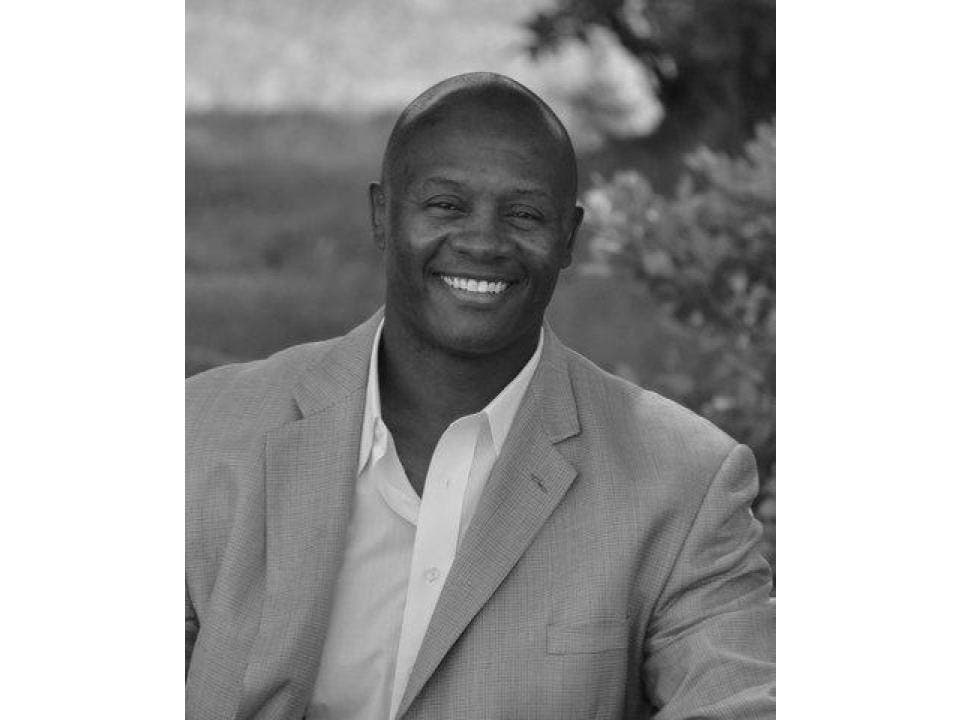
CONCORD, NH — A Black Republican with decades of experience in administration who was denied a hearing for a state government job has withdrawn his nomination, calling the process by Democrats who denied him a hearing "structural political racism."
Eddie Edwards of Dover, the GOP nominee for the 1st Congressional District seat in 2018 as well as a veteran, former police chief, and head of liquor enforcement for the state, submitted the letter to Gov. Chris Sununu Tuesday after waiting more than three months for a confirmation hearing to be executive director of the Office of Professional Licensure and Certification. His hearing for nomination was held up by three Democrats on the Executive Council, including Andru Volinsky, a candidate for governor this year.
Volinsky, a Concord Democrat, with the backing of two other Democrats on the five member board, Debora Pignatelli, who represents Nashua and the southwestern part of the state, as well as Michael Cryans of the North Country, kept the nomination from moving forward for political reasons, including past positions taken by Edwards — something that has become the norm in recent years on the council.
Find out what's happening in Concordfor free with the latest updates from Patch.
According to Benjamin Vihstadt, the governor's spokesperson, Sununu has accepted Edwards' withdrawal letter.
In the letter, Edwards thanked Sununu for the nomination calling it another "first in my family" moment during his life. He said he was stunned by the delay tactic by the Democrats, calling it "unreasonable and unacceptable," especially after there have been three different leaders for the office in less than four years.
Find out what's happening in Concordfor free with the latest updates from Patch.
Edwards said Volinsky had not been truthful to the public when he said he had no experience or expertise to lead the office.
"Councilor Volinsky's statement about my qualifications was not only false but it also played into a racial stereotype long since removed from our society," Edward said. "In light of Councilor Volinsky's self-proclaimed relationship with the NAACP and Black Lives Matter, it would be shocking if he were unaware of the historical context associated with false claims that black people are not qualified as a tactic to exclude them or deny career opportunities."
Edwards rattled off some of his 25 years of experience in licensure and certification including a business administration degree, the FBI National Academy, Harvard University Kennedy Business School of Management of Regulatory and Enforcement Agencies, consulting, and other training in law enforcement compliance, policies, and procedures, including work as the chief of police in South Hampton, and liquor enforcement. He added that he was one of the most experienced people ever nominated by Sununu or former Gov. Maggie Hassan, now a U.S. Senator — but was the only one to face bias and tactical denial that a white nominee would never have faced.
"What is appalling and indefensible is that Councilors Volinsky, Pignatelli and Cryans voted to confirm, within the last 12 months, a white nominee without experience and expertise," Edwards said. "According to Councilor Volinsky, the nominee told these same councilors during his confirmation hearing that he had no experience or expertise and had no vision for the agency because he doesn't know the agency. However, when it came to me, not one of these councilors would vote with Councilors Gatsas and Prescott to schedule a confirmation hearing in any format over the last 105 days. I'm not sure if there has ever been a better example of structural political racism. This is text book discrimination; delaying, redefining, denying, moving the goal post or using a different set of standards. I feel very strongly that no unqualified person should ever be appointed to any position based upon their ethnicity or race. Equally true, no elected official should use implicit bias to disqualify a qualified person. We too easily view this as just politics, its more than just politics. This is an attack on a citizen of this state for political gain."
Volinsky, in prior comments, pointed to Edwards political non-support of the Affordable Care Act and said he would be overseeing the licensing of health professionals. Edwards countered that he had never let his personal beliefs prevent him from carrying out public service responsibilities. Edwards added the procedures for the office were the same ones he carried out at liquor enforcement — "effectiveness and efficiency of administrative functions"; the state Board of Medicine, he added, was responsibile for licensing of physicians.
"Councilor Volinsky either intentionally provided false information or he does not fully understand the role of the Executive Director for OPLC," Edwards said. "Frankly, neither is acceptable."
Edwards added that the lack of a hearing for his nomination was "the ugliest kind of elected behavior, structured political discrimination," but something Black conservatives were used to. He added that he and others were often attacked, marginalized, and devalued as "tokens," "sellouts," and other derogatory and racist references often spoken from the mouths of those who preach tolerance and diversity.
Edwards' withdrawal was the second Black nominee to a board or job by Sununu that was stopped by white Democrats on the Executive Council.
On June 11, Ryan Terrell, a musician and project manager in digital systems who has worked in alternative education setting, is originally from Louisiana who had lived in the state for about 12 years, was rejected by the Executive Council by a 3-2 margin to serve on the state Board of Education.
Terrell was attacked by members for being transient, lacking institutional educational experience, and someone who had not run for school board or served in a parent-teacher organization — even though none of those are a requirement to serve on the board.
Volinsky targeted Terrell saying he wasn't going to "engage in tokenism" with the governor's nomination, calling him "a nice guy" who had "no informed opinions" and no experience. He also called Terrell's nomination an "exceedingly inappropriate and demeaning appointment to a very important board."
Terrell countered that the comments were racist and would discourage other people of color, with diverse political views, beliefs, and experiences, from becoming involved.
The next day, Volinsky apologized for using the word "token" but declined to apologize to the nominee, according to NH Journal.
Sununu was asked about the Terrell and Edwards nomination at a recent press conference and he said the treatment of them was deplorable.
Edwards this week was named to the governor's task force on police accountability.
Got a news tip? Send it to tony.schinella@patch.com. View videos on Tony Schinella's YouTube channel. Follow the New Hampshire Patch Politics Twitter account @NHPatchPolitics for all our campaign coverage.
Get more local news delivered straight to your inbox. Sign up for free Patch newsletters and alerts.