Crime & Safety
Officials: Concord Is Prepared As it Can Be
Police, fire have received extensive training to respond to incidents.


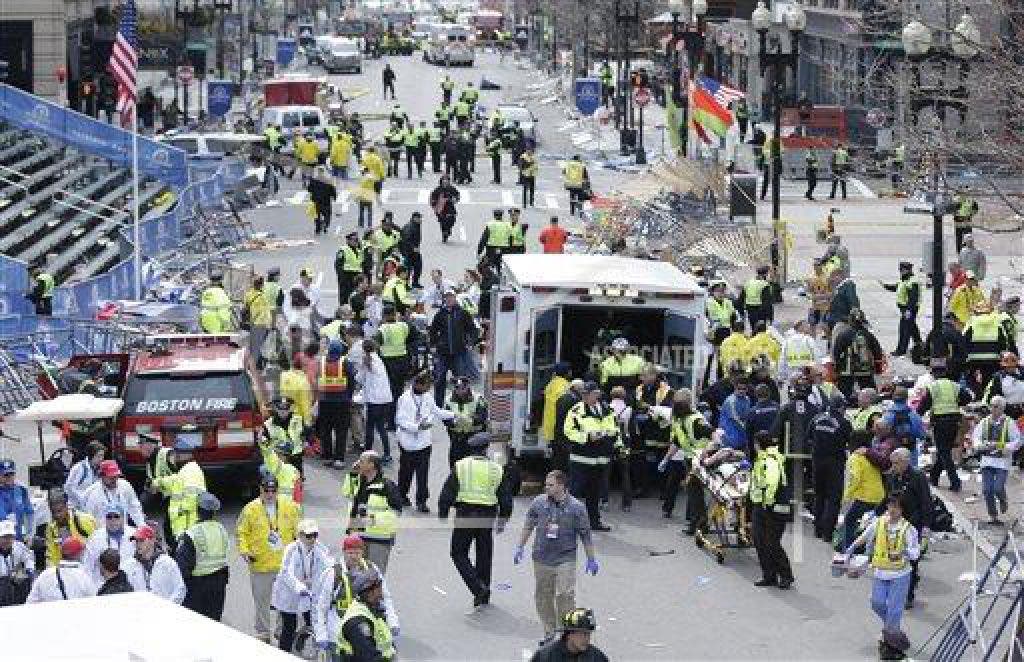
No one ever wants to think of a terrorist attack happening in our neck of the woods. But if it ever happens in Concord, the heads of both the city’s first lines of response to such an event say that they are ready.
Concord Fire Chief Dan Andrus and Concord Police Chief John Duval both said their departments had undergone extensive training since and even before the Sept. 11 terrorist attacks, to prepare to react quickly to an event in the city.
Andrus said the department was “as ready as we can be” because “Concord trains heavily,” and he noted that some of that preparation was seen at the Boston Marathon.
Find out what's happening in Concordfor free with the latest updates from Patch.
Dr. David Hirsch, a medical director in Concord Hospital’s emergency room, was “right on top of the scene,” working the tent at the marathon with other doctors when the attacks occurred, and jumped right in.
Part of that training is mass casualty drills and preparing for chemical, biological, nuclear, or explosive devices, and every aspect of the damage that could be done with such weapons. The training includes the most effective way to triage situations, critical injury movements and actions, and can often be used in non-terrorist situations, such as a bus accident, fire, or “whatever place we find ourselves in” at any given time during an emergency.
Find out what's happening in Concordfor free with the latest updates from Patch.
“I could not imagine the lost lives if they didn’t have the medical support they had at the scene,” Andrus said.
Duval agreed.
“I don’t know how anyone can adequately prepare for a large scale terrorist act,” he said, “but I can tell you, we’ve made an investment in training and preparation.”
First responders had spent a lot of time and money training during the last 12 years, applying for grant money, preparing for almost any incident, whether it was a school shooting, terrorist attack, or a natural disaster, Duval said. His department had sent employees to New Mexico for response to explosives training and large-scale disaster response training, and worked closely with the fire department and the medical community to regularly train and hold exercises together.
Duval said being in the capital city, all the local departments also have the New Hampshire State Police, the county sheriff’s department, and neighboring communities that can assist for anything major.
Andrus noted that the department had formally adopted many of the strategies from terrorist response training to regular calls, saying, “This is how we’re doing business now.” He said that on every call, the department scales the incident command system. In a larger event, there are just more agencies and departments working together to clear any incident.
“We’re always practicing … always being ready,” he said.
Duval added that his department was also using the expanded training for non-terrorist response.
“We have to be mindful that there are dangers in the world and to the extent that we can respond to them, I think we have the right mindset,” he said, adding that the departments had recently held a training exercise at Merrimack Valley High School for a mock school shooting incident.
The departments had also “evolved” on how they responded and communicated with each other, using tactics that allowed everyone to know what was going on during a specific event. For the most part, the department had divested from police codes, he said, with officers “saying what we need to say on the radio,” which is new to the police culture. He said it had been difficult for some of the veteran officers. But it improved communication.
Andrus said that residents could brief themselves on how to be ready for any type of incident if it occurs by visiting capitalareaprepares.com.
Get more local news delivered straight to your inbox. Sign up for free Patch newsletters and alerts.