Politics & Government
President Trump Signs Shaheen, Hassan Opioid Legislation Into Law
NH's Senators worked on the INTERDICT Act, which hopes to help border patrol intercept fentanyl. Connected Government Act also approved.


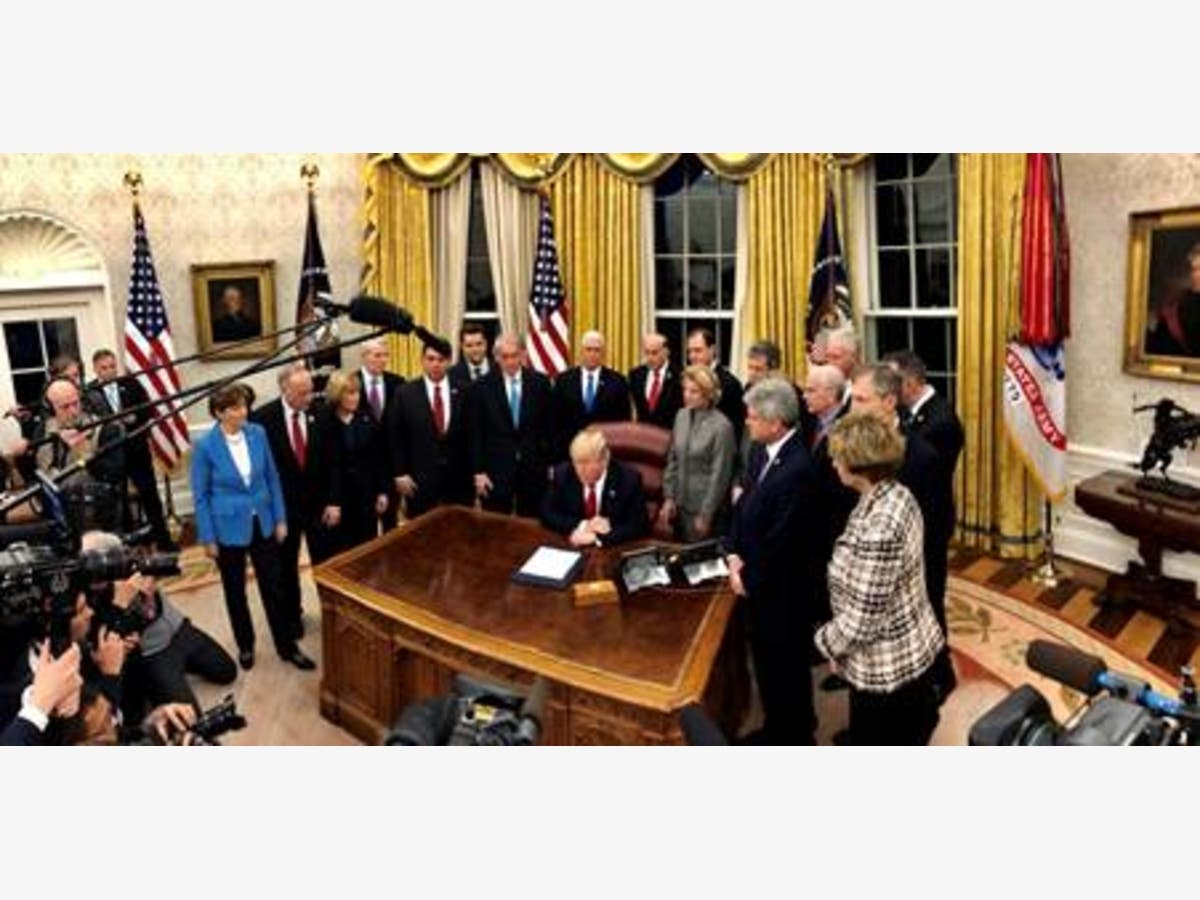
WASHINGTON, DC — Key opioid legislation cosponsored by Sens. Jeanne Shaheen, D-NH, and Maggie Hassan, D-NH, to help ensure U.S. Customs and Border Protection (CBP) has tools to help detect and intercept fentanyl and other illegal synthetic opioids was signed into law last night by President Donald Trump, according to a press statement. The International Narcotics Trafficking Emergency Response by Detecting Incoming Contraband with Technology (INTERDICT) Act was introduced by a bipartisan group of Senators, including New Hampshire's Senators as well as Sens. Marco Rubio, R-FL, and Shelley Moore Capito, R-WV.
“New Hampshire has more fentanyl overdose deaths per capita than any other state in the nation, making interdiction of fentanyl at the border absolutely critical to saving lives in our state,” said Shaheen. “It’s very encouraging to see bipartisan cooperation on this legislation, which gives Customs and Border Protection better means to snuff out fentanyl trafficking. I hope we can soon make similar progress across the aisle when it comes to securing treatment providers and law enforcement the resources they desperately need.”
As the lead Democrat on the Commerce, Justice, Science and Related Agencies Appropriations Subcommittee, Shaheen has led efforts in Congress to combat the opioid epidemic.
Find out what's happening in Concordfor free with the latest updates from Patch.
“The spread of synthetic opioids like fentanyl is exacerbating the devastating opioid crisis that’s ravaging our communities in New Hampshire and taking a massive toll on our economy, killing people faster and with smaller amounts,” added Hassan. “By giving Customs and Border Protection agents better tools to detect and disrupt the flow of fentanyl across our borders, the bipartisan INTERDICT Act is an important step forward in our comprehensive approach to combat this crisis and help save lives, and I am pleased that President Trump has signed the measure into law. It is critical that we continue working across party lines to strengthen prevention, treatment, recovery, and law enforcement efforts to stem – and ultimately reverse – the deadly tide of this epidemic.”
Also yesterday, Shaheen joined with Hassan to propose an additional $25 billion to address the growing crisis as part of the budget agreement that is currently being negotiated in Congress. Shaheen and Hassan also recently introduced bipartisan funding legislation to prioritize states hardest hit by the opioid epidemic, including New Hampshire.
Find out what's happening in Concordfor free with the latest updates from Patch.
Connected Government Act
The president also signed into law the bipartisan Connected Government Act, which was introduced by Hassan and Sen. Cory Gardner, R-CO, which hopes to expand access to government services and information by requiring that all new federal websites are mobile-friendly.
The bipartisan measure supports Granite Staters and Americans who experience disabilities given that 80 percent of Americans who experience disabilities use wireless technology every day. The measure also supports low-income Americans who rely on mobile broadband at higher rates.
“I am pleased that the bipartisan Connected Government Act has been signed into law so that Granite Staters and Americans who rely on mobile devices to use the web – including low-income Americans and those who experience disabilities – can now better access government services, resources, and information,” Hassan said. “I will continue working to bring the federal government up to speed with the latest technology so that our people, our businesses, and our economy can thrive.”
Gardner added, “"I am thrilled the President has signed this common-sense bipartisan legislation into law. As more and more Americans rely on their mobile devices to access information and websites, it’s important the federal government has websites designed for mobile platforms. The Connected Government Act will promote transparency and bring the government into the 21st century.”
The Connected Government Act requires that all new government websites intended to be used by the public are mobile-friendly. The bill also requires the General Services Administration to submit a report to Congress on agency compliance with this law within 18 months of enactment. U.S. Reps. Robin Kelly, D-IL, and Frank Pallone, D-NJ, introduced the companion to this bill in the U.S. House of Representatives. The bill passed the U.S. House of Representatives on Nov. 15, 2017 and it passed the Senate on December 21, 2017.
See bill text here.
Image courtesy of the White House; text submitted by Sarah Weinstein and Aaron Jacobs.
Get more local news delivered straight to your inbox. Sign up for free Patch newsletters and alerts.