Neighbor News
Herschlag: Thoughts On The Employment Security Building Project
Where do we go from here? What do you think we should do?
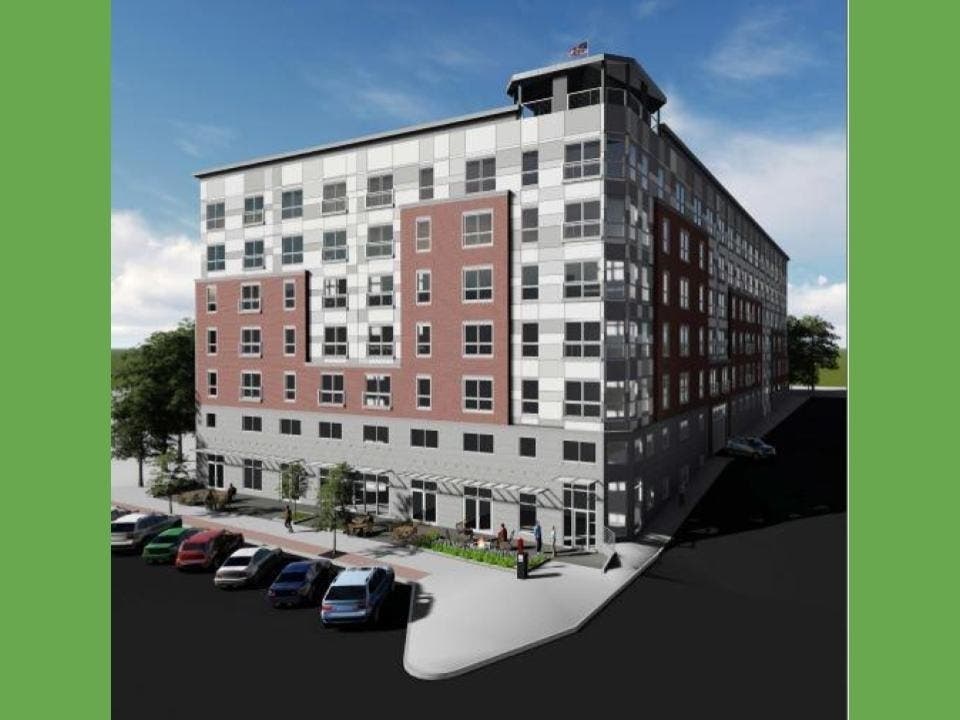
Some thoughts on the city council’s vote to not go forward with the Department of Employment Security (DES) building project.
I had been supportive of ensuring the DES project would have only market rate or higher rents with no subsidies. My thoughts were that the downtown has a number of lower income units compared to market rate housing. Having the DES project providing market rate or higher units would bring more of a balance to the types of housing downtown.
The DES project had the potential to add vitality to our downtown. I voted against it because it would not have returned any new taxes to the city, school district or county for approximately 13 years and I was not willing to support the project without a surety bond for the entirety of the city’s costs.
Find out what's happening in Concordfor free with the latest updates from Patch.
With the city council vote against the project, we now have an opportunity to take another look at how to move forward. Should we consider a project that can provide for housing for a mix of incomes? What would that look like and how would that type of development be managed are questions that need to be answered. But more importantly they are questions that need to be discussed.
Is workforce and affordable housing different than low income and subsidized housing?
Find out what's happening in Concordfor free with the latest updates from Patch.
The information I have linked from the NH Housing Finance Authority showing HUD income limits is for Merrimack County, but Concord’s median income is less.
HUD currently sets the following income limits for income for Merrimack County and estimates the maximum affordable price for a family of four purchasing a home and a family of three renting work force housing.
The Median Income for a family of four in Merrimack County is $92,700.
Using 100% of their income HUD estimates that a family of four using 30% of that income would be able to afford a house priced at $293,500. (This includes the cost of the mortgage, taxes and insurance.)
If a family of three was renting and their income was adjusted to 60% and used 30% of the adjusted income, Hud estimates they would be able to afford an apartment with a rent of $1,250. (This estimate includes the price of rent and utilities.)
https://www.nhhfa.org/assets/pdf/WrkfrcHsngPurchaseAndRentLimits_2019.pdf
If the city was willing to participate in alleviating some of the development costs for an ‘upscale’ project, should the city be willing to provide resources for housing for those who provide a wide array of services for our community but have difficulty finding housing they can afford?
NH Law (RSA 674:58-61) defines workforce in the following manner:
Workforce housing—housing that’s “affordable” for
Renter family of 3 making 60% of Area Median Income.
Owner family of 4 making 100% of Area Median Income.
Does not include age-restricted housing.
Does not include developments with >50% of units having less than 2 bedrooms.
Affordable—no more than 30% of income should be spent on housing (rent + utilities; or mortgage principal and interest, taxes, and insurance).
Reasonable and realistic opportunities
Economically viable workforce housing.
Collective impact of land use ordinances and regulations.
Natural features and market considerations may be beyond the control of a municipality.
Multi-family housing—5 or more dwelling units
https://www.nhhfa.org/assets/pdf/NH_Workforce_Housing_Law_Summary.pdf
Some more questions.
Should the DES building be preserved? What about the girls school attached to it?
The Dol-Soul project would have removed the 70+/- parking spaces behind the DES building and the city would have set aside (at market rate) an additional 30+ spaces for the project. That adds up to over 100 parking spaces being removed from public use.
How should the city and a future developer address parking for tenants and the public?
There is a consensus that the project should have commercial uses on the first floor. I don’t really have an opinion on what types of use should be part of a project, other than the design of the building and the businesses respect the history and character of our city. The question to you is, how much space should be set aside for commercial uses and what types of businesses would you like to see?
Let me finish with the following:
All too often I hear from you that your voice doesn’t matter. It is only true that your voice doesn’t matter, if we can’t hear it.
The recent vote to not approve an additional $3.5 million for the Employment Security project (total cost $4.6 million) was because you spoke up. You sent emails, you made phone calls and you talked to us when you saw us walking around the city. And you testified at the city council’s public hearing in July. Your voice did matter.
So how do we move forward? What would you like to see there? What makes sense for the city? Is this an opportunity for a mixed income project? Should it be mostly residences or should it have a larger commercial component than the last proposal?
I want to hear what you have to say.