Crime & Safety
Witness Confuses Race Of Concord Officer At Sal’s Pizza Arrest Scene
State's first witness confirms leg sweep by accused assaulting cop Richard Cobb is what officers are trained to do for suspects who resist.


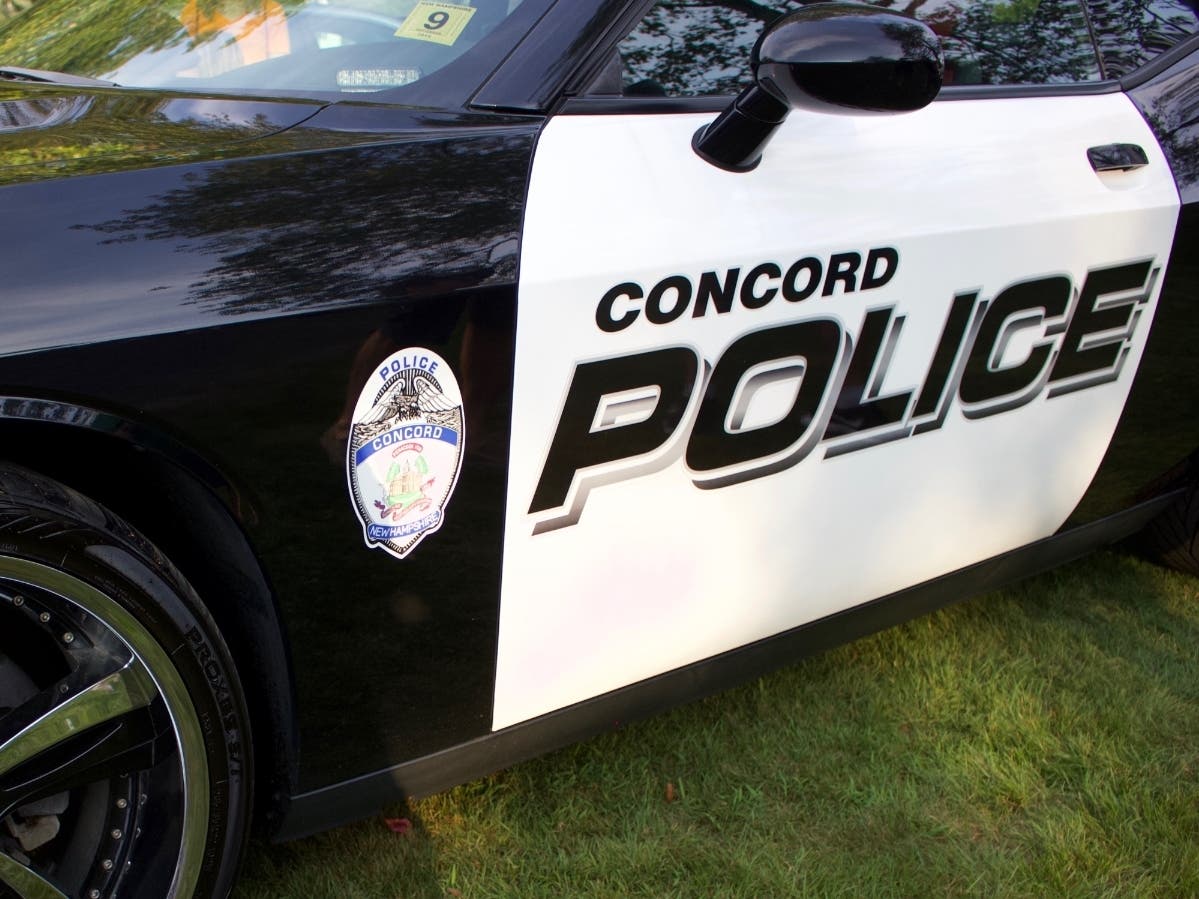
CONCORD, NH — Two state witnesses were called to the stand on the first day of what was expected to be a two-day trial against a Concord police officer, currently on unpaid leave, accused of assaulting resisting arrest suspects.
Concord Police Officer Richard Cobb, 41, of Prescott Valley, Arizona, faces two simple assault charges, accused of assaulting Blake Andrew Thomas-Haney, 38, a transient from Texas, who was reportedly drifting through Concord in Spring 2023. The reported assault took place outside Sal’s Pizza on Storrs Street after the suspect refused to comply after being found to be heavily intoxicated, over four times the legal limit.
Judge Dan St. Hilaire gave the jury instructions, reminding them Cobb was innocent until proven guilty, beyond a reasonable doubt. He also reminded them not to discuss the case amongst themselves or do any research independently.
Find out what's happening in Concordfor free with the latest updates from Patch.
Dan Jimenez, an attorney with the New Hampshire Attorney General’s Office, opened the prosecution’s case by showing a short video from a security camera outside the restaurant to the eight women and five men of the jury. One juror was excused for the day. Jimenez said the video purported to show Cobb slamming Thomas-Haney’s head into the sidewalk and then pushing him against a police SUV. He said state law allows police to use force when it is reasonably necessary to prevent escape or when there is a clear danger to the officers. But, Jimenez said, the evidence would show Cobb’s actions were unnecessary and criminal.
Thomas-Haney, Jimenez said, was homeless, drunk, and sitting outside Sal’s Pizza on April 1, 2023. After a passerby heard him muttering a comment about wanting to shoot an invisible person, police were requested. Concord Police Officer George Tarwo arrived at the scene first, followed by Cobb. Tarwo searched Thomas-Haney and found no weapons.
Find out what's happening in Concordfor free with the latest updates from Patch.
After a short period, the officers decided to take Thomas-Haney into protective custody due to his intoxication. Tarwo attempted to handcuff Thomas-Haney and was able to get one hand into the cuffs but was having trouble getting the second hand secured. Without provocation, Jimenez claimed, Cobb took Thomas-Haney’s head and threw it into the pavement.
A video was then shown to the jurors, with most not offering any reaction to the footage.
Also Read
- First Trial Of Concord Cop Accused Of Assaulting Suspects Underway
- Former Concord Police Officer Indicted On Simple Assault Charges
- Pickup Truck Rolls On Iron Works Road In Concord: Watch
Jimenez said a staffer at Sal’s “gasped when she saw this.”
While down on the ground, Thomas-Haney was handcuffed and searched again. During the second search, Jimenez said, the second assault occurred, with the homeless victim being pushed against a police SUV by Cobb.
Jimenez showed the jury a photo of Thomas-Haney, showing his injuries.
“There was no reason (for this),” Jimenez said, showing a picture of Thomas-Haney after being processed.
Jimenez said jurors would not hear Thomas-Haney testify “because the state can’t find him.” However, that did not mean his case should not be heard.
Cobb’s attorney, Eric Wilson, of Wilson, Bush & Keefe of Nashua, countered to the jurors that they were only shown a few seconds of video, which was only part of the story. The entire sequence of events of the resisting incidentwas around 40 seconds, he said. When Tarwo and Cobb were called to the scene, he said, it was to investigate threatening statements and a potential weapon. A portable breath test was request and administered to Thomas-Haney and he blew a 0.32, four times the legal limit, Wilson said. After being told he would be taken into protective custody, he repeatedly refused to cede to the officers.
Wilson said the jurors would see Cobb instructing Thomas-Haney to turn around so he would be taken into custody. While the officers believe there might be a firearm involved, Wilson called Tarwo’s search limited and not extensive but a “quick pat search.” There was also a bottle at the scene and in his pants, he said. Wilson called the section of video shown by the prosecution “somewhat limited.”
Wilson added, “It was 40 seconds from when they made physical contact to when Mr. Haney was thrown to the ground.”
Tarwo will testify Thomas-Haney interlocked his fingers to keep from being cuffed and the officers struggled to have him remove his fingers, Wilson said. He accused him of struggling to not be handcuffed by the officers. Cobb repeatedly requested, “Please let us cuff you. We don’t want to arrest you for resisting, so please let us cuff you,” Wilson said.
Part of the training, too, is to take suspects “to the ground,” Wilson said jurors would learn, in order to render them helpless so they can be detained. Cobb saw him refusing to cede, found it alarming, and decided to take him down via a leg sweep, he said.
Wilson then demonstrated the use of handcuffs to the jury and said, after Cobb noticed Thomas-Haney had an abrasion from being taken down, he called Concord fire and rescue teams to the scene. However, because the suspect was verbally abusive and physical during the handcuffing process, EMTs left and were unable to service him due to his belligerence.
Wilson then spoke about how the homeless man was held against the police SUV and explained how the move was used to keep the suspect off balance and to keep the officers from being injured by the suspects. The video, he said, would show Thomas-Haney against the cruiser as he kept pushing back and then snaps his head back toward Cobb’s face. Cobb then pushed him into the cruiser to prevent an injury to himself, Wilson said.
Tarwo Doesn’t Remember Cruiser Push
Tarwo, an officer for almost four years, who also served in the Marines, was questioned by Joe Fincham, another prosecutor.
Tarwo confirmed that he arrived first and then Cobb.
“It was a normal call in our minds,” he said.
After speaking with Thomas-Haney, Tarwo realized he was new to the community, and no one had had previous contact with him. The homeless man, though, was clearly intoxicated due to swaying on his feet and the odor from his breath. He could not immediately determine how impaired he was, so a breath test was requested. After several requests, he agreed, Tarwo said.
Fincham asked Tarwo to explain the process of taking someone into protective custody, but he was vague about why it was done, only saying it was what he was trained to do and was policy. While he could not remember the exact reading of the breath test, it was very high, he said, in the 30s. Since he could not find a sober party to be released to, he needed to be taken to the county jail.
Fincham said Thomas-Haney had a Missouri ID and he was homeless. Tarwo said a lot of homeless people are coming to New Hampshire and his belongings were nearby.
When Cobb was with him, he, too, was explaining Thomas-Haney was not under arrest but could not be left alone without a sober party. Tarwo confirmed Thomas-Haney was resisting, and they were unable to get him into handcuffs, with Cobb trying to de-escalate the situation. When he would not cede, Cobb performed a leg sweep, knocking the homeless man to the ground, and they tried to get him into the cuffs.
Tarwo said, “We were fighting with him on the ground,” with the suspect interlocking his fingers. But, eventually, they were able to get him into handcuffs, lifted him up, and brought him to the cruiser. Another, more extensive search was performed, and a liquor bottle and miscellaneous items were found but no weapons.
After realizing Thomas-Haney had an abrasion on his face, Concord fire and rescue teams were requested. But Tarwo said he was not respectful to the firefighters and EMTs.
“Fire tried to check him out, but he was just being … he just wasn’t letting them do their job,” he said.
Firefighters later left since Thomas-Haney was not being compliant, he said.
Tarwo said Thomas-Haney was taken to the Merrimack County Jail, but they would not accept him without a medical clearance. So, he was driven to Concord Hospital and then returned to the jail.
After being dropped off at the jail, Tarwo put together a use of force form, noting the injury to his face during the takedown.
When asked if he had submitted such a form before, Tarwo said “Yes,” and then changed his answer to “No.” Cobb also completed the form, and Tarwo said he took verbiage from Cobb’s report and “applied it to mine.”
When Fincham asked Tarwo about the verbiage, Wilson objected and later, Fincham withdrew the question.
Fincham then asked if there was a use-of-force report for the cruiser, but Tarwo did not recall. He also did not recall the cruiser incident. Tarwo said there were gunshot sounds due to a car show, and he turned away during the shove into the police SUV.
When asked if Thomas-Haney was seen as a danger, Tarwo said he did not. Officer Paige Salmon, he said, retrieved the security video later from Sal’s.
While Tawro stayed on the stand, Fincham handed out photos from the scene to the jurors. The attorney asked him about his height and build, and he said Thomas-Haney was bigger than he was. Tarwo then said he was about 5 feet, 10 inches. Thomas-Haney was taller but did not have a heavy build.
Under cross-examination, Wilson asked about the officers arriving at the scene and their heightened concern due to the initial call. It turned out that Thomas-Haney had an active warrant, Wilson said, and Tarwo confirmed.
When asked about his demeanor, Tarwo said, at first, he was fine.
“We had a good conversation,” he said.
But when they realized he was highly intoxicated and needed to be taken into protective custody, things changed, he said.
Tarwo confirmed that Thomas-Haney repeatedly refused to turn around when asked.
Wilson then asked Tarwo to approach him and went through several processes with a pair of handcuffs while asking questions of Tarwo and referring to the video. He asked about the cuffs used in Concord — a cuff with a hinge and not a chain, which is more challenging to secure due to the tightened spread between a suspect’s arms.
Wilson also asked about the leg sweep and struggle afterward. Tarwo said Thomas-Haney was on the ground for quite some time and continued to struggle.
Tarwo was asked about the “ask, tell, make” process training technique to prevent officer injuries by asking the suspect to comply, telling them to cede, and then forcing them into handcuffs. He confirmed the leg sweep by Cobb and called it the proper process. When asked about handcuffing and how it could be done in a few seconds and not 40, Tarwo said officers were trained to take down suspects if they did not comply.
When shown the video of Cobb pushing the suspect into the cruiser, Tarwo was asked if it was pursuant to training, and he said, “Yes.”
Fincham then redirected and pointed to testimony from an interview with Todd Flanagan, an investigator with the attorney general’s office, on how he did not see Thomas-Haney as a danger and asked to look at the prior comments. He said he did not recall but did say what he said in the transcription, noting it was 19 months ago. Fincham asked, Has your memory gotten better with time?
Fincham also asked how Tarwo did not realize the suspect’s fingers were interlocked. Tarwo said, No, he did not remember.
The attorneys were allowed counter-questioning, with Fincham asking whether Tarwo used information from the report for his, and he confirmed that. St. Hilaire also jumped in to tell the jury Fincham was speaking about Cobb’s report and not Wilson’s.
Second Witness: ‘I Thought He Was Going To Kill Him’
Jurors also heard from another witness, Brooke Bartlett of Webster, who worked at Sal’s at the time of the incident.
She was asked about her current employment in Hooksett and her previous work at Yellowstone in Wyoming. She said she spent about three years at Sal’s. Bartlett said she was honestly scared when she saw the leg sweep.
“I thought he was going to kill him,” she said.
Wilson objected to the statement, calling it speculative.
St. Hilaire agreed and sustained the comment.
“That is speculation,” he said.
Jimenez did not ask any other questions.
Wilson asked her if the officers had been speaking with Thomas-Haney for a long time, and she said they had. When asked if the officers were men, she said they were. When asked if the officers were both white, she said yes, not realizing or remembering Tarwo is Black.
Wilson asked no further questions.
St. Hilaire dismissed the jury and told them not to watch news reports or research the case.
Cobb has been on unpaid leave since May 2023 after he was accused of assaulting a man and a woman during two different incidents in March and April 2023. The current trial is the first of two trials. A second trial, where a woman accused Cobb of assaulting her when she resisted demands to stop gathering evidence at a crash scene on Iron Works Road in March 2023, is scheduled to begin in March.
Do you have a news tip? Please email it to tony.schinella@patch.com. View videos on Tony Schinella's YouTube.com channel or Rumble.com channel. Follow the NH politics Twitter account @NHPatchPolitics for all our campaign coverage.
Get more local news delivered straight to your inbox. Sign up for free Patch newsletters and alerts.