Politics & Government
Flock Around And Find Out: GOP Lawmaker Wants Surveillance Ban
Roundtable participants said NH currently has more protections than most states, undergirded by a culture of protecting individual liberty.

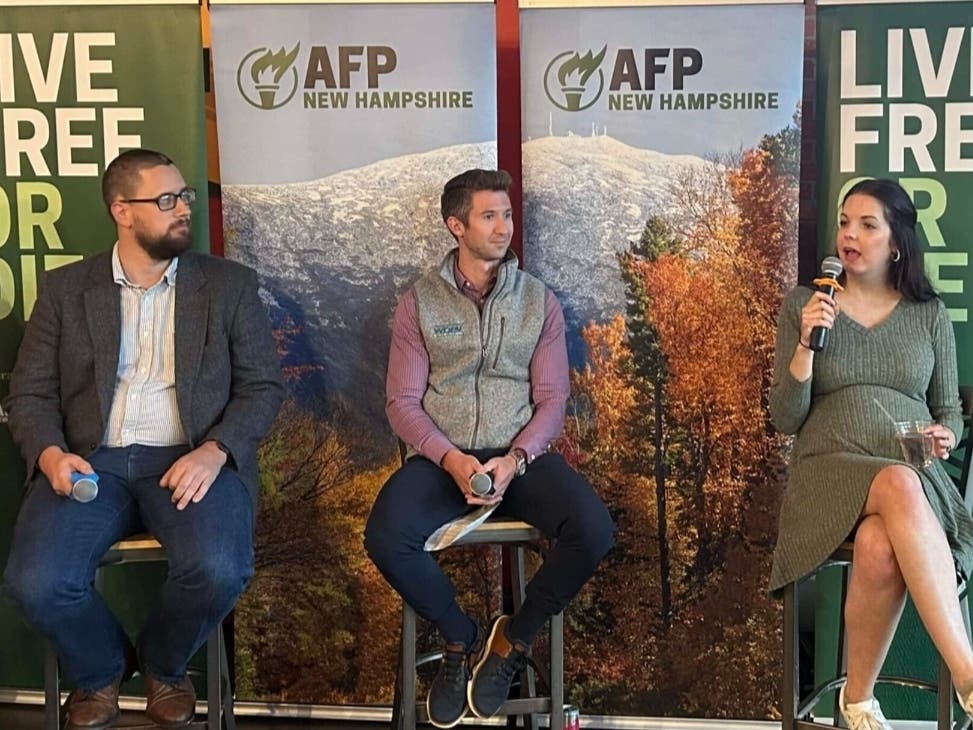
There’s not much room for Big Brother in the Live Free or Die state. But the spread of surveillance systems like Flock cameras, combined with the rise of artificial intelligence, has Granite State lawmakers and liberty activists looking for potential problems ahead.
During a Sept. 15 roundtable hosted by Americans for Prosperity of New Hampshire, state Rep. Michael Granger (R-Milton Mills) said that he will ensure that the state’s constitutionally mandated right to privacy is protected by submitting legislation to ban Flock cameras and enhance the state’s highway surveillance statute.
Find out what's happening in Manchesterfor free with the latest updates from Patch.
“We’re trying very hard with the anti-Flock [camera] bill to target Flock cameras and the abuse of some of these surveillance technologies without going after hidden cameras, closed-circuit cameras, or any local sort of anti-AI shoplifting software.” Granger told the roundtable.
Granger shared that the proposed bill has earned some cosponsorship offers from Democrats, many of whom want tougher restrictions on data able to be collected using recording devices by private companies, such as supermarkets.
Find out what's happening in Manchesterfor free with the latest updates from Patch.
Roundtable participants acknowledged that New Hampshire currently has far more protections than most other states, undergirded by a culture of protecting individual liberty.
For example, the state has some of the nation’s most restrictive rules on government surveillance of motorists, generally barring state and local agencies from using cameras to identify drivers or vehicle owners on public roads.
Under RSA 236:130, police and municipalities generally cannot install cameras that automatically identify motorists and issue speeding or red-light tickets. Officers may still use radar or lidar, stop vehicles and manually check license plates. The New Hampshire House rejected a 2025 proposal that would have authorized municipal speed and red-light cameras.
Automated license plate readers are legal, but state law sharply limits their use. Police may scan for stolen vehicles, wanted or missing people, outstanding warrants and vehicles connected to criminal investigations. But police must permanently delete plates that do not produce an authorized alert within three minutes. A license plate reader alert alone also does not necessarily provide reasonable suspicion for a traffic stop, and officers must attempt to verify the plate and the underlying information.
Flock cameras made by surveillance technology provider Flock Safety capture images of vehicles that pass the cameras, which are usually mounted on poles, highways, or near neighborhood entrances.
Ross Connolly, AFP Regional State Director, said Flock Safety’s database should require a search warrant to be used and be transparent to the public.
“The biggest answer for this is the system that we’ve had forever,” Connolly said at the roundtable. “If you have identified someone that could be involved in a crime, get a warrant from a judge. If you have the evidence, you should get a warrant and that includes third-party data.”
“It should be a completely open, transparent database for the public to be able to see so you can directly tie it to a warrant or a missed toll,” Connolly added. “Right now, in most places across the country, it is hidden completely from the public.”
Granger’s legislation is a step in the right direction to bolster New Hampshire’s “right to privacy” with legislation, Connolly said.
Though New Hampshire is one of four states with a freestanding constitutional privacy clause, gray areas remain involving artificial intelligence, private databases and government access to information collected by third parties.
In a 2019 case involving proposed surveillance cameras around Manchester City Hall, a Superior Court judge ruled that installing cameras capable of recording motorists would not, by itself, violate state law. However, the judge said a government employee’s use of the footage to recognize a vehicle or occupant could violate RSA 236:130 and predicted such identification would be “virtually inevitable.” The court nevertheless declined to block the cameras.
The issue flared up again this week when Moka Pot co-owner Nick Carnes said Manchester police investigating vandalism at the coffee shop reviewed footage from “one of those new traffic cameras.” State law allows surveillance conducted on a case-by-case basis to investigate a particular offense.
Granger’s legislation, Connolly said, could be a step toward making the law around surveillance technology use in New Hampshire clearer.
“We have a constitutional right to privacy here in New Hampshire, but it’s just on paper now. There’s nothing to actually back it up like a court precedent,” Connolly said. “Elected officials should look towards creating guardrails for government use of surveillance and backing up that right to privacy with actual hard legislation.”
This story was originally published by the NH Journal, an online news publication dedicated to providing fair, unbiased reporting on, and analysis of, political news of interest to New Hampshire. For more stories from the NH Journal, visit NHJournal.com.