Politics & Government
Manchester Breaks Tax Cap, Mayor Ruais Says Alternative Was Worse
Manchester Mayor Jay Ruais now finds himself trying to explain a tax-cap override to the same voters he promised to protect from high costs.

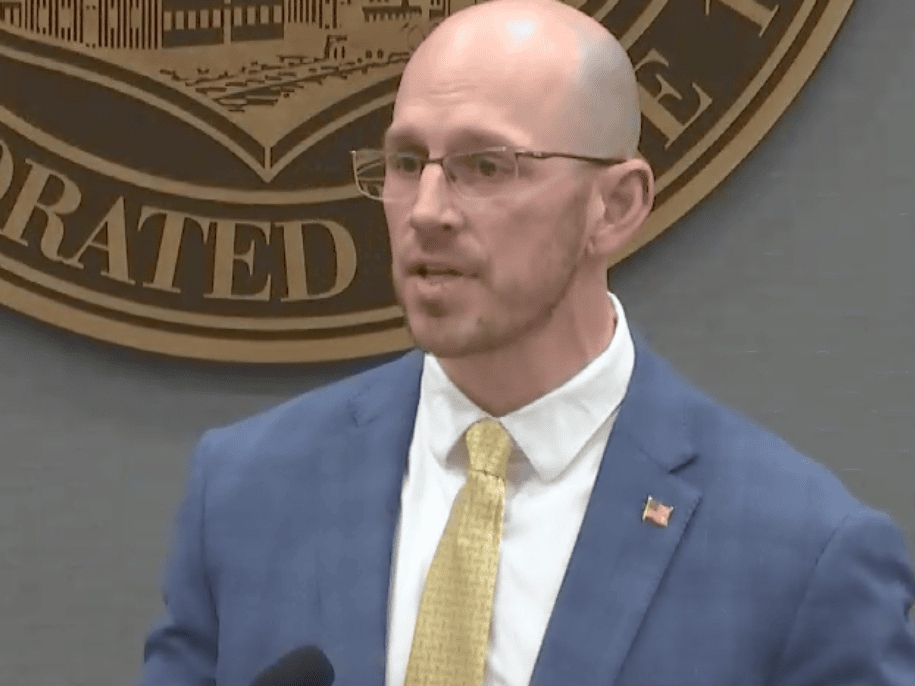
Saying he refused to play “performative politics” with his veto pen, Manchester Mayor Jay Ruais allowed a $453 million Manchester budget to pass Tuesday night that overrode the city’s tax cap.
Instead, Ruais told NHJournal he faced the harsh financial realities roiling the city’s budget and fought to keep the fiscal damage to a minimum.
Find out what's happening in Manchesterfor free with the latest updates from Patch.
“Nobody is happy with the final result,” the Republican mayor said of the budget.
The board adopted a budget put together by Alderman At-Large June Trisciani and Ward 9 Alderman Jim Burkush, which increased the city budget by more than $8 million and the school district budget by $3.5 million.
Find out what's happening in Manchesterfor free with the latest updates from Patch.
“It’s fair to say that there is not one person that is satisfied with this budget for many reasons,” Trisciani said Tuesday night, according to Manchester InkLink. “However, the proposal that is put in front of you took a lot of hours, a lot of time and a lot of discussion with our department heads to get us here today. That is the duty of an alderman. That is our job. That is why you put us here.”
Overriding the tax cap requires the votes of 10 aldermen. Ruais pointed out he could have vetoed the override, but it also takes 10 votes to override a mayor’s veto. With the end of the 2026 fiscal year looming on June 30, Ruais said there was little choice but to allow the override to pass.
“Governing requires leadership, and I’m not going to play performative politics,” Ruais said.
If no budget is passed before the end of the fiscal year, Manchester’s default budget would not cover anticipated costs and would force the city to dip into reserve funds, Ruais said. That could result in Manchester’s credit rating being downgraded.
The default budget also would have meant the city could not fund a new contract with the Manchester Police Department, a long-standing priority for Ruais. MPD currently has 30 vacancies, and another 18 officers could retire at any time. Without a new contract, Ruais said, it would be impossible to recruit new hires.
“As a city, we needed to fund our police — addressing recruitment and retention issues — and protect our credit rating. Moving forward, I’m going to continue to fight to reduce the cost of housing, childcare, and implement policies like the hiring of our Independent City Auditor, eliminating and merging departments, while centralizing purchasing, and payroll, in order to save taxpayers’ dollars,” Ruais said.
Not good enough, said state Sen. Victoria Sullivan, who represents Manchester.
“Last night, the Manchester Board of Mayor and Alderman passed a tax-cap-busting budget that will raise the property taxes of Manchester residents by over 11%, according to most calculations,” Sullivan posted on social media. “They betrayed their constituency.”
“I am just heartbroken for my community this morning. So many families will be impacted,” she added.
Ruais was elected in 2023 promising to make the city livable, affordable, and safe after years of Democratic Mayor Joyce Craig overseeing tax increases and rising crime and homelessness.
During his first term, Ruais and the Board of Aldermen passed “Goldilocks” budgets, increasing some spending but not as much as the school district and some unions wanted. That kept the new spending $10.2 million under the tax cap, which Ruais says saved the median household $234 in tax increases.
Ruais fought for months to keep the budget within the tax cap, but told NHJournal he had little choice as the budget cycle progressed. He presented two budgets to the Board of Aldermen this cycle that would have kept spending under the cap, but his proposals became unworkable when the city learned of new increases in health insurance costs, coupled with about $10 million in lower revenue projections.
Not this year.
The tax impact is still not entirely clear. Manchester is currently undergoing a revaluation, and it is anticipated the city’s property value will go from $13.4 billion to more than $18.9 billion. That new valuation will be reflected in the tax rates set by the state later this year, Ruais said.
Information presented to the Board of Mayor and Aldermen detailed the increasing costs of health insurance, overlays and CGL, with a nearly $10 million loss in revenue projections and contract negotiations made this a particularly challenging budget year.
Now, Ruais finds himself trying to explain a tax-cap override to the same voters he promised to protect from higher costs.
His argument: The alternative was worse.
“Like I said, nobody is happy,” he said.
This story was originally published by the NH Journal, an online news publication dedicated to providing fair, unbiased reporting on, and analysis of, political news of interest to New Hampshire. For more stories from the NH Journal, visit NHJournal.com.