Community Corner
How Do Droughts Impact NH Forests? UNH is Finding Out
Scientists have launched a multi-year study in an effort to protect 84 percent of New Hampshire's land.


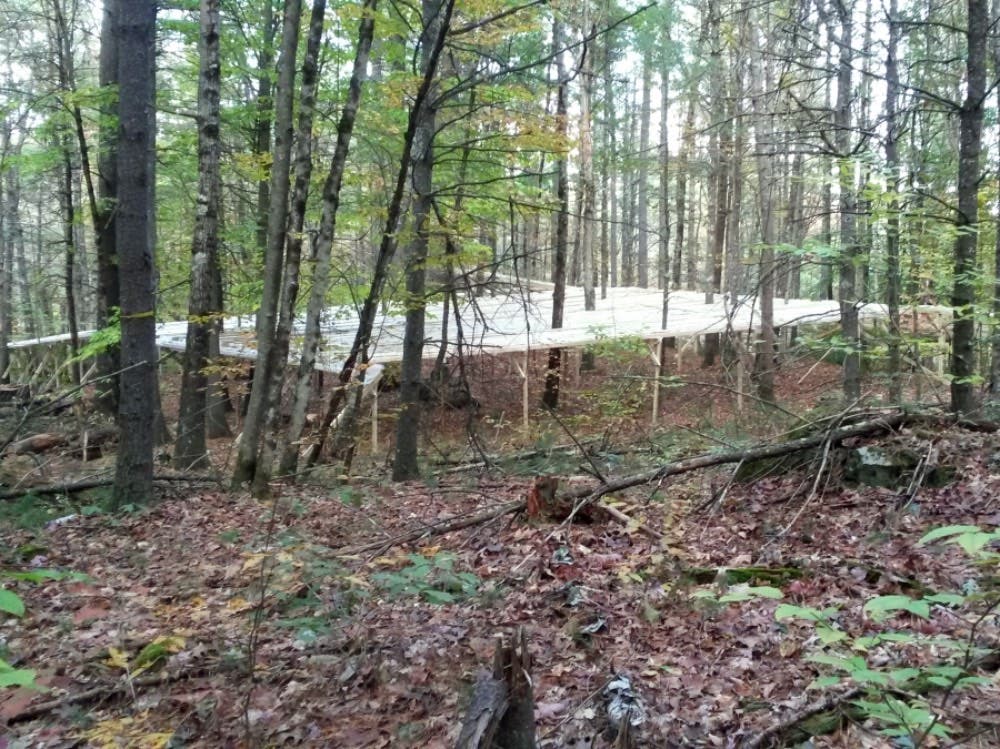
DURHAM, NH - Researchers with the NH Agricultural Experiment Station at the University of New Hampshire have launched a multi-year research project to investigate how droughts may impact Northern forests, which play a critical role in protecting and regulating water resources.
“Forests in the Northeast provide critical hydrologic benefits to society, including clean and reliable drinking water, flood control, and regulation of stream flow for wildlife and human populations," according to experiment station researcher Heidi Asbjornsen, associate professor of ecosystem ecology. "Climate change is already causing an increase in the frequency and intensity of extreme rainfall events, including both intense storms and droughts. This trend is expected to continue in the future, and will likely have important consequences for plant growth and mortality, pest outbreaks, and the capacity of forests to provide hydrologic benefits to society. This research aims to improve understanding about the impacts of climate change and altered rainfall patterns on forest health, productivity, and hydrology. The results will provide crucial information to citizens, policy makers, and managers needed to make effective decisions for ensuring the sustainability of forests and water resources in the future."
According to the NH Division of Forests and Lands, New Hampshire is nearly 84 percent forested, and the forest’s direct impact on the economy of the state is $2.26 billion annually. This research will enhance understanding of how forests will respond to anticipated climate change-induced alterations in rainfall and the influence it may have on the ecosystem services, quality of life, and economic security. The research is particularly important to foresters, land managers, and landowners.
Find out what's happening in Portsmouthfor free with the latest updates from Patch.
Researchers are focusing on two tree species, the eastern white pine and northern red oak. According to Cameron McIntire, a doctoral student in Asbjornsen’s lab whose dissertation research focuses on the experiment station-funded project, these trees are common to New England forests and represent significant economic and ecological value in the region.
Read the full press release on the UNH website.
Find out what's happening in Portsmouthfor free with the latest updates from Patch.
Caption: Experiment station scientists plan to remove 55 percent of incoming precipitation at this throughfall structure at the Thompson Farm. Credit: UNH EOS
Get more local news delivered straight to your inbox. Sign up for free Patch newsletters and alerts.