Health & Fitness
Health Care Compact a Healthy Alternative to Federal Controlled Health Care
Recently opponents have sensationalized and pushed outright mistruths about legislation to create an interstate Health Care Compact to deliver critical health care services to our seniors.
Recently opponents have sensationalized and pushed outright mistruths about legislation to create an interstate Health Care Compact to deliver critical health care services to our seniors.
Few believe that there is no role for government. And while Republicans do believe in a smaller and less intrusive government, we also believe in a safety net for our most vulnerable. That includes our seniors. The issue of Medicare isn’t whether or not it should exist but how we fix the mess it has become. Currently, Medicare faces an unfunded liability of $38.6 trillion, according to the Medicare Trustees report recently released. That’s an astounding $328,404.43 in extra taxes for every American family of four.
But critically substantive entitlement reform will never be achieved if every option put forth is met with outlandish partisan claims designed to scare seniors. Increasing patient choice in Medicare would help save Medicare from bankruptcy. So would passing House Bill 1560 to establish an interstate Health Care Compact in New Hampshire.
Find out what's happening in Salemfor free with the latest updates from Patch.
Compacts are voluntary agreements between two or more states consented to by Congress. They have been used throughout American history to allow states to work together in important policy areas. Authority for compacts was established by the United States Constitution and more than 200 such agreements are currently in effect. Importantly, compacts cannot take effect without the federal government granting the authority and with the state opting to administer the policy area.
So why explore a compact for health care?
Find out what's happening in Salemfor free with the latest updates from Patch.
If substantive reform is not achieved Medicare will hemorrhage into bankruptcy. Despite this grave threat, Congress has failed to deliver such reform. The sad truth is Medicare, and the political system charged with overseeing it, are badly broken. The United States Senate hasn’t been able to pass a budget in three years or work with Congress to bring a final resolution to the highway funding bill. These failures give little confidence that Washington will be able to address an issue as sensitive and colossal as health care reform.
So the time has come for a discussion about how New Hampshire can provide critical services in the event that Congress fails to reform Medicare and the program slides into insolvency. The Health Care Compact is one option to consider.
At its most basic level, the Health Care Compact is a petition to the federal government asking them to allow states the opportunity to take federal health care funding in the form of block grants and craft state specific programs to replace or supplement some aspects of the federally administered programs.
We believe that, as a state, we can do better providing for these programs because a government closest to the people governs best. The Health Care Compact provides an opportunity to do just that by restoring authority and funding for health care regulations to states. Health care policy is about who and what is covered and House Bill 1560 focuses on who decides, without dictating the type of system to adopt thereby allowing state health care policies to be personalized and localized to meet the needs of the people.
Joining the compact itself entails no financial obligation. Further participation by choosing to administer a state-based program involves limited financial risk and the potential for significant savings.
New Hampshire should consider moving forward cautiously. We should petition the federal government to give states authority to enter into a health care compact if they choose to exercise such power and wait to see what other states do. Even though all fifty states would be granted the choice by Congress, only six to eight are expected to initially participate, amounting to a series of very different pilot programs and innovation that could teach us more.
New Hampshire may well not yet be up to the task but other states say they are. Texas, for instances, likely would try a uniquely market-oriented approach, while Vermont may create a single-payer plan.
Allowing other states to pilot innovative programs will help educate us all. That’s the only commitment we make by joining the compact. Based on these experiences, New Hampshire could consider moving forward with our own reforms based on best practices seen in other states.
Most importantly, it forces state leaders to begin thinking about how they would react and ensure that there would be no loss of coverage in the event that reform is not achieved and the programs become insolvent. No one is trying to eliminate Medicare or Medicaid. This is merely one option to fix the mess.
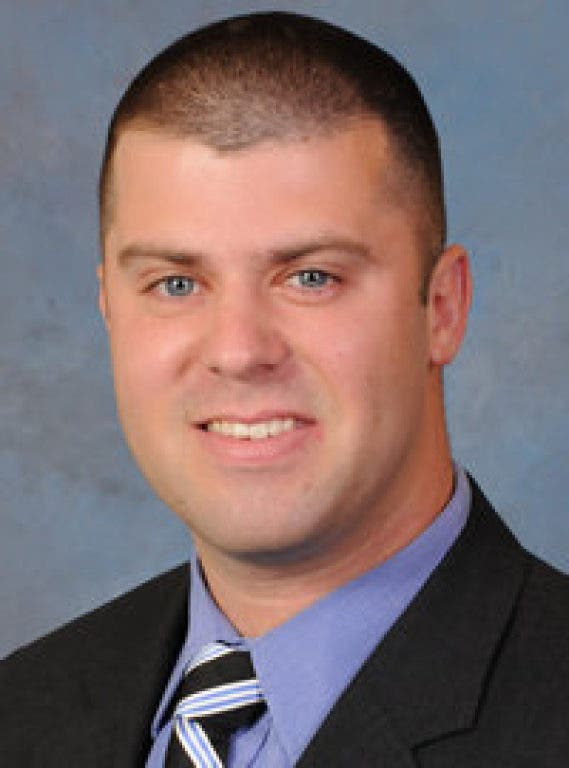
Chuck Morse, of Salem, is Chairman of the New Hampshire Senate Finance Committee. D.J. Bettencourt, of Salem, is Majority Leader of the New Hampshire House of Representatives.