Politics & Government
NJ Tax Break Funnels $190 Million Toward Millionaires, Report Finds
Researchers say reforming New Jersey's Alternative Business Calculation could recover more than $120 million in state revenue.


NEW JERSEY— A New Jersey tax deduction created to help business owners offset losses now disproportionately benefits the state’s wealthiest households and costs nearly $190 million annually, according to a report from New Jersey Policy Perspective.
The report examines the state’s Alternative Business Calculation, known as the ABC deduction, which allows filers with certain types of business income to use losses in one category to offset profits in another, lowering their personal income tax bills.
The report found more than 60 percent of the deduction’s benefits now go to fewer than 0.6 percent of New Jersey tax filers, all earning more than $1 million annually.
Find out what's happening in Across New Jerseyfor free with the latest updates from Patch.
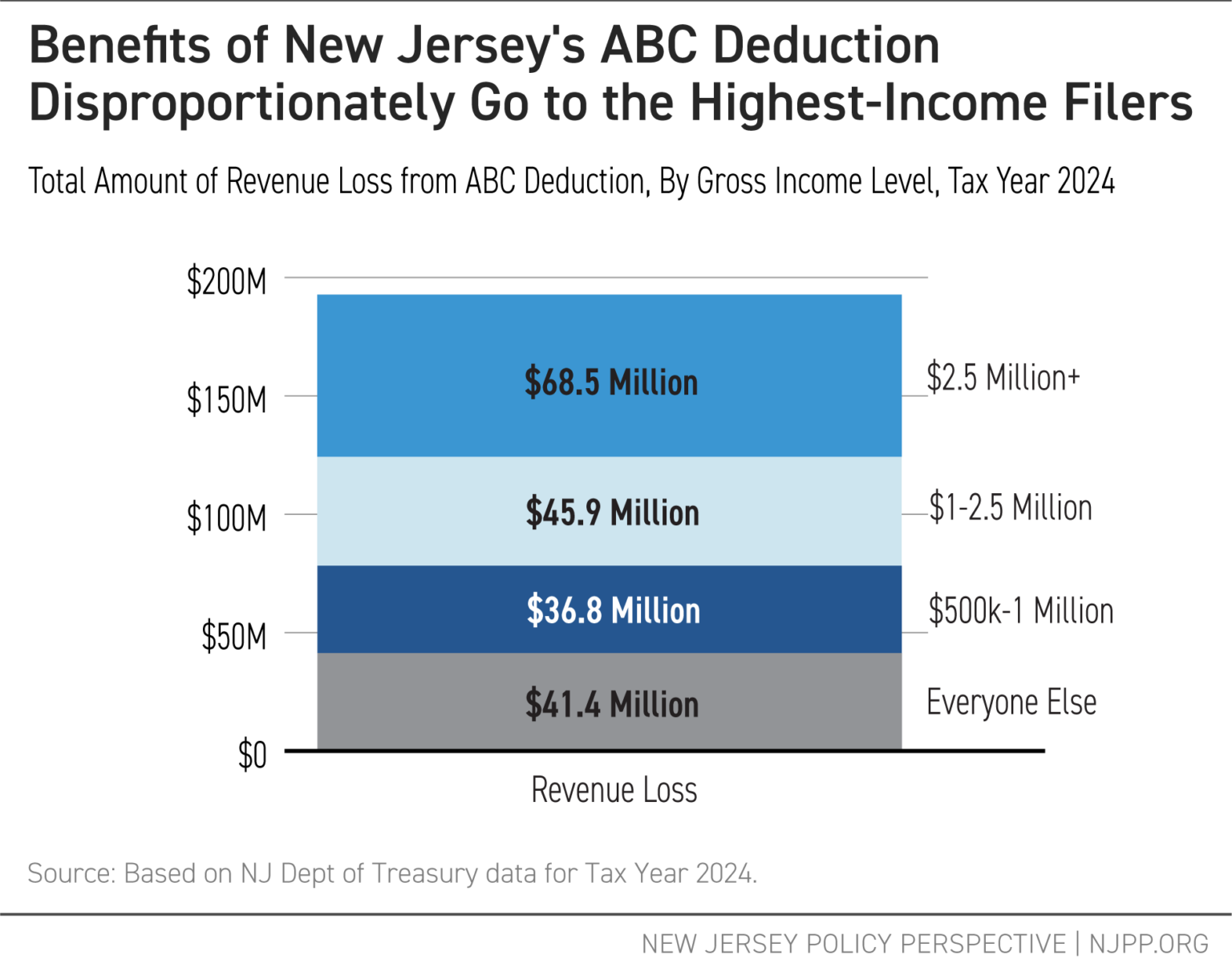
Filers making more than $2.5 million now receive more in ABC deduction benefits than all households earning less than $500,000 combined, according to the analysis.
“This deduction was never designed to be a tax shelter for millionaires, but that’s exactly what it has become,” Peter Chen, a New Jersey Policy Perspective researcher, said.
Find out what's happening in Across New Jerseyfor free with the latest updates from Patch.
Chen also recommend shortening the carryforward window to one or two years and increasing audit scrutiny of pass-through business income, which the Government Accountability Office has previously identified as vulnerable to noncompliance.
Researchers found the deduction’s cost to the state grew from $92.6 million in 2016 to $192.6 million in 2024, an increase of 108 percent.
During the same period, all other gross income deductions and exemptions combined grew by roughly 49 percent.
Gov. Mikie Sherrill proposed changes in her Fiscal Year 2027 budget that would cap the deduction at $1 million in income and reduce the benefit by half for households earning between $500,000 and $1 million.
“These tough choices will help us redirect funding to serve people’s greatest needs and to make government run as intended,” Sherrill said at a news conference in March.
According to the report, the proposal would recover an estimated $114 million in revenue, with an additional $18 million generated through reduced benefits for upper-income households below the cap.
Nicole Rodriguez, president of New Jersey Policy Perspective, said the changes would leave most residents unaffected.
“Reforming the ABC is a straightforward way to make the tax code fairer and shore up state finances at the same time,” Rodriguez said. “The vast majority of New Jersey business owners would see no change at all.”
Business groups warned the proposed changes could affect smaller companies operating on narrow margins.
Mike Egenton, chief government affairs officer for the New Jersey Business and Industry Association, said revenue thresholds do not always reflect profitability for business owners with fluctuating income or high operating costs.
“Once you get down to the lower numbers, the lower digits, you’re really jeopardizing a small business owner because they don’t have the resources,” Egenton said.
The findings come as lawmakers consider two broader tax proposals aimed at high earners and large corporations.
Assembly Bill 5121 would increase income taxes on the state’s highest earners, defined as those making more than $1 million annually..
“New Jersey cannot afford to leave billions on the table while so many people struggle to afford the basics,” said Eric Benson, coalition manager for For the Many. “New Jerseyans shouldn't foot the bill for an economy that works only for multinational corporations and ultra-wealthy households — while our communities are asked to do more with less.”
Senate Bill 4204 and Assembly Bill 5039 would require multinational corporations to use worldwide combined reporting to calculate taxable income in New Jersey.
The method would require companies to report global profits and apportion them based on activity in the state, a change supporters say would limit profit shifting to low-tax jurisdictions.
The Alternative Business Calculation became law in 2011 to address limits in how New Jersey treated business losses across different forms of income.
Under the provision, filers can deduct 50 percent of losses across categories including sole proprietorships, partnerships, rental income and S corporations.
Get more local news delivered straight to your inbox. Sign up for free Patch newsletters and alerts.