

As mating season for a number of New Jersey’s owl species approaches, we’re more likely to hear their haunting calls.
Of the eight species of owls that live or fly through New Jersey at one time or another throughout the year, the barred, screech and great horned are probably the most widespread and easily recognized.
What they are: Barred owls, named for the stripes or bars on their buff-colored undersides, have one of the most easily identified calls of the bird world. The eight-part cry – often very loud – sounds a little like “Who cooks for you? Who cooks for you-all?” The barred is a large owl, with big white facial disks outlined in brown surrounding its dark brown eyes and yellow bill. Bars run horizontally on its upper breast and vertically on its lower breast.
Find out what's happening in Barnegat-Manahawkinfor free with the latest updates from Patch.
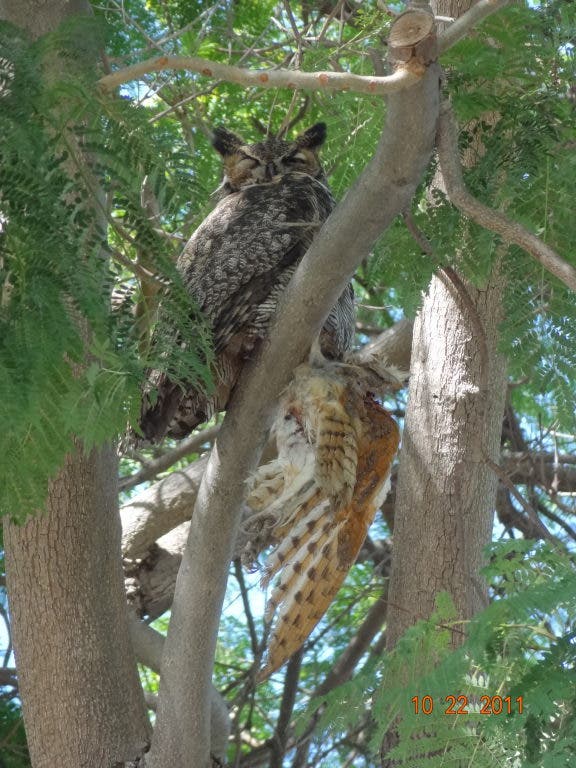
Great horned owls are also oversized, but are a more consistent color overall – usually brown, but they may be a little reddish or gray. Their most recognizable characteristic is their ear tufts, the two horn-like protrusions of feathers on their heads. The loud, low call of a male great horned is what many people imagine when they think of an owl’s hoot. It sounds like a melancholy “hoo-hoo hoooo, hoo, hoo.”
Eastern screech owls, to the uninitiated, sound less like owls and more like caterwauling ghosts. These tiny owls – no taller than 10 inches – have a trembling, descending shriek-whistle. If you’re lucky enough to catch a glimpse of one, you’ll see a stocky little owl with gray-brown feathers and prominent ear tufts.
Find out what's happening in Barnegat-Manahawkinfor free with the latest updates from Patch.
Where and how to find them: The best way to hear these nocturnal owls is to take a walk in the woods or down a rural road after sundown. With owls’ mating season approaching, the birds will be stepping up their nighttime noises. Try putting a red filter on your flashlight (a red plastic cup will do) to protect your night vision.
Barred owls set up shop in mature wetland woods, and you can often find them in stands of large Atlantic white cedar. Screech owls need only small tree cavities to nest in, and can be found in a wide range of forest types. Great horned owls are the least picky, and will hunt and roost in a huge range of habitats, from backyards to city parks to deep woods.
While some carry along recordings of owl calls to try to initiate a territorial response, the practice is frowned upon by many experts. Repeatedly playing the sound of possible rival relentlessly hooting can unsettle owls enough to cause them to relocate.
Want to go owling with a guide? Sign up for the Ocean County Parks Department’s next Owl Prowl, set for 7 to 9:30 p.m. Saturday, March 3 at Cloverdale Park in Barnegat.
Why bother: While winter might wipe away a lot of lovely sights and sounds from our natural areas, the stark landscape and relative quiet makes it even easier to see and hear some fascinating, reclusive owls.
Get more local news delivered straight to your inbox. Sign up for free Patch newsletters and alerts.