Politics & Government
NRC Continues to Push for Groundwater Protection at Nuclear Power Plants
Oyster Creek Generating Station participates in industry initiatives to minimize groundwater contamination

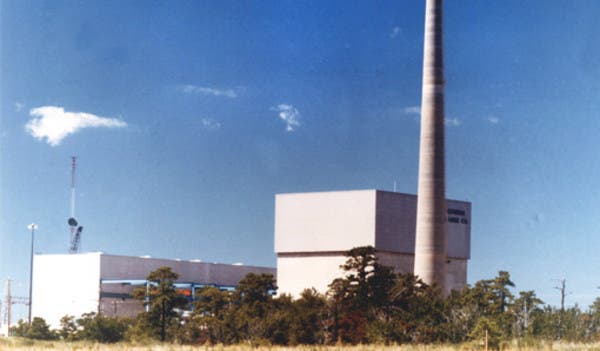
The Nuclear Regulatory Commission voted in favor of continuing to enforce existing regulations involving groundwater protection at nuclear power plants, including Oyster Creek Generating Station, spokesperson Neil Sheehan said.
The NRC has been monitoring the effectiveness of ongoing industry initiatives in this area, including a Groundwater Protection Initiative, a Buried Piping Integrity Initiative and an Underground Piping and Tanks Initiative, Sheehan said.
“These efforts have already yielded results, including the installation of sentinel wells to detect the presence of contamination in groundwater at plant sites and a decision by Exelon to move buried piping at the Oyster Creek nuclear power plant above-ground for improved access and monitoring. More work remains to be done via these initiatives,” he said.
Find out what's happening in Barnegat-Manahawkinfor free with the latest updates from Patch.
Over the years, Oyster Creek experienced leaking underground pipes, which led to groundwater contamination, Sheehan said.
In April and August 2009, the Groundwater Task Force reported that two unrelated pipes had leaks. Sampling results in April indicated the water was contaminated by tritium. In both instances, the pipes were replaced.
Find out what's happening in Barnegat-Manahawkinfor free with the latest updates from Patch.
“The team did not identify any radiological public health and safety consequences associated with the leaks, or violation of NRC requirements or standards. Although tritium contaminated groundwater was detected on-site in the vicinity of the leaks, this condition did not, nor was it expected to, result in exceeding any regulatory dose limit to the public,” Sheehan said.
Sheehan explained that if an adult were to swim in the discharge canal every day, the indicated maximum projected annual dose of contamination would be .000029 millirems. The average American is exposed to about 620 millirems of radiation each year from natural and man-made sources, he said.
Since the leaks, Exelon Nuclear has partaken in the industries initiatives, Sheehan said.
“They embarked on this initiative to move the most vulnerable pipes from underground. They put them in concrete enclosures to be monitored more easily and any leakage would be captured and treated. Exelon committed quite a bit of money to making that happen,” he said.
The project was completed towards the end of 2010, Oyster Creek spokeswoman Suzanne D’Ambrosio said.
The task force has analyzed the existing groundwater contamination and there is no risk to the public or the workers, Sheehan said.
The groundwater is not used as a source of drinking water, he said. The water migrates to the plant’s discharge canal where it mixes with the millions of gallons of water permitted to flow through.
The tritium is virtually undetectable and the path of the groundwater allows it to emit better and dilute, he said.
But Janet Tauro, Chair of the Board of Directors for the New Jersey Environmental Federation and a member of Grandmothers, Mothers, and More (GRMMES), feels otherwise.
“We are exposed to low levels of radiation from that plant on a daily basis and the National Academy of Sciences says no dose of radiation should be considered safe,” Tauro said.
“It's not just tritium. You have other radioactive isotopes. You have a radioactive cocktail," she said. "I would tell [the NRC] to go pour a tall glass of water [from the discharge canal] and drink it.”
The levels of tritium releases after the leaks at Oyster Creek were over 500 times the level of allowable tritium, she said.
The Department of Environmental protection allows 20,000 picoCurie per liter. The NRC does not require plants to report tritium detections unless it hits that level, Tauro said.
Over the years, Exelon would do readings of tritium levels at Oyster Creek, often hitting over 17,000 picoCurie, she said.
“They would just miss that limit of having to report the presence of tritium. That is just irresponsible. When it enters into the water, it enters the food chain. Eventually that water flows into the Barnegat Bay and it will enter the food chain,” she said.
She pointed out that when there was a tritium leak at the Fukushima nuclear plant in Japan, radioactive water entered the Pacific Ocean, which is the real concern surrounding groundwater contamination.
The state’s standards are one of the highest in the country, she said. California requires plant’s to report levels of 5,000 picoCuries and Canada is adopting the same standard.
“It’s a big difference. We would like to see the standard rewritten,” she said.
The industries initiatives are failing miserably, she said.
“Look at what happened at Oyster Creek. Those pipes were not inspected as a condition of relicensing. Those pipes have burst,” she said.
The pipes had been previously identified by an independent contractor as “at risk,” she said. In the 1990s, the pipes were identified as thinning and pinpointed as pipes that needed to be replaces with galvanized stainless steel.
Relicensing was in 2009 and Exelon replaced the pipes after the fact, she said.
“If the NRC is going to keep the rules that they have in place going, then they need to really seriously reconsider that and have a much better program of evaluating the pipes,” she said.
The inspection and maintenance of buried piping and other areas are still under way by consensus standards organizations such as the American Society of Mechanical Engineers (ASME), Sheehan said.
The NRC will work with those organizations to determine whether any changes need to be made to the agency’s regulations, he said. The NRC will also continue to monitor progress at plants.
For more information on industry initiatives, see the attached letter from NRC Chairman Gregory Jaczko to Congressman Runyan.
The 2010 Groundwater Task Force Report and the 2009 Oyster Creek Groundwater Report are also attached as PDFs.
Get more local news delivered straight to your inbox. Sign up for free Patch newsletters and alerts.