Community Corner
Farmers Can Use Smudge Pots Or Open Burning To Protect Plants And Vegetables During Cold Snap
State Department of Environmental Protection will allow use of both through April 5.

The state Department of Environmental Protection will allow New Jersey farmers to protect their fruits, vegetables and flowers from the coming cold by using controlled open burning or smudge pots.
Forecasts call for near or below freezing conditions overnight Saturday through April 5. The cold could affect fruit and vegetable crops, and flowers in bloom or near bloom, according to a DEP release.
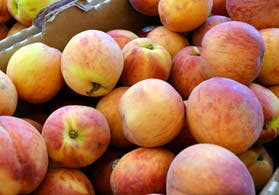
Peaches, blueberries and apples are particularly susceptible. Frost damage now could "significantly" crop yields later in the season.
Find out what's happening in Berkeleyfor free with the latest updates from Patch.
"The DEP and Department of Agriculture are allowing these steps through April 5 to protect farmers' livelihoods and to ensure that consumers will be able to enjoy an ample supply of Jersey produce later this year," the release states.
New Jersey is among the nation's leaders in blueberry and peach production. Blueberry production is focused in the Pinelands of Burlington County. Peach orchards can be found throughout the state, with Gloucester County ranking among the nation's leaders in peach production. New Jersey also has a vibrant apple industry, with orchards found around the state.
Farmers who need to conduct open burns and/or use smudge pots must provide notice to the DEP's 24-hour Communications Center at 877- WARNDEP (1-877-927-6337.) Notification to DEP does not require the implementation of either technique, but ensures proper procedures are followed should they become necessary.
If a farmer does not call DEP in advance, but uses either technique, the farmer may notify DEP the morning following the use of either technique by 9 a.m.
Farmers must record the incident number provided to them by the Communications Center.
The following information is to be provided:
* Name of the individual making the decision to conduct the open burning/use of smudge pots; name of the farm;
* Actual street address of the farm on which either technique will be used (no P.O. Boxes);
* Telephone number of a contact at the farm;
* Predicted temperature (in degrees Fahrenheit) at the agricultural operation when the technique will be used;
* Wind speed anticipated when the technique will be used ;
* Predicted hours of open burning and/or use of smudge pots;
* Materials expected to be burned.
Farmers will be given an e-mail address and incident number at the time of the initial call to the Communications Center. Within two days, they must submit to DEP via this email address the following information:
* The DEP Communications Center incident number;
* Ambient temperature (in degrees Fahrenheit) at the time the technique was used;
* Actual wind speed at the orchard at the time the technique was used;
* A statement verifying that all restrictions in the open burning or use of smudge pots were followed.
No open burning will be permitted unless the temperature within the orchard area is at or below the critical temperature for the bud stage for that particular crop and wind velocity is less than five miles per hour. Smudge pots must be fueled only with either kerosene or No. 2 fuel oil.
Open burning can consist only of clean and untreated scrap lumber, felled trees, clippings pruned from trees and shrubs, hedgerows or firewood. Absolutely no refuse, trade waste, tires or garbage of any type may be added to the authorized open burning material.
Get more local news delivered straight to your inbox. Sign up for free Patch newsletters and alerts.