Arts & Entertainment
'The Pinewald Movie' - A Lesson In Public Relations From The 1920s
Many turn out for the showing of the silent 1926 promotional film.

by Patricia A. Miller
The footage is grainy. It flickers bright white in some spots. But you can still make out what Bayville looked like almost 90 years ago, back in 1926.
And the condition of the film didn’t matter to the more than 100 people who came to the Berkeley Little League complex on Friday night for the first showing of ”The Pinewald Movie” in a number of years. It especially didn’t matter to the dozen or so people who have lived in Bayville for more than 60 years.
Find out what's happening in Berkeleyfor free with the latest updates from Patch.
The silent 16mm film was produced by the B.W. Sangor company in an effort to entice buyers to the pines, forests and waters of Barnegat Bay of Berkeley Township, said Berkeley Township Historical Society member Jerry Beers, who narrated the movie.
“It’s very, very grainy,” he told the audience. ”But it’s still a great movie. I think you’ll get a kick out of seeing what is now Pinewald.”
Find out what's happening in Berkeleyfor free with the latest updates from Patch.
B.W. Sangor was once a large development company with offices around the country. The beginning of the film - which even Beers admitted wasn’t all that exciting - shows company talks at the New York office at Broadway and 42nd Street. Lots of people clapping. Trophies bestowed on company representatives for their sales prowess.
“This was a big outfit,” Beers said. ”This was no small potatoes.”
Men in suits and straw hats and women wearing large hats and long dresses boarded buses in the city to take them to a ferry to Jersey City. From there, depending on the day of the week, they took the ”Sangor Special” train to Pinewald or a bus, he said.
The potential buyers had already gone through a rigorous interview process before they even made the journey, including proving how much money they had, Beers said.
“You couldn’t just walk into the office and say ’I want to go to Pinewald,’ ” he said.
“The Wonder City”
The trains eventually pulled into the train station near Central Boulevard and the ”Wonder City of the Jersey Pines.” Then the visitors boarded buses to tour the area, Beers said.
“Then they got this huge sales pitch,” he said. ”The drivers had a script.”
Sangor hoped to bring as many as 250,000 people to Pinewald.
“Can you imagine Bayville with 250,000 people?” Beers said.
So what did the visitors see during their tour?
Not very much. The few roads - including Central Boulevard were gravel. Dust spewed up from roadways as the buses lumbered through the pines. The visitors did get to see Crystal Lake. The lake already existed before Sangor arrived, but the company dredged it significantly and enlarged it.
They saw a few buildings from the failed Barnegat Park development back in the 1880s and 1890s. The film also contains obviously spliced footage of boys riding their bikes down tree-lined streets with paved roads.
“I’ve always been a little suspect of that particular part,” Beers joked. ”It doesn’t look like Central Boulevard.”
Bayville and Pinewald were extremely rural back then. There were no traffic jams on Route 9 back then, just a few Fords and Chevys sputtering down the roadway.
The vision fails
Most of Sangor’s vision did not happen. He eventually built the Royal Pines Hotel - now the Bayview Convalescent Center next to Crystal Lake in 1930. The Depression hit. And Sangor was selling some lots that didn’t belong to him, according to an earlier Berkeley Patch article.
Sangor was later convicted of embezzlement. He was a director of a Toms River bank headed by the owner of the title insurance company that was guaranteeing title to Sangor’s lots in Pinewald. The bank was named executor of an $172,000 estate. Sangor and the bank director swapped $84,000 in Pines Hotel bonds for the valuable securities in the estate. The bank failed and both were eventually convicted, fined and sent to prison.
The film was discovered in the old train station in Pinewald. Eventually a resident had the film transferred to a DVD. The version show last Friday night was a fourth-generation DVD, which accounts for some of the poor quality. But the film already in bad shape when the DVD transfer was made. The location of the initial film footage is unknown today, Beers said.
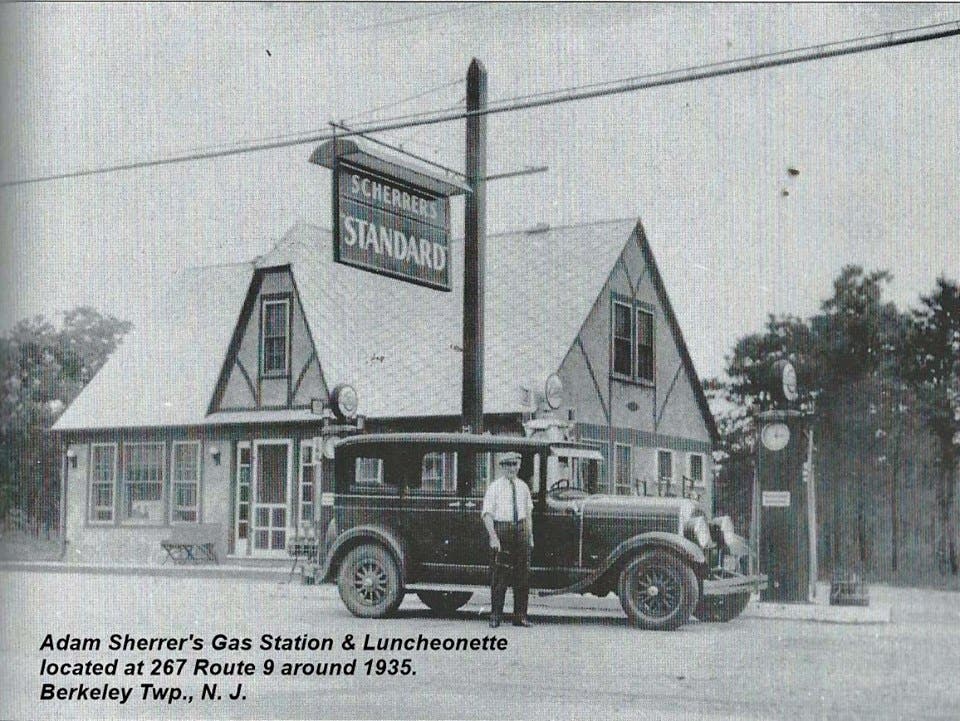
Photo credit: Images of America: Berkeley Township.
Get more local news delivered straight to your inbox. Sign up for free Patch newsletters and alerts.