Weather
Bloomfield Is Fighting Back Against Floods – Here’s How, Officials Say
WATCH: Bloomfield officials gave an update about what the town is doing to prevent flooding – and what local residents can do to help.


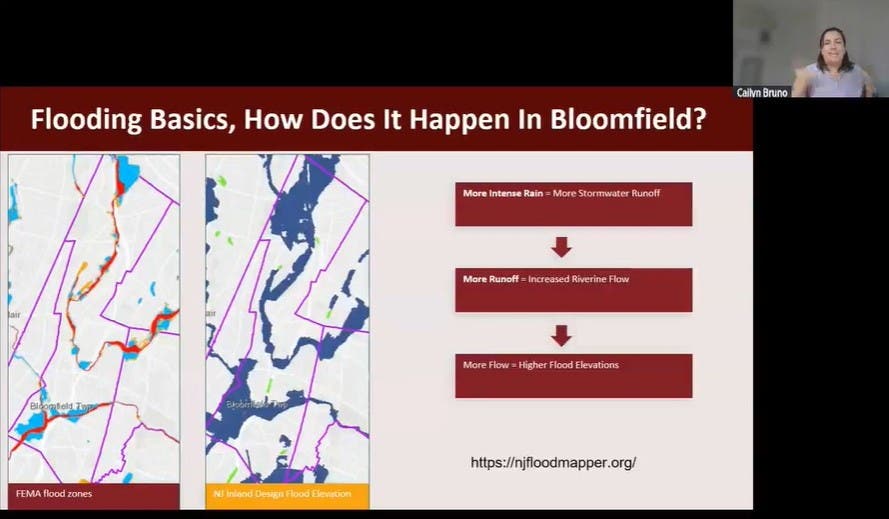
BLOOMFIELD, NJ — Bloomfield officials held a virtual workshop about local flood preparedness on Monday evening.
Bloomfield is among the many towns and cities in New Jersey that have been forced to reexamine how they deal with flooding in recent years.
In addition to ongoing property damage for local residents, the wild weather also caused a death in 2021 as the remnants of Tropical Storm Ida passed through Bloomfield. Flooding has continued to present a challenge in the township, which formed a Flood Mitigation Advisory Committee in 2024 to brainstorm possible solutions. That committee has since been folded into the town’s environmental commission as a subcommittee.
Find out what's happening in Bloomfieldfor free with the latest updates from Patch.
This week's “mayor’s information session” included participation from township council member Sarah Cruz, Bloomfield Environmental Commission chair Cailyn Bruno, township engineer Paul Lasek and Peter Plianthos of the New Jersey Department of Environmental Protection.
Watch video footage here, or view it below.
Find out what's happening in Bloomfieldfor free with the latest updates from Patch.
MEETING ROUNDUP
During a question-and-answer segment, some residents said there has been repeated flooding in areas such as Thomas Street, Windsor Place and Beardsley Avenue. Other flooding has been reported near Watsessing Park and the Second and Third rivers.
Cruz said heavier storms, aging infrastructure and decades of development are taking their toll on Bloomfield’s drainage system.
Stormwater management efforts, infrastructure improvements and planning for long-term solutions are taking place in Bloomfield, she said.
“At the same time, there are important steps residents can take on their own properties to help reduce runoff, protect their homes, and limit impact on their neighbors,” Cruz continued. “Understanding how water moves across your property and how stormwater flows through our community is one of the first steps towards reducing flood risks and limiting damage before the next storm arrives.”
“Stormwater does not stop at property lines, and neither does preparedness,” the councilwoman added.
Lasek said Bloomfield’s stormwater system dates back to the late 19th and early 20th centuries. The system includes 2,587 inlets (catch basins), 1,129 storm manholes, 59 miles of pipe and 150 outfalls (pipes discharging into streams).
The township engineer highlighted some recent projects that Bloomfield has taken to help turn the situation around, including rerouting collapsed storm pipes, constructing new storm lines and adding catch basins on several local streets. Other measures include installing a municipal rain garden in the “Pitt Street lot” behind businesses on Broad Street.
Future work includes an underground detention system at the Conger Street Parking Lot, and improving drainage along Ampere Parkway and Abington Avenue, he said.
Bruno urged residents to replace conventional lawns with native plants and trees, help clear nearby storm drains, and reduce runoff from their properties. Meanwhile, Plianthos promoted rain barrels and “pervious pavement” – which allows water to travel through it to the soil below – as potential tools to slow and store stormwater.
Coincidentally, the meeting took place as weather forecasters called for heavy downpours and strong winds in Bloomfield.
Send local news tips and correction requests to eric.kiefer@patch.com. Learn more about advertising on Patch here. Find out how to post announcements or events to your local Patch site.
Get more local news delivered straight to your inbox. Sign up for free Patch newsletters and alerts.