Kids & Family
Meet Bloomfield Fire Captain David Flanagan
Longtime Fire Department veteran reflects on his years in the fire department and what challenges firefighters face while working in this diverse and busy township.
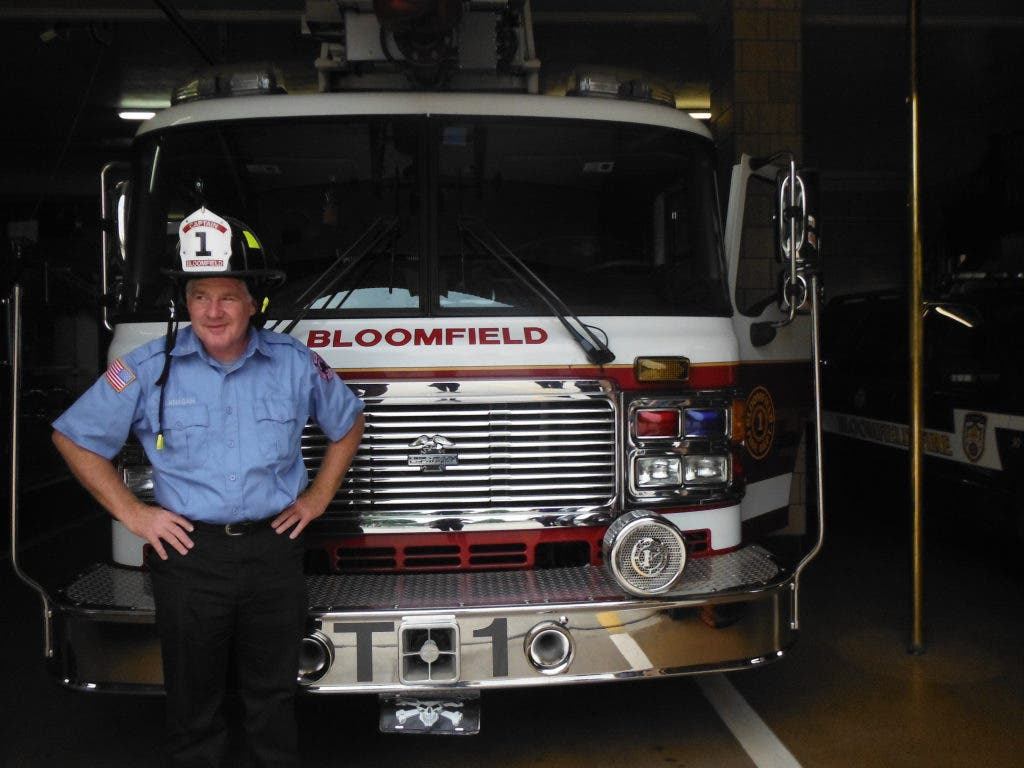
Fire Captain David Flanagan has worked at the Bloomfield Fire Department for 27 years and has also lived in Bloomfield for 50 years.
He sat down with Patch recently to reflect on his years in town, serving during 9-11 and why local firefighters have heart as well as bravery.
Find out what's happening in Bloomfieldfor free with the latest updates from Patch.
What made you want to become a firefighter?
“My friends were there. But I’ve always wanted to help the community. My friends and I took the (firefighter's) test together and we all tested well. Most of them are still here with us. So it was also a friend-packed sort of thing.”
What do you love about your job?
“Going in fires is pretty fun, it’s exciting and it’s an adrenaline rush. But it’s also about helping people, you don’t want to see houses on fire and you want to put them out.”
Find out what's happening in Bloomfieldfor free with the latest updates from Patch.
What do you dislike about your job?
“The car accidents. Pulling up on a car accident can be bad – late at night, especially if kids are involved. But it’s part of the job. The good and the bad – you do it.”
How would you describe a typical workday?
“Morning starts with coffee of course, we go over how everybody did, how their weekend went. As a supervisor I kind of want to hear what they did, you know, just to make sure everyone’s okay physically and mentally. Nine o’clock Chief comes in and we go through new memos and new training – we do training every day. (The training) lasts an hour in the morning, another half-hour session in the afternoon, and at night we do physical training. Then there’s lunch, we never miss lunch! We’re stuck together for 24 hours. But you know, there’s a little break to get away from each other because it’s like being with your brothers and sisters for 24 hours, you need that little break sometimes.”
What season would you say is high risk for fires?
“Well, statistically I think they say the summer is, but really I think it’s the winter. You have your illegal basements which we try to keep an eye on, boiler back fires, basement overcrowding, and extension cords. But the summer is just busier because of the heat; you’ll see more blackouts and flooding. I’d say the harder work is definitely in the winter, especially since I’m not much of a winter person.”
Have you seen firefighters experiencing traumatic stress after big or devastating fires?
“Yes. We have a stress team if we need them. After every fire our chief will make his rounds and ask standard questions to make sure they’re okay. The stress team had to come in when we lost two children, those guys were a mess. But you know, they got to come back to work, so the stress team works with them. Usually you can tell when someone gets really quiet, you’re trained to look for that personality and just bring them back in. Usually when you bring them back in they come right back, you just say something like ‘hey let’s train’ to get them out of it. But any loss is no fun.”
What has impacted you the most throughout your years as a firefighter?
“Well, I was here for September 11th. I lived through it while on the job here. I worked the next day, we all came in because we thought they needed us and the next day we were in New York City and we built a friendship with the Brooklyn company there. Engine 219 and 105, we still play softball with them and stuff like that. It was weird though, I was in New York for maybe 24 hours, they rotated us – they were afraid. Being there seeing the New York version of it was so much bigger. I remember I had to drive the Chief officers and we went on an alarm over the Manhattan Bridge and nobody knew where to go, I’m from Bloomfield and I know my area, we were in Manhattan and I didn’t know anything about it. After it all we went to the schools and talked about what we did, we had a memorial service. It was a very impacting experience. A lot has changed since then too, equipment, accountability and training. You used to only worry about Bloomfield but now you see that there is a bigger world. But things got better, we used to wear rubber boots and you know rubber and fire is probably not the best thing. Now we have leather boots, bunker pants, there’s a date on them and you get rid of them, before we used to just wear them until they ripped and then we fixed them ourselves.”
What would you like the people of Bloomfield to know?
“That we do care. There are people in Bloomfield who think we make too much, but we’re here for 24 hours and it’s not just Christmas that I’ll miss. It’s the birthdays, my wife’s birthday, my niece’s game where I used to be able to go to and now it’s ‘I work that day.’ But it’s a great job, I love it – there’s nothing wrong with it or with the people of Bloomfield. We do good and it’s a fun job, we all have a little Bloomfield in us.”