Politics & Government
Chabad Suit Claims 'Rising Tide Of Anti-Semitism' Influenced Toms River Zoners
Federal lawsuit says refusal to allow religious services in rabbi's home violates 1st, 14th Amendments, was spurred by public opinion.


TOMS RIVER, NJ -- Representatives of the Chabad Jewish Center filed suit Tuesday in federal court against Toms River and its Zoning Board of Adjustment alleging its refusal to allow small weekly prayer services in Rabbi Moshe Gourarie's home is a civil rights violation spurred by a "rising tide of anti-Semitism" in the community.
The lawsuit, which was filed in federal district court, asks the court to overturn the December decision of the zoning board rejecting the Chabad's request for an interpretation that its activities were permitted and that Gourarie did not need a use variance to continue them.
The lawsuit, filed by Roman Storzer of Storzer & Greene of New York, in conjunction with Christopher Costa of Kenny Chase & Costa, accuses Toms River officials of violations of the First Amendment guarantee of free exercise of religion and the 14th Amendment guarantee of equal protection under the law. It also alleges violations of the federal Religious Land Use and Institutionalized Persons Act (“RLUIPA”) and the Fair Housing Act.
Find out what's happening in Brickfor free with the latest updates from Patch.
The lawsuit also asks the court to overturn the township's zoning regulations.
"State law specifically protects the right of clergy to engage in religious exercise with limited participants in their own homes," Storzer said.
Find out what's happening in Brickfor free with the latest updates from Patch.
Toms River officials could not immediately be reached for comment.
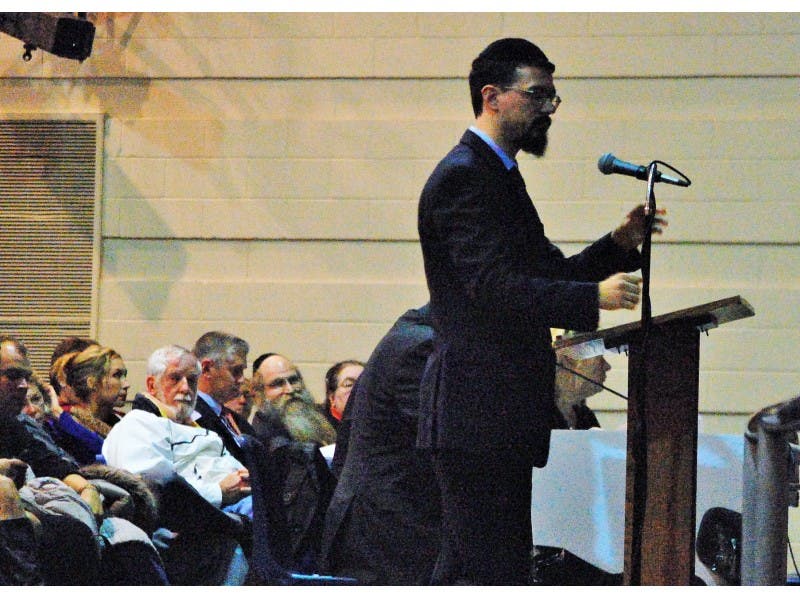
Storzer noted that more than 1,200 residents attended the board’s hearing on the Chabad’s application, which had to be moved to Toms River North to accommodate everyone who wanted to attend.
"Despite its negligible land use effect on the local community and its existence at this location and another residential home in Toms River for 12 years without any negative impacts, substantial community opposition to both the Chabad’s use and to the ultra-Orthodox Jewish population in general, has targeted the Chabad," he said, noting the Chabad, at 2001 Church Road, is adjacent to an American Legion Post, a church, and Ocean County College.
"These recent actions to shut down the Chabad took place during a rising tide of anti-Semitism among the Toms River government and population, fearful that the ultra-Orthodox Jewish community located in adjacent Lakewood Township will extend into Toms River," the complaint says.
It cites statements by Mayor Thomas Kelaher in a Bloomberg article last week regarding ultra-Orthodox Jews moving into Toms River as an “invasion” and the recent carving of the words “Burn the Jews” into playground equipment at Riverwood Park.
Kelaher's comments appeared in a March 14 Bloomberg article that delved into the recent tensions between Toms River and the Orthodox community in Lakewood that led to Toms River implementing a five-year ban on real estate soliciting in the North Dover section of the township.
Kelaher, at a press conference last week, said the comments were simply a recitation of sworn testimony given when the township was considering implementing that ban, which took effect last Friday, March 18. He and others emphasized the conflicts were of a legal nature, not religious.
But the complaint also cites a number of statements made in various places on social media "regarding the Chabad and ultra-Orthodox Jews describing them as “cockroaches,” “trash,” a “cult,” “he-brews and she-brews,” a “Jewish conspiracy,” “disgusting phonies,” a “joo school,” “damn jews,” “dirty,” and a “disease.”
The result, the complaint says, was a collaborative effort between Toms River officials and residents with respect to various efforts to prevent ultra-Orthodox Jews from adjacent Lakewood Township from moving into Toms River.
“This cancerous movement targeting a specific religious minority has spread into Toms River,” Storzer said. “The use of local ordinances and land use regulation to build a wall around Lakewood should not be tolerated.”
"Religious land uses are protected from undue burdens, discrimination and arbitrary treatment under RLUIPA, which was passed by Congress 16 years ago to prevent discrimination against religious institutions in land use regulation," Storzer said, noting his firm has represented scores of churches, temples, mosques and synagogues in land use conflicts from Hawaii to Florida.
Get more local news delivered straight to your inbox. Sign up for free Patch newsletters and alerts.