Politics & Government
Every Ocean County High School Now Equipped With Narcan; 'It's About Saving A Life,' Prosecutor Says
Training session addresses issue of the continuing spread of the crisis, and efforts to fight it.


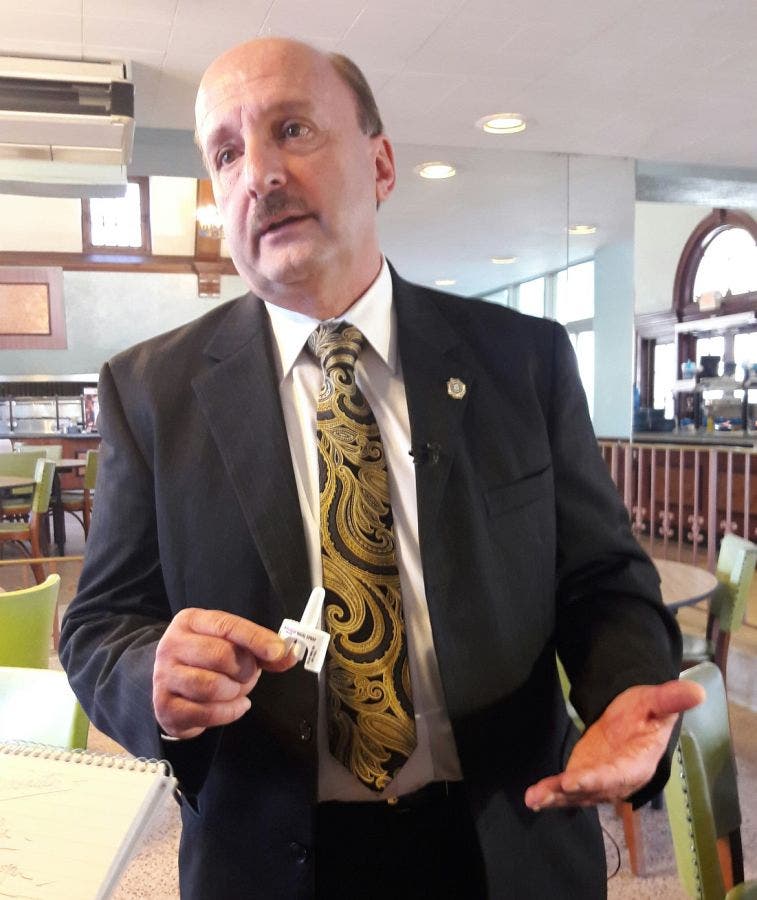
LAKEWOOD, NJ — "You don't just wake up one day and decide to take heroin."
This has been Joseph Coronato's mantra on the heroin epidemic for a while: that the root causes of an overdose crisis that continues to spiral wildly out of control are not heroin, but the use and abuse of prescription medications.
"It all starts with prescription pills," the Ocean County prosecutor said Thursday during a presentation and training session on the use of Narcan for school nurses and student assistance coordinators from the county's 18 high schools at Georgian Court University.
Find out what's happening in Brickfor free with the latest updates from Patch.
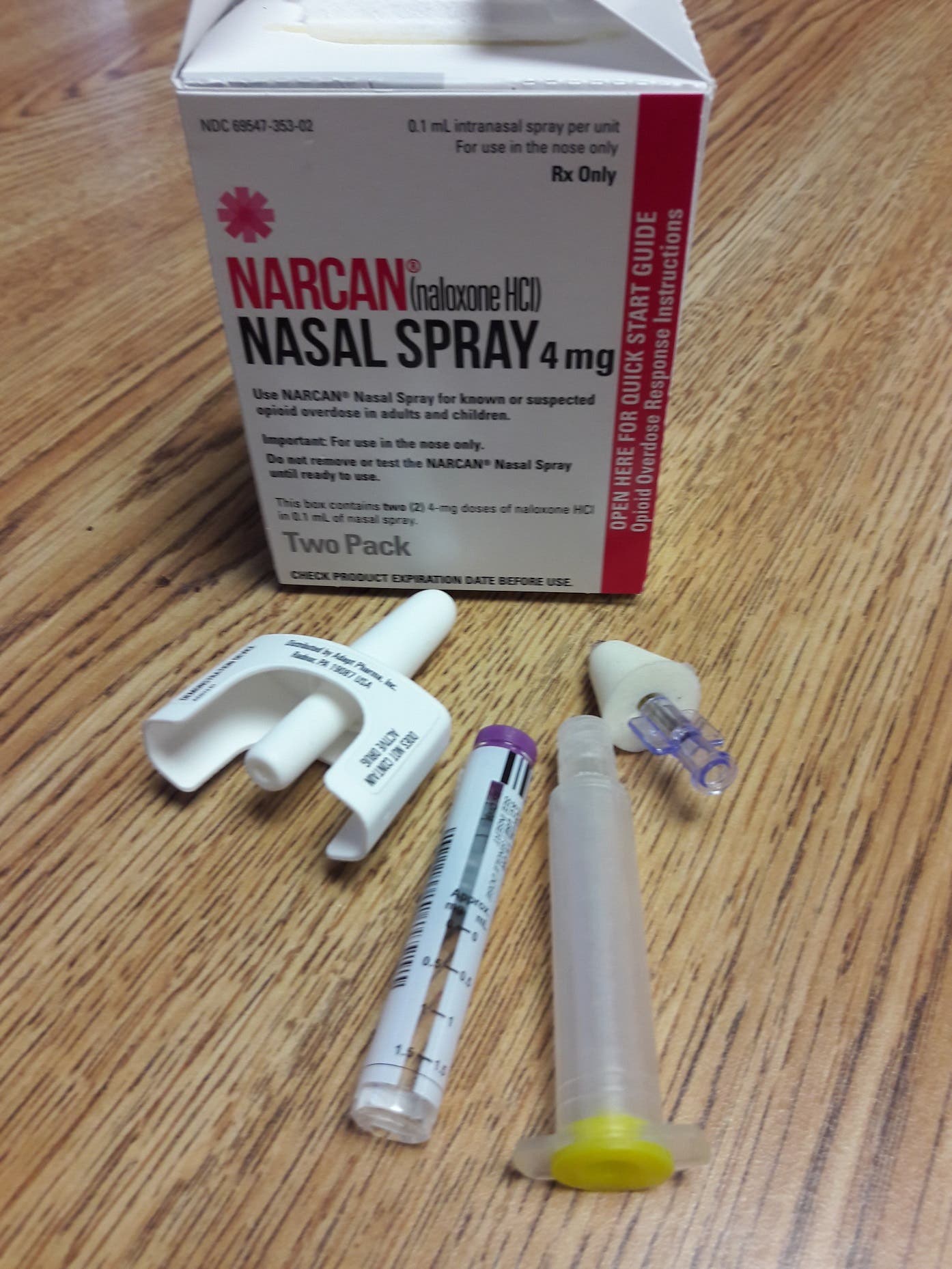
Every high school in Ocean County will now be equipped with Narcan, which Coronato said is being provided at no cost by Adapt Pharma.
Coronato said the decision to equip schools comes as authorities continue to see younger victims of the heroin crisis and issues with students even in middle school abusing prescription drugs.
Find out what's happening in Brickfor free with the latest updates from Patch.
Coronato said that for addicts, as pills become more and more difficult to come by — a single pill of Oxycontin, Percocet or Vicodin can go for $30 on the street — and their addiction deepens, the person becomes more and more desperate to fend off the intense sickness that comes with opiate withdrawal. That's when they turn to heroin, which sells for as little as $3 to $5 a hit on the streets, Coronato said.
"As many of you know, it's starts as young as 12, 13, 14 years old," Anthony Pierro, supervising assistant prosecutor who oversees juvenile cases in the prosecutor's office, said to the nurses and student assistant coordinators. "We hope you never have to use it."
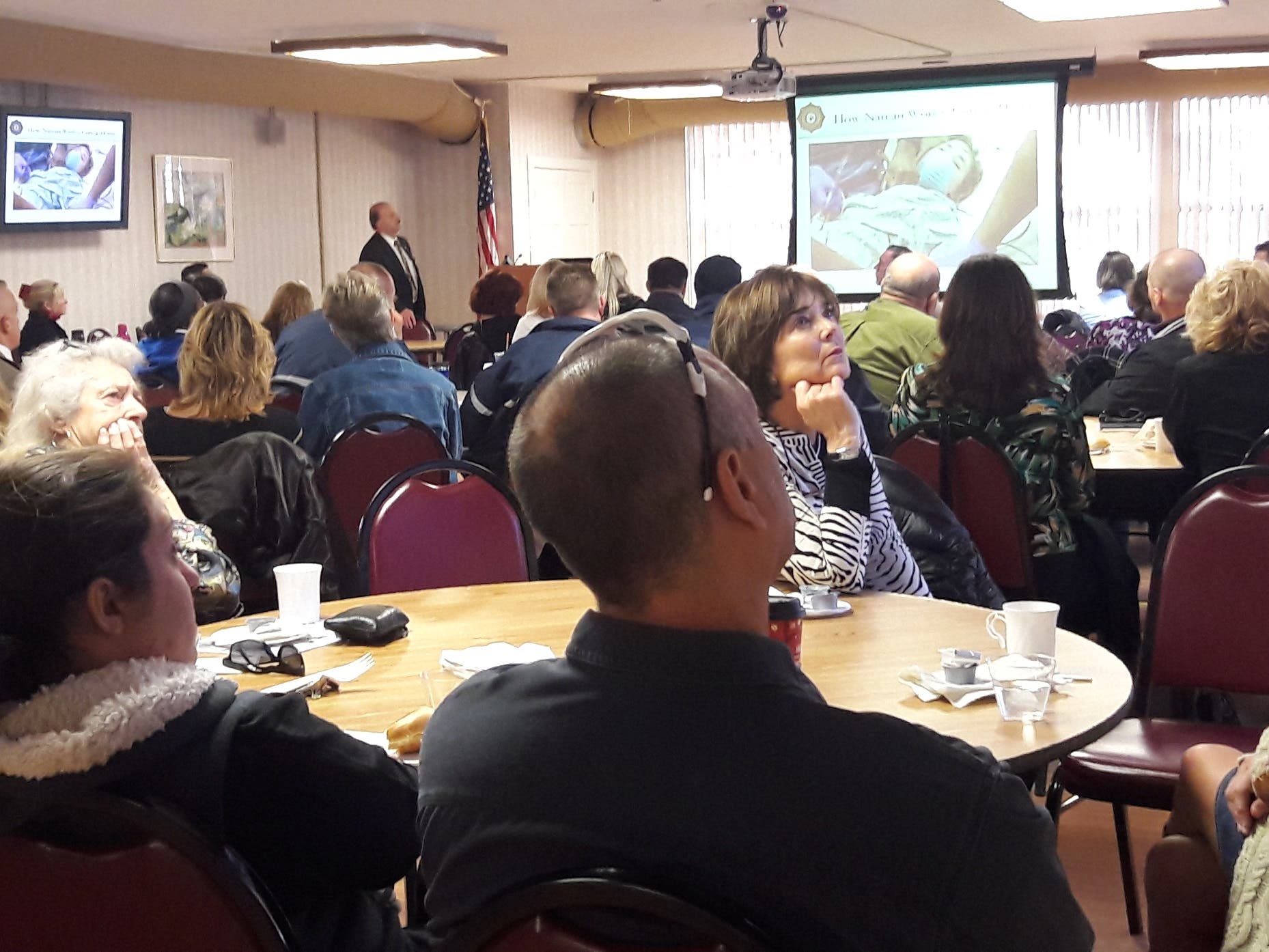
Coronato said the training session was sparked by an overdose incident that occurred at one of the county's high schools. He declined to identify the school or give details because — similar to when the prosecutor's office conducts unannounced drug sweeps at schools — the goal is not to single out or stigmatize any particular school.
"This is not about putting some kid in jail," Coronato said. "This is about saving a life."
Saving lives has been an uphill battle in Ocean County in 2016. As of Wednesday, there have been 445 overdose reversals in Ocean County this year. There also have been 180 deaths, Coronato said, adding he expects that number will very likely reach 200 by the end of the year, far surpassing the 118 overdose deaths recorded in 2015, "which is just totally unacceptable."
Part of the reason there have been so many deaths is because more and more frequently the heroin is being laced with fentanyl, a synthetic opioid that is 1,000 times stronger than morphine, Coronato said.
"It's a synthetic storm," he said, and it takes "only a grain" of fentanyl for a lethal dose.
The training session didn't merely explain how to administer the Narcan, however; Coronato emphasized that anyone who has been sprayed with the nasal spray needs to be taken to a hospital immediately, for two reasons.
First, he said, medical professionals have found that while heroin leaves a person's system fairly rapidly, fentanyl is more difficult because it stays in the muscles, and can cause a secondary overdose within less than an hour as it is released from those tissues. "And if you don't have another dose of Narcan, the person can die," he said.
Second, anyone who has an overdose reversed in Ocean County is met at the emergency room by a certified recovery specialist, whose sole reason for being there is to try to convince the person to go into a long-term treatment program to break the cycle of addiction.
Coronato's initiative, the Opioid Overdose Recovery Program, a two-year pilot program operated by the Barnabas Health Institute for Prevention in conjunction with the prosecutor's office, has seen 62 percent of those receiving intervention this year after a Narcan reversal agree to go to long-term treatment, he said.
The program had only been operating in RWJ Barnabas hospitals in Ocean and Monmouth counties (Community Medical Center in Toms River; Monmouth Medical Center in West Long Branch and Monmouth Medical Center Southern Campus in Lakewood) but in recent weeks Meridian has come on board, meaning recovery specialists also will be dispatched to Ocean Medical Center in Brick and Jersey Shore University Medical Center in Neptune. CentraState Medical Center in Freehold Township also participates in the program.
Coronato has been battling the opioid epidemic since shortly after he was sworn in as prosecutor in 2013, and equipping schools with Narcan is just one more measure to battle the crisis, he said.
"(Schools) wanted it not just out of concern over the possibility of a student suffering an overdose, but also so they are prepared in case someone does at a football game or a soccer game," Coronato said, similar to how schools throughout the state have automatic emergency defibrillators on hand in case someone goes into cardiac arrest.
"It doesn't have to be a student," Coronato said. "It could be someone delivering something to the school (who overdoses)."
And because people are ingesting heroin in a variety of ways, it can happen at any time. John Brogan, a recovery specialist with the Opioid Overdose Recovery Program, said he and Angela Cicchino, another recovery specialist who attended the training session, were called out Wednesday night to assist a young woman who had agreed to seek treatment.
"We left the house for 15 minutes," Brogan said, and were called back almost instantly because the woman had ingested some fentanyl by smoking it.
"It took four shots of Narcan to revive her," he said. The woman did agree to go to into a longterm recovery program, he said.
The long-term recovery isn't just about the physical addiction; it's about addressing the emotional pain that is prompting the substance abuse in the first place, Brogan, a former addict himself, said.
Coronato emphasized that he does not believe heroin is the biggest issue among high school students who are addicted. The biggest problem and biggest risk is the prescription pills sitting in plain sight in so many medicine cabinets, with Percocet, Vicodin and OxyContin being the biggest offenders.
"They get the pills from their parents' (cabinets), from their grandparents, from friends," Coronato said. There are cases where people go to an open house being held by a real estate agent and ask to use the bathroom, then they raid the medicine cabinet there.
Equipping the schools with Narcan gives them the tools if they need it, Coronato said. And if a school has to put the Narcan to use, the prosecutor's office will give them a new one at no cost to the district. A package of Narcan, which comes with two applications, costs about $73, he said.
"We don't want money to be an issue," Coronato said. "It's better to be safe than sorry."
Watch Coronato's remarks on the subject here:
The remarks by John Brogan and Angela Cicchino can be heard here:
Photos/video by Karen Wall
Get more local news delivered straight to your inbox. Sign up for free Patch newsletters and alerts.