Health & Fitness
Preventing Backpack Injuries
School can be "back-breaking" work: Don't let a heavy backpack ruin your child's day.

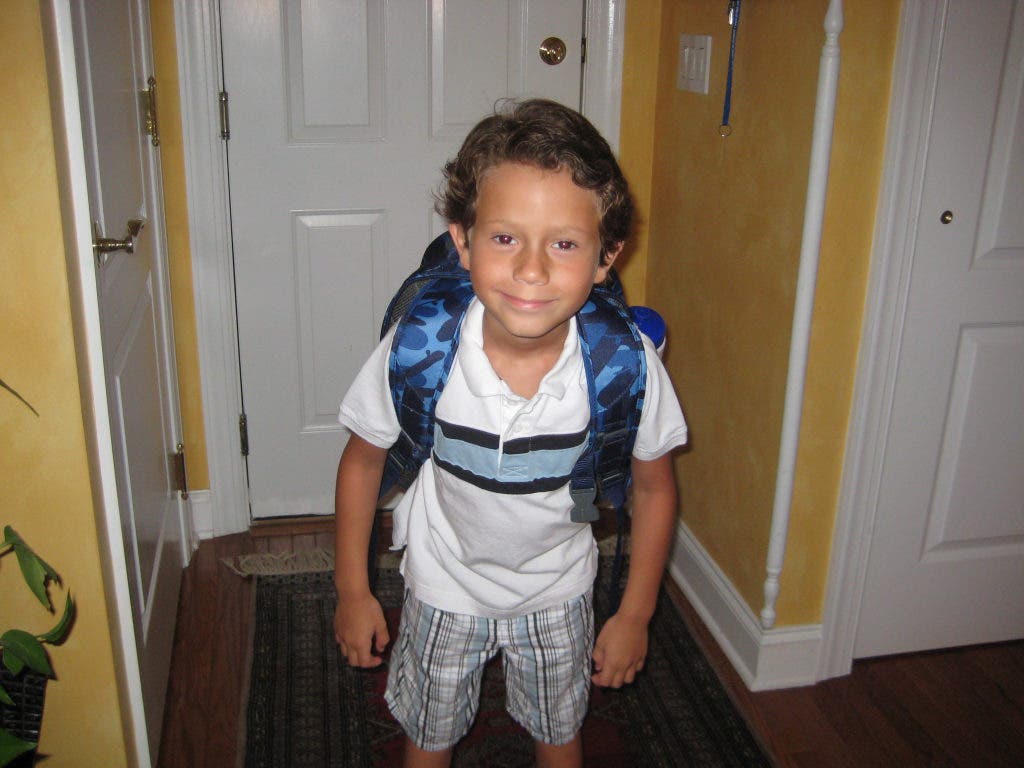

Each morning, millions of elementary, high school and college students across the nation are racing out to the school bus or scurrying to their classes with an overstuffed backpack slung over one shoulder. While carrying a backpack to school each morning might seem harmless enough, it can cause some painful back and neck problems for students who don’t pack or carry their backpacks properly.
Back pain is pervasive in our society. Eighty percent of us will suffer from it at some point in our lives, and 50 percent of us will suffer from low back pain this year alone. Low back pain is the most common health complaint experienced by working Americans today, and a condition which costs the economy at least $50 billion a year in lost wages and productivity.
Much of this suffering is brought on by bad habits initiated during our younger years, such as carrying overweight backpacks to school. The improper use of backpacks can lead to muscle imbalance that could turn into chronic back and neck problems later in life.
Find out what's happening in Chathamfor free with the latest updates from Patch.
The American Chiropractic Association and its Council on Occupational Health offer the following tips to help prevent the needless pain an overstuffed backpack could cause the students in your household. (And, now that backpacks have begun replacing briefcases in the work place, you, too, might want to follow this advice):
- Make sure your child’s backpack weighs no more than 5 to 10 percent of his or her body weight. Beyond that weight, the backpack will cause your child to begin bending forward in an attempt to support the weight on his or her back rather than on the shoulders by the straps.
- A backpack with individualized compartments will help you position the contents most effectively and ensure that your child’s sandwich isn’t flattened by a heavy textbook.
- When packing the backpack, make sure that pointy or bulky objects are packed away from the area that will rest on your child’s back. An uneven surface rubbing against your child’s back could cause painful blisters.
- Tell your child to use both shoulder straps, not just one. A backpack slung over one shoulder disproportionately shifts all of the weight to one side, and can cause not only neck and muscle spasms, but also low back pain.
- Padded shoulder straps are very important. Not only will they be more comfortable than non-padded straps, but they will also help prevent the straps from digging into your child’s shoulders.
- The shoulder straps should also be adjustable, so the backpack can be fitted to your child’s body. Shoulder straps that are too loose can cause the backpack to dangle uncomfortably and cause misalignment and pain.
- If the backpack is still too heavy, talk to your child’s teacher. It might be possible for your child to leave the heaviest books at school, and bring home only lighter handout materials or work books.
- Talk to your child about the proper use of backpacks and help him or her understand why this and other ergonomic issues are important. A child who is educated early in life on ergonomic issues can apply this knowledge later in life (at home or in the office) and will be happier and healthier as a result.
By following these simple guidelines, you can prevent “Backpack Pain.”