Neighbor News
The Fight for Affordable Housing
In the upcoming months, a number of critical legal battles will be waged in a number of New Jersey municipal courts.
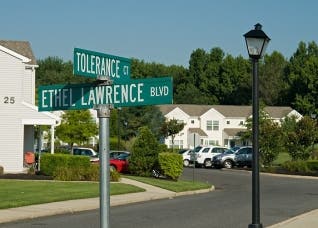
Forget the new Captain America sequel, the municipal courts of New Jersey is where the real blockbuster action will go down this summer.
In the upcoming months, a number of critical legal battles will be waged in a number of New Jersey municipal courts. The defendants will be the various municipalities and their constituents who wish to limit affordable housing in their communities; the plaintiffs, nonprofit legal advocates whose goal is to make sure that each city meets its “fair share” of affordable housing obligations.
While perhaps not the most glamorous political issue out there, decisions concerning affordable housing are important. Where you live is perhaps the greatest determinant of your social and economic welfare, personal safety and getting a good education. It has become very difficult to live in the New Jersey suburbs, as hard-working families and individuals continue to be priced out of safer suburban areas and into inner cities where their chances of leading a decent life are significantly diminished. Furthermore, in 2014 New Jersey had a 16 percent increase in homelessness. No New Jerseyan should be O.K. with this.
Find out what's happening in Cherry Hillfor free with the latest updates from Patch.
Historically, in New Jersey different municipalities autonomously decided where and what developers could build with very little state intervention. In this context, the 60s saw the beginning of New Jersey townships developing new, expensive communities as the Garden State took its first steps into mass suburbanization. Those who had been residing on farmland, many of whom were low-income minorities, were forced out of their homes by townships interested in paving the way for pricey single-family homes. Some had family living on this land for many generations. But for various reasons such as substandard plumbing or structural problems (some houses were little more than converted chicken coops), these homes were deemed not up to code by the townships and condemned, the tenants evicted. Neither the municipalities nor New Jersey properly aided the people they made homeless in their search for new and suitable housing. Many of these people ended up in Camden (Massey).
These practices went on largely unregulated and unnoticed until two legal rulings introduced some semblance of law to this landscape. Mount Laurel I, (1975) and the later Mount Laurel II (1983) decisions, demanded that each township in New Jersey “...Had an 'affirmative obligation' to meet their 'fair share' of the regional need for low- and moderate- income housing.” The decisions proved to be bonafide judicial landmarks, with advocates in many states across the country citing them in their own campaigns for fair affordable housing practices.
Find out what's happening in Cherry Hillfor free with the latest updates from Patch.
Responding to some crafty circumvention of Mount Laurel I by municipalities, Mount Laurel II precipitated a state committee to make sure that New Jersey cities would comply fully with the new laws. It was given the name Council on Affordable Housing (COAH), and it was supposed to meet every decade or so to approve or reject new development plans based on how much of the construction each municipality allocated for low- to moderate- income families. COAH, increasingly ineffectual since its inception, had become even more so recently under Governor Christie and growing pushback from certain municipalities and their citizens. And so, in March 2015, the Council was disbanded. With COAH no longer existing to scrutinize new development plans, in March 2015 the New Jersey Supreme Court shifted the enforcement of affordable housing obligations to the lower courts. In place of COAH, municipal judges have now been delegated to rule on a case by case basis whether a township is allocating its fair share of resources for affordable housing.
Much of the opposition to affordable housing development comes from the NIMBYism (Not in My Backyard!) of New Jersey residents. These local suburban dissidents pressure township leaders into affordable housing hard-lining—that is, to push for the minimum (or even less) of their Mount Laurel I and II affordable housing obligations. These folks fear that the influx of lower income residents will lower property values, overtax their schools, make their neighborhoods less safe, and generally tarnish their comfortable suburban way of life.
Studies have consistently shown that none of this actually happens. It has been demonstrated that affordable units have no negative effect on established suburban neighborhoods. Climbing Mount Laurel (2013), a seminal publication scrutinizing the Mount Laurel decisions and their impact, looked closely at these concerns. The authors found that crime rates do not increase, property values do not decrease, and the schools remain largely unaffected with the happy exception that the new students reap the benefits of a solid education (Massey). Affordable housing also lowers Medicaid costs: A recent study demonstrated that “healthcare expenditures were down 12% in the year after [the subjects] moved into affordable housing–that’s $48 per member, per month.” With more time to focus on health issues, occupants of affordable houses required fewer emergency room visits and had access to better quality of care.
I was witness to the fear surrounding a new affordable housing development in my own neighborhood. Back in the early 2000s, an affordable housing development was to be built near my middle class suburban community. I live on the east side of Cherry Hill near Sergi Farms, an affordable housing complex. My mother was amongst those worried about affordable housing in our neighborhood. She, along with many others, feared that the schools would struggle to bear the weight of new students who, the thought was, would require more attention than students from our development. I attended Johnson, one of the schools which took many of these new children. In stark contrast to what was worrying parents, my education in a more racially and culturally diverse community was a very positive experience. On top of that, the students from Sergi Farms received a proper education in a safe school, a right that should be granted to every American child. Today, with property values unaffected and my grade school education behind me, my mother realizes her mistake in opposing Sergi Farms being built and is now a fervent supporter of affordable housing constuction.
Affordable housing is a net good to society, giving people stuck in inner cities a lifeline, while having minimal effect on already established single-family communities. The Mount Laurel decisions certainly give advocates of affordable housing plenty of ammunition, and they are led ably by the vigorous nonprofit group Fair Share Housing. But residents of New Jersey need to be supportive as well. Contact your local government representatives to find out what your town's position is on affordable housing and if they are meeting their legal obligations. Combat the idea that affordable housing is undesirable. Your opinion does matter. Be a squeaky wheel.
Massey, Douglas S.; Albright, Len; Casciano, Rebecca; Derickson, Elizabeth; Kinsey, David N. (2013-07-21). Climbing Mount Laurel: The Struggle for Affordable Housing and Social Mobility in an American Suburb. Princeton University Press.