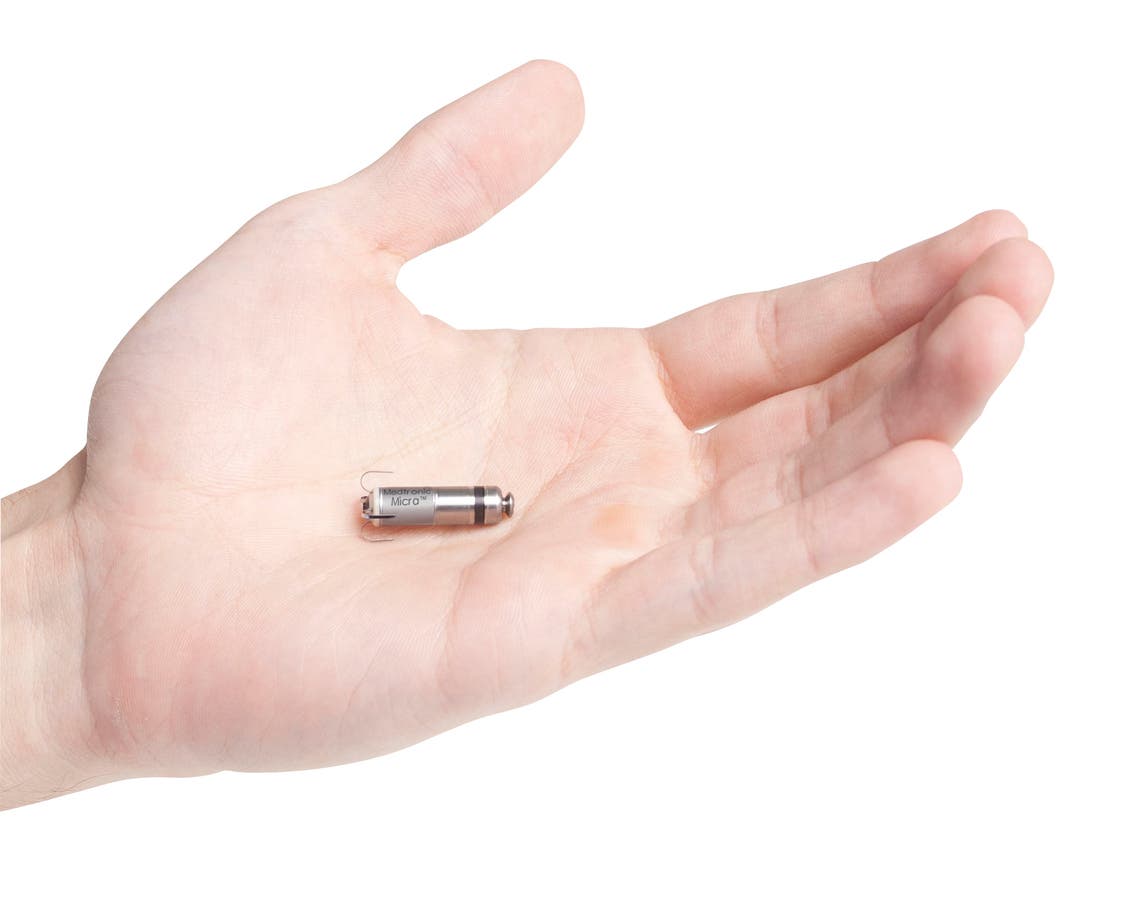
Our Lady of Lourdes Medical Center is now one of a few select hospitals in the region to offer a new dime-sized pacemaker that is implanted directly in the heart.
Developed by Medtronic, FDA-approved device is 2.6 centimeters long and weighs the same as a penny. Called “Micra,” the device is designed for people with a slow heart rate, called bradycardia, who only need a single-chamber pacemaker.
Conventional pacemakers require the doctor to make an incision in the chest and place the device in a “pocket” just underneath the skin. While technology has progressed so that conventional pacemakers are no longer the size of a smoke alarm, the leads that deliver electrical impulses into the heart remain the weak point in the system, vulnerable to wear and tear and possible infection.
Find out what's happening in Cherry Hillfor free with the latest updates from Patch.
“The Micra transcatheter pacemaker is completely self-contained. There are no leads that could wear out or become infected. The procedure also avoids any pacemaker pocket-related infections,” said Lourdes electrophysiologist Devender Akula, MD, FACC. “As it is imbedded inside the right ventricle, there's no bulge or scar on the chest. Nobody knows you have a pacemaker.”
The pill-shaped pacemaker is placed in a special catheter inserted into a vein in the upper thigh and threaded into the heart’s right ventricle. Four anchors hold the device in place. Patients generally stay overnight in the hospital after placement, said Dr. Akula.
Find out what's happening in Cherry Hillfor free with the latest updates from Patch.
“As with other pacemakers, the device adjusts your heart rate automatically by sensing changes in your body related to your activity level,” said Dr. Akula. “But our ability to deliver it via a minimally invasive approach with fewer postimplant activity restrictions may greatly improve a patient’s experience.”
The battery in the device lasts 10 to 12 years. Micra is safe for MRI scans.
“From safety and cosmetic standpoints, the wireless pacemaker is a tremendous leap forward,” said Lourdes electrophysiologist Faisal Siddiqi, MD, FACC. “People with bradycardia have a slow heart rhythm, usually less than 60 beats per minute. At this rate, the heart is not able to pump enough oxygen-rich blood to the body. You can feel dizzy, fatigued, short of breath or even faint. The Micra may be an option for these patients.”
For patients who need a conventional pacemaker, which are typically implanted in patients who need more than one lead placed in the heart, Lourdes heart rhythm specialists are improving implantation procedures.
Normally, the pacemaker leads are inserted through a vein in the shoulder and placed in the right atrium and right ventricle of the heart. However, this placement can cause the two bottom chambers not to beat in synch. This may lead to cardiomyopathy, symptoms of heart failure or atrial fibrillation in some patients.
“By placing the leads on an area of the heart called the His-bundle, we can utilize the heart’s natural electrical pathways and create better synchronization between the bottom chambers of the heart,” said Dr. Akula.
“We believe the heart is better suited to be paced this way,” said Dr. Siddiqi. “It is rethinking an old problem and now doing it a better way. Whether through new placement, or with new technology such as the Micra, we are excited to be at the forefront of innovation.”
Caption: The Micra is one-tenth the size of a traditional pacemaker and sits inside the heart.