Health & Fitness
New Jersey's Most Distinctive Fatal Illness? Blood Poisoning
Even the CDC seemed at a loss to explain how the disorder was among "the most distinctive causes of death" in New Jersey.


Cancer and heart disease are the biggest killers, but one of New Jersey’s most common fatal diseases or illnesses - and, apparently, it’s most distinctive - is something you may not expect.
It’s septicemia, or blood poisoning, according to the U.S. Centers for Disease Control and Prevention.
Find out what's happening in Cinnaminsonfor free with the latest updates from Patch.
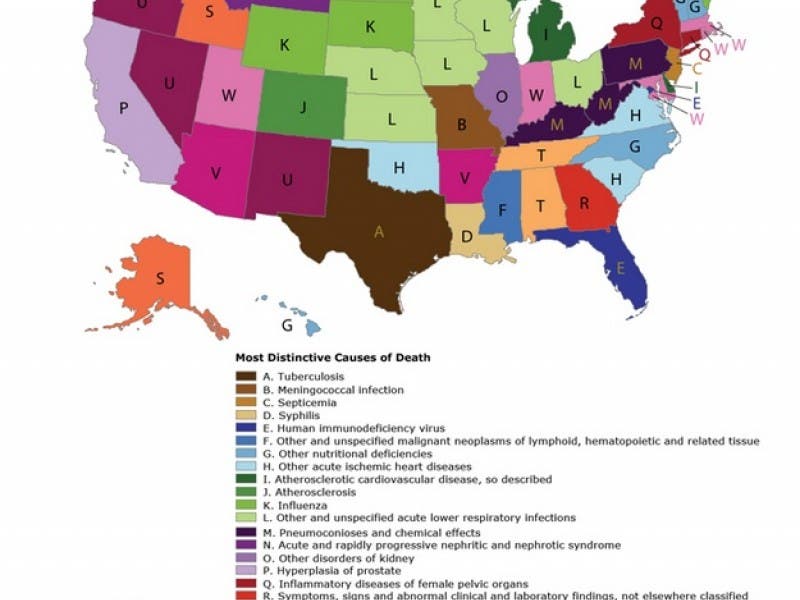
The CDC recently put out a map titled, “The Most Distinctive Causes of Death by State, 2001-2010.” The map shows where certain disorders, illnesses and other distinctive causes of death have what the CDC considers a “high rate,” based on a formula. The list was also derived from a compilation of death certificates.
In North Dakota and South Dakota, it was Influenza. In Illinois, it was kidney disorders.
Find out what's happening in Cinnaminsonfor free with the latest updates from Patch.
In Arizona, the most distinctive cause of death was neither a disease or a disorder. It was “discharge of firearms.”
New Jersey’s distinction seemed to surprise the CDC researchers who put together the map, writing this:
“Some of the findings make intuitive sense (influenza in some northern states, pneumoconioses in coal-mining states, air and water accidents in Alaska and Idaho), while the explanations for others are less immediately apparent (septicemia in New Jersey, deaths by legal intervention in 3 Western states).”
Septicemia is a serious bloodstream infection that can rapidly become life-threatening, arising from various complications including those of the skin, lungs, abdomen, and urinary tract, according to the CDC. Patients with these conditions are often treated in a hospital’s intensive care unit.
New Jersey health officials have expressed concern that the state’s historical issues with environmental pollution have contribute to lead exposure.
Since 1999, the New Jersey Department of Health’ Child and Adolescent Health Program has collected data on all blood lead screenings of New Jersey children. Clinical laboratories licensed by the state are required to report these data to the state.
In cooperation with the Child and Adolescent Health Program, the NJ EPHT Network contains summary information on risk factors for childhood lead exposure, childhood lead screening rates, and levels of lead measured in children’s blood, according to state officials.
You can find out more about the CDC’s map by clicking here.
Get more local news delivered straight to your inbox. Sign up for free Patch newsletters and alerts.