Health & Fitness
NJ Hospital Is Giving Antibodies To Patients To Help Fight COVID
"The number one message I want to get across is vaccines work. This is not a replacement for the vaccine," said Trinitas Dr. John D'Angelo.


ELIZABETH, NJ — As the Delta variant swiftly spreads, one New Jersey hospital is taking action to help in the fight against COVID-19.
Trinitas Regional Medical Center is participating in a study with Duke University and having good success with administering therapeutics like monoclonal antibodies to vaccinated and unvaccinated patients coming into the emergency room with COVID-19.
"Essentially what it does is jumpstart the immune system to kind of trick the body into believing it has seen the virus before," said Dr. John D'Angelo, Vice President Chief Medical Officer and Chairman of Emergency Medicine at Trinitas.
Find out what's happening in Clark-Garwoodfor free with the latest updates from Patch.
The Elizabeth-based hospital began administering the antibodies last December. However, when the vaccine became available, cases died down and the need wasn't as prevalent. Now with cases ramping up again, the hospital has started giving out the antibodies.
As of Monday, the hospital has five patients currently hospitalized with COVID-19.
Find out what's happening in Clark-Garwoodfor free with the latest updates from Patch.
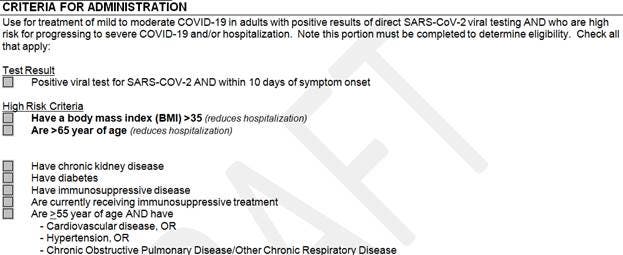
Currently, the hospital is offering two different types of monoclonal antibodies to patients who do not meet hospital admission criteria; namely a patient who does not require supplemental oxygen to keep their oxygen at a safe level. If eligible, patients can receive a monoclonal antibody infusion.
"The largest benefits are seen in patients who are obese and over the age of 65," said D'Angelo. "Having said that, the key is early evaluation and not waiting at home to see if you improve on your own. Seek medical attention early, especially if you have other medical conditions."
Monoclonal antibodies are laboratory cloned proteins derived from patients who have convalesced from COVID.
"We take the best antibodies, those most specific for the 'spike protein' of the virus and clone them. The infusion is given to a patient via an intravenous infusion, similar to what would look like a small bag of fluids. The drug is infused over one hour," said D'Angelo.
The monoclonal antibodies then recognize the COVID-19 virus as foreign and begin to attack it. Patients will stay in the emergency department for about an hour after the therapy is complete to monitor for any potential adverse reactions.
The hospital then follows up with patients after they are discharged.
There are 400 patients enrolled in the study, ages between 18 and 96, with an 87.5 percent success rate of keeping patients out of the hospital. A total of 12.5 percent have returned to then be discharged a few days later. There have been zero deaths after this drug was administered.
"That's wonderful news if we can keep patients out of the hospital that otherwise could potentially come back," said D'Angelo.
This antibody is being offered to those who and who have not been vaccinated since there are breakthrough infections.
"The number one message I want to get across is vaccines work. This is not a replacement for the vaccine," said D'Angelo. "Vaccines are doing their job."
To see if you are eligible for the antibody see below:
Have a news tip? Email alexis.tarrazi@patch.com.
Get Patch breaking news alerts sent right to your phone with our new app. Download here. Don't miss local and statewide announcements. Sign up for Patch alerts and daily newsletters.
Get more local news delivered straight to your inbox. Sign up for free Patch newsletters and alerts.