Health & Fitness
In the Night Time of the Mind, Part I
This story was inspired by my travels through Latin America, the streets of Valparaiso, Chile especially.
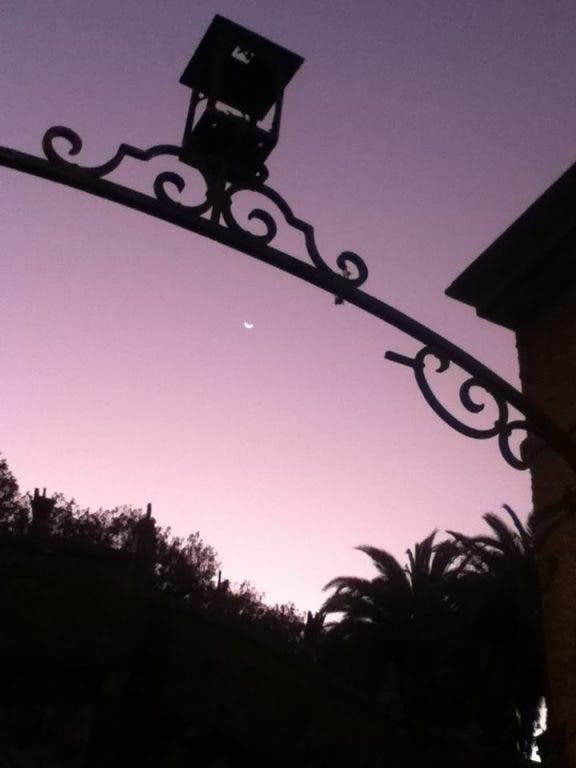
(Editor's note: This story was inspired by Latin America, the streets of Valparaiso, Chile especially. It will unfold in parts in Willow Zef's Local Voices blog.)
Sitting on the side of a hill, silhouetted figures absorb the beauty of a sky painted like the ocean. Placid with pinks and purples, they appreciate the sun’s artistry.
Slowly, as the sun sets down, and the sky fills up with stars, the people of the city fall into a light, playful sleep.
Find out what's happening in Collingswoodfor free with the latest updates from Patch.
The Dreaming
Street lamps flicker on and illuminate plazas, corners, and building facades. Spotlighting little areas like scenes from a play, the city becomes a theater stage surreal.
Find out what's happening in Collingswoodfor free with the latest updates from Patch.
The Maestro
I am ushered into the heart of the city by an old man, one who the residents call the Maestro. I do not know his real name. He introduces me to a sleeping culture, a culture in which people participate in a shared reality of dreaming.
From his language, I take it the Maestro is a special person, special in that he appears to be eternally asleep. “A sleep so deep,” he smiles, “my purr has the effect of a lion.”
He enlightens me with the idea of wakeful sleeping, what he describes as meditation.
In a slow, peculiar way, he guides me through an explanation of urban rivers and chirping geckos. Lit up by fireflies and a full moon, he appears like a gondolier at the stern of a long, imaginary boat, pushing us further into the night with his meditative songs.
Overcome by his world, I enter a peacefully detached state of mind.
Nocturnal Mysticism
Feeling fully rested, and ever intrigued by the old man, I ask around to find out all that I can. I learn very quickly he is what the people call a “nocturnal mystic.”
A man in the streets, with his slow argot, elaborates, “He spends most of his time in a subconscious state, acquiring knowledge from the collective dreaming of the cosmos.”
“His art is to sleep,” he states matter-of-factly, “and he lives his art.”
Upon this description, I am now unsure if I met the Maestro in waking, or if he visited me in a dream.
I walk off, downright dumbfounded by the implications of such a reality.
The Trance Lady
Perhaps by way of hypnotic intoxication, I find myself visiting a voluptuous woman, a woman who falls into a moment’s dream whenever she wishes. A practitioner of lucid dreaming, she is also a fantastic cook.
She details the sleeping culture for me, “There are many ways to meditate, many. By reading or breathing or holding a pose. I personally love being painted in the nude, but that’s just me,” she laughs with the spirit of a child. “Oh, and you can cross meditation with imagination. Like cooking,” she points at the meal she is preparing, “it is a way to meditate,” she breathes in the steam rising off of her pan, then concentrates for a moment, “it needs more spice,” she goes into her cupboard to search for the right one, “and, you can also use your imagination. For one, I never cook the same meal twice. Other people enjoy creating recipes, writing them down to hide or share. Whatever you do, it takes an imagination to be a good cook. I love when my food stock is low and I have to use what’s here… cauliflower, tomatoes and artichoke, who would have thought?”
She smiles, “And the best way to know a good meal is when it makes you laugh, a deep hearty laugh from feeling so goshdarn good inside! And that’s even before dessert!”
When we finish our meal, we talk over tea and coffee. Then we clean up.
We move into another room, where she eases right into different poses and postures. “This one, I call the Muslim,” she gets down on her knees, puts her head to the ground, and stretches her arms out in front, “to me, this is the most vulnerable position you can be in. Back and neck exposed, it is a surrender to the world. This is why I call it the Muslim… Islam translates to surrender, and peace. In surrender, we find peace… It is also called the child’s pose.”
She continues on and shows me the Buddha pose, which she describes as a lotus.
She then transforms, one at a time, into the frog, the lion, the snake and the Egyptian sphinx. “Shape shifting,” she says as she becomes a butterfly, “but it is more than just posing like a butterfly, it is the experience of being a butterfly.”