Health & Fitness
Invasion of the Remakes
Remakes of movies come in many varieties--to the point where saying "it's a remake" isn't enough.
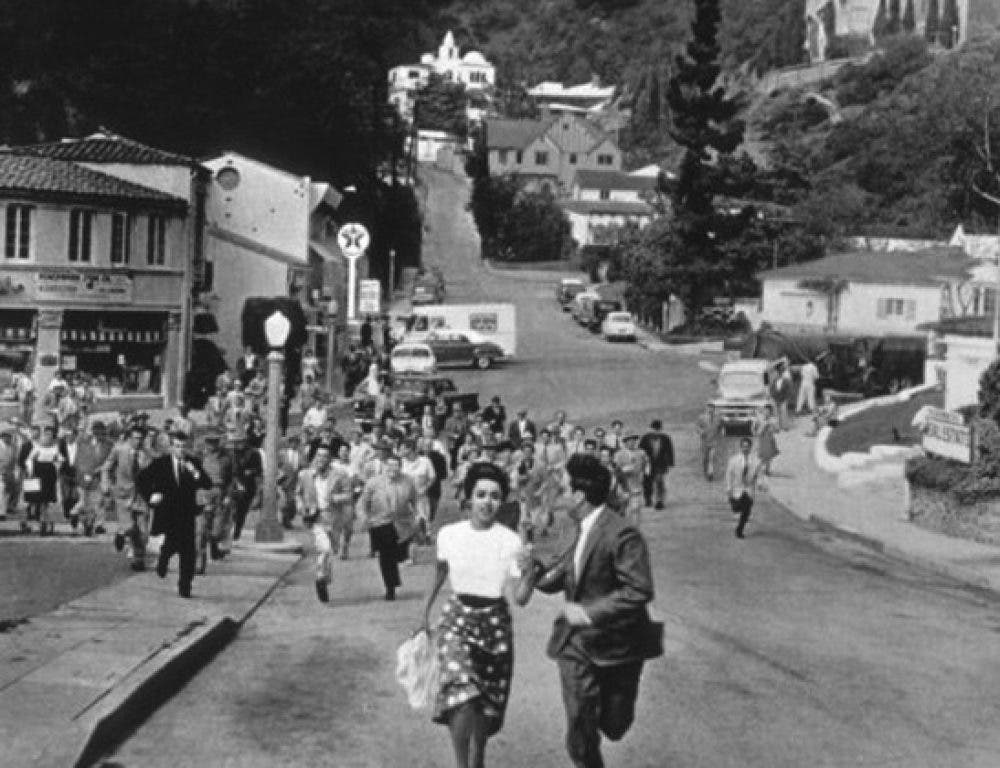
Remaking a movie seems like it should be a simple thing: take an old, popular film, update it for a new generation of moviegoers, enjoy a modest financial return. "Modest" because few remakes create superior box office.
At quick glance, few remakes appear in the IMDb all-time best moneymakers, King Kong (2005), Ocean's Eleven (2001), and Robin Hood (1991). Typically, producers of remade movies overestimate the value of their properties. The public often judges the remake to be the product of a lack of creativity in Hollywood; the sequel and prequel are understood to be equally symptomatic of this. But there is also a case to be made for the remake as an opportunity to tell a very compelling story.
A Star is Born, for example, is headed to its fourth version in 2013. The best version of The Maltese Falcon came out in 1941, but it had already been made twice: as Satin Met a Lady (1936), and Target: Harry (1968). Last week, I wrote about the three Things justifying a remake of The Thing from Another World (1951).
Find out what's happening in Collingswoodfor free with the latest updates from Patch.
When the Coen Brothers remade True Grit (2010), they said that they weren't remaking the 1969 John Wayne version, but rather making a film that followed the Charles Portis novel. This was the only case where I could watch the remake but not the original.
Then there's the most controversial remake ever: Gus Van Sant's Psycho (1998). Van Sant dared to take what could be described as an untouchable film (to name a few others in that pantheon: Citizen Kane, Gone with the Wind, E.T., Casablanca) and remade it shot by shot. It managed to break even financially, mostly as a curiosity, but the viewer rating on its IMDb page is a dismal 4.6.
Find out what's happening in Collingswoodfor free with the latest updates from Patch.
I'm sure many people voted it down without having seen it. The whole effort was generally deemed blasphemous or sacrilegious; I thought it imprudent at best, but I still watched it, up to and including the murder of Marion Crane (Anne Heche) murder. After that, I gave up.
I wasn't convinced by what I saw that Van Sant should have made the film. Intellectually, I knew this was Van Sant's film and had ideas particular to his cinematic vision. However, I couldn't transfer my feelings for the characters and actors of the original to Anne Heche, Vince Vaughn, and Viggo Mortenssen.
I wouldn't pronounce the film a failure, only a failure for me. I wonder whether anyone had watched the new Psycho without having seen the original. What would have been the response to it? (I also wonder whether Van Sant would bless a remake of Good Will Hunting.)
Hitchcock's films, I might add, were by no means inviolable before the 1998 Psycho. The 39 Steps (1936) has found two other versions, Shadow of a Doubt (1943) was turned into an obscure 1958 film called Step Down to Terror, and The Lady Vanishes (1938) was reproduced in 1979 with Elliott Gould and Cybill Shepherd.
Brian De Palma has made a career of grafting Hitchcock's stories and themes onto his own films, especially Dressed to Kill (1980) and Body Double (1984). Indeed, De Palma's takes on Hitchcock muddle the idea of what a remake is. In Body Double, as in Vertigo (1958), a character witnesses a death but misinterprets what he has actually seen. The second half of the film, however, deviates completely from both Hitchcock's narrative strategy (where we learn what really happens from Madeleine's point of view).
I prefer to classify Body Double as a Hidden Remake. No announcement or commotion attends the Hidden Remake. Miller's Crossing (1990) was such a venture, borrowing its principal charcters and setup from the Alan Ladd film The Glass Key (1942) before going its own way. Joan Campion's The Piano (1993) bore such a resemblance to The Trap (1966) that Campion was called a thief in some circles, but the two films diverge enough that no lawsuits have been filed.
Speaking of lawsuits, one notable remake was the product of one: Never Say Never Again (1983), a non-Broccoli and Saltzman produced Bond film. Apparently, Ian Fleming based much of the novel Thunderball upon an abandoned screenplay co-writen with Kevin McClory, who sued Fleming for the rights to the work and won. Fleming had to make a public acknowledgment of the plagiarism, which led to a remake starring Sean Connery, the happiest of accidents.
The Bond series also numers among its chapters a baroque form of remake: Casino Royale. The first Bond novel, to which Bond producers did not own the rights, was made into a Bond spoof in 1967 with an all-star cast and five directors. Not until 2006 was the film remade, with a new Bond (Daniel Craig), only that was not a remake, but a reboot, which launched an entirely new series, just as Batman Begins (2005) restarted a series that had originally begun in 1989 with Tim Burton’s Batman. This year, the Spider-Man franchise will be rebooted after only having been begun ten years ago.
Like the quick reboots, there are quick remakes, often from foreign sources. Before Batman Begins, Christopher Nolan made Insomnia (2002) after a 1997 Norwegian film. The Ring (2002) was made only four years after the Japanese film Ringu, and a number of Japanese horror films were then remade in English versions following its success. Dutch director George Sluizer remade his own film Spoorloos (1988) four years later as The Vanishing.
A Fistful of Dollars (1964), which made both the careers of Sergio Leone and Clint Eastwood, was taken directly and without credit (a stolen remake!) from Akira Kurosawa’s 1961 Yojimbo. Thirty-two years later, Walter Hill remade it as Last Man Standing with Bruce Willis. Kurosawa had several of his films remade, most famously The Seven Samurai (1954) became The Magnificent Seven (1960); Rashomon (1950), one of my favorite films, found new if turgid life as The Outrage (1964), with Paul Newman and Lawrence Harvey; and The Hidden Fortress (1958) became the foundation for Star Wars (1977).
The perennial question about remakes is how well they match their precessor(s). Our attachment to the originals (like mine for Hitchcock's Psycho) makes it an extremely difficult task. I was especially skeptical back in the 1970s when Invasion of the Body Snatchers was to be redone; like many, I didn’t think Don Siegel’s 1956 classic could be improved.
The original Invasion of the Body Snatchers was good enough to incorporate two equal if opposite interpretations. First, it was seen as anti-communist parable (like The Thing from Another World). A threat existed “out there” that would take away our freedom and individuality. Yet, most people I speak to tell me it’s an anti-Joe McCarthy story depicting mass hysteria to the communist threat. It’s your choice. Siegel also directed Dirty Harry (1971) in case you might wonder what he may have intended.
I don’t remember when I gave in and saw the 1978 version of Invasion of the Body Snatchers. Maybe after I became a fan of its director Philip Kaufman, who directed The Right Stuff (1983), The Unbearable Lightness of Being (1988), Rising Sun (1992), and Quills (2002). Or I may have been won over by its critical success: Pauline Kael wrote that it was the best film of 1978, and other critics have called it one of the best remakes ever. Don Siegel appeared in a cameo role late in the film as a cab driver, giving the remake some legitimacy, while Kevin McCarthy, who starred in the Siegel version of the film, appears to warn Donald Sutherland that “they” were taking over.
Kaufman’s film may lack the subtlety of the original, but makes up for it with wittiness; essentially, the film satirizes the New Age movement of self-fulfillment. The arrival of the insidious pods allow people to be all right with themselves; no more fighting or bad feelings. Psychology guru Dr. Kibner, played by Leonard Nimoy, exhibits no difference before or after being taken over. Kaufman’s version does accomplish something the original producers would not allow Siegel: a pessimistic ending. A new beginning and ending were attached to Siegel's film to give the audience the sense that the pods would be tracked down and destroyed. No such luck in Kaufman’s cinematic universe.
Two other versions of Invasion were made: Abel Ferrara's Body Snatchers (1993) and the $80 million Nicole Kidman/Daniel Craig vehicle The Invasion (2007). Like Van Sant’s Psycho, I couldn’t become interested in the characters in The Invasion; however, I found the situation they were in to be as frustrating and nerve-rattling as that of the earlier versions. Just like when I had watched the 2001 version of The Thing, the story elements still worked despite my intellectual indifference to everything else about The Invasion. I hope no more versions are made. I won’t be able to resist watching them.
Collingswood resident Bob Castle is an author, teacher, film critic, and playwright. In town, he is also the founder of the Collingswood Movie Club, which meets monthly in the public library for film showings and discussion.
Castle's writing has appeared in Bright Lights Film Journal, Film Comment, and The Film Journal. His plays have been performed during the Philadelphia New Play Festival, the Philadelphia Fringe Festival, and at the the Gone in 60 Seconds and "In a New York Minute" festivals.