Health & Fitness
My Wife's Most Compelling Films
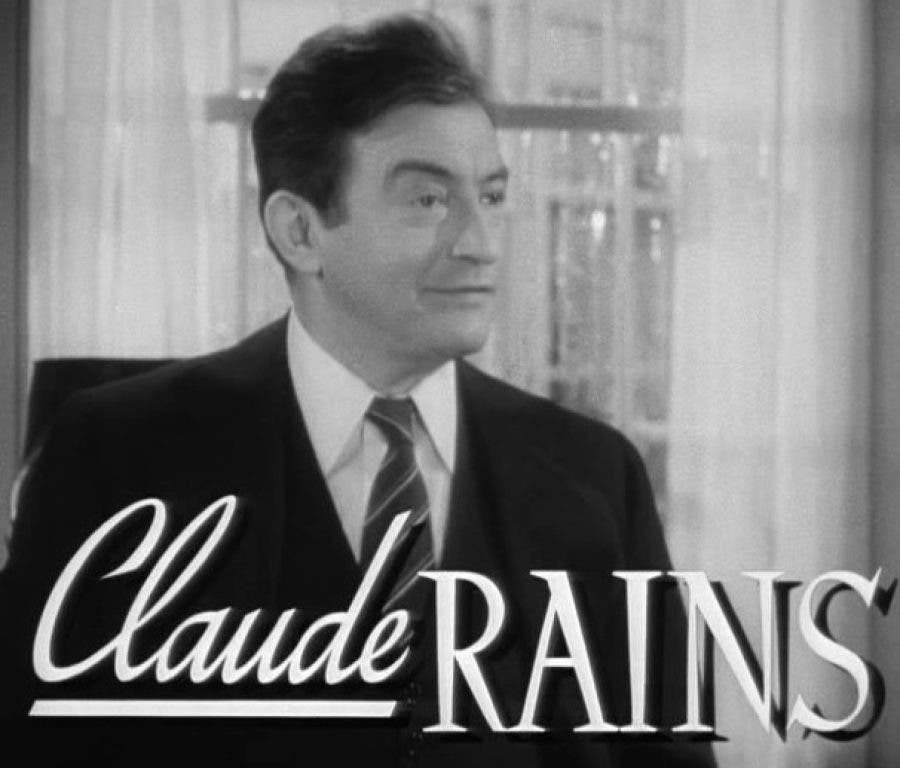
My wife's top five compelling films all have a romantic flare and the presence of the great character actor, Claude Rains.
My wife, Donna, knows my own list of compelling films because she always sees me watching them; the same goes for me knowing hers. I embrace particulars, like dialogue, whereas she embraces stories foremost.
Most of her five most compelling films appear regularly on Turner Classic Movies:
- Gone with the Wind (1939)
- Ben-Hur (1959)
- Now, Voyager (1942)
- Notorious (1946)
- Casablanca (1942)
The first four bring her to tears many times during their respective viewings.
Find out what's happening in Collingswoodfor free with the latest updates from Patch.
In Notorious, she cries with satisfaction when Cary Grant carries Ingrid Bergman down the stairs and outside to his car from the German consulate. The other four have gratifying endings, and all are touched with romantic themes and/or parent-children issues.
I don’t dislike any of them but am compelled to say—out of her earshot—that Gone with the Wind is the most overrated movie in the history of cinema. Only The Godfather (1972) and Road House (1989) seem to be on television more.
Find out what's happening in Collingswoodfor free with the latest updates from Patch.
It’s often described as a soap opera, and this might get to the heart of Donna’s enjoyment of it and my disinterest.
I can live with Clark Gable’s Rhett Butler, a Southerner who understood the South’s Lost Cause in the Civil War. At the beginning, he’s the only one at the end of the opening scene who isn’t enthusiastic over the attack on Fort Sumter. However, he manages to make enough money running the Union blockade to survive after the war—and get some response from Vivien Leigh’s Scarlett.
And I have nothing against Vivien Leigh. I just can’t deal with Scarlett’s constant machinations to get Leslie Howard, especially after her sister has married him. I’m thinking Leslie has the best sense to avoid her. She seems an utter bore!
As does all the phony Southern pride and angst after losing the Civil War. Gone with the Wind represents the myth of South’s horrible suffering, especially during Reconstruction.
The film's greatest achievement is its imprint on the American mind of the Civil War and Southern culture. Indeed, it may be the most watched film ever, even in my household.
On the other hand, I had the pleasure of viewing Ben-Hur on the big screen around 1970, in the golden years when films were available to theaters forever. The chariot scene lived up to its hype—besides, I was a fan of Stephen Boyd, whom I had watched in The Fantastic Voyage (1967) and The Oscar (1966).
Donna is particularly affected by the plight of Charleton Heston’s mother and sister. They have been imprisoned by Boyd; at the time he’s banished Heston to slavery and certain death.
When Heston returns to Jerusalem and gets Boyd out of the way, he’s determined to find his family—and discovers that they're living in a leper colony. After they witness Christ’s Passion, the women are cured of their leprosy; a miracle of the Christ.
(A bit of trivia: The novel Ben-Hur was written in the 1880s by Lew Wallace, former governor of the New Mexico territory during the days of Billy the Kid, as an antidote to the influence of Darwin’s theories.)
Notorious is one of Hitchcock’s best, and his best film with Ingrid Bergman; if not, it features one of his best couples, Grant and Bergman, who engage in an extremely complex relationship.
Despite loving her, Grant pushes Bergman to marry Claude Rains in order to get “vital” information from a group of Nazi sympathizers. Grant believes he can continue to love her; however, the secret mission might force her to stay with Rains indefinitely.
Rarely can one sympathize with the villain as at the end of Notorious. Grant promises to take Rains along if gets them outside the consulate. If the other Germans find out that he’s married a spy, he’s a dead man.
Grant doesn’t let him into the car, and drives off; Rains’ German friends await at the front door for him to explain. He is a dead man.
To understand what compels Donna to watch Now, Voyager besides the love story (Paul Henreid lights two cigarettes at once and gives one to Bette Davis—yes, that—and the fact that their love is thwarted by his being married), go no further than Claude Rains.
In Now, Voyager, Rains appears as Davis’s doctor and, essentially, makes him see that life is worth living. His appeal in this film greatly comes from his fatherly approach, with a voice that seems to instantly quell fear and anxiety.
He played Napoleon (Rains was 5'6") in Hearts Divided (1936) and Louis Napoleon III in Juarez (1939). In The Adventures of Robin Hood (1938), he added another royal figure in the guise of Prince John, the future John I of England.
He was Senator Paine in Mr. Smith Goes to Washington (1939) and the heavenly title character in Here Comes Mr. Jordan (1941); Lon Chaney, Jr. is his son in The Wolf Man (1941).
You can also find Rains in Ronald Reagan’s best film, King’s Row (1942), the Phantom in Phantom of the Opera (1943), and in another of Donna’s favorites (but played less often on TCM), Mr. Skeffington (1944).
Rains performed many memorable roles, receiving Oscar nominations for four of them—including his role as Captain Louis Renault in Casablanca (1942), famous for the line:
I'm shocked—shocked—to find that gambling is going on in here!
Postscript: One day, I happened to meet Donna's gynecologist. Afterward, I mentioned to her he seemed very familiar, but that I couldn’t place him. Donna suggested that perhaps it was because he looked like Claude Rains.
My God, yes. He was the only male gynecologist that she trusted.
Collingswood resident Bob Castle is an author, teacher, film critic, and playwright. In town, he is also the founder of the Collingswood Movie Club, which meets monthly in the public library for film showings and discussion.
Castle's writing has appeared in Bright Lights Film Journal, Film Comment, and The Film Journal. His plays have been performed during the Philadelphia New Play Festival, the Philadelphia Fringe Festival, and at the the Gone in 60 Seconds and "In a New York Minute" festivals.