Health & Fitness
The Thing about THE THING (and some other things)
Does the 2011 remake of the John Carpenter classic get to be too much of a good Thing?
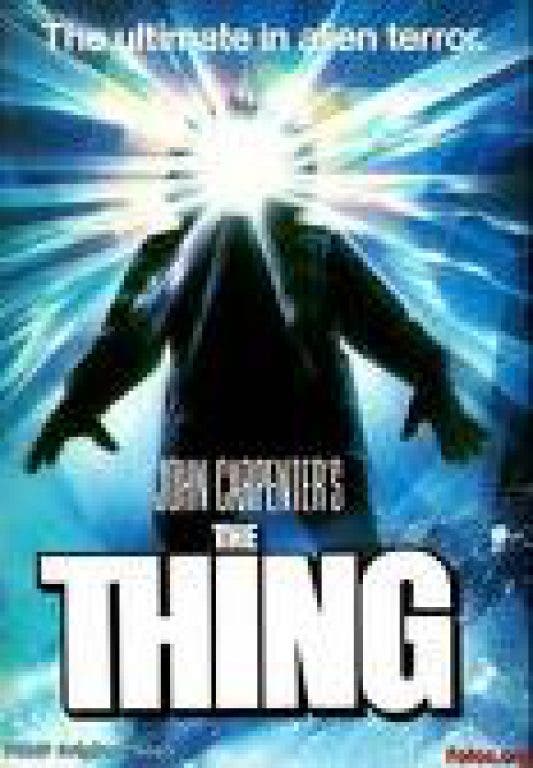
Two months ago I realized it had escaped my notice that a remake (or a prequel) of The Thing passed through movie theaters in October 2011.
Not that I would have been enticed to go. That’s the thing with remakes (or prequels), especially remakes of films that can’t be topped, like John Carpenter’s The Thing. But I was curious to see the new Thing and put it at the top of my Netflix queue two months ago.
Low expectations made the film seem much better than it probably was. I hadn’t been so tense watching a movie since I saw The Ring (2002)--or better, creeped out--despite knowing everyThing that was going to happen.
Because this Thing, directed by Matthijs van Heijningen Jr., followed Carpenter’s Thing Thing by Thing by Thing, and as I hadn't read anyThing about it (and because prequels don't generally share the same titles as the first movie made in a series), I approached the movie as a remake. Yet I had a feeling throughout that it wasn’t quite a typical remake.
I sensed an immediate connection between the two Things, starting with the use of Ennio Morricone’s thump-thumping soundtrack from the original 1982 Thing. My sensors vibrated when the new Thing opened with a Norwegian scientific team in the Antarctic. Finally, in the film's closing sequence, when a Huskie jumps out of a window followed by several men in a helicopter, the prequel fused its connection with Carpenter’s original Thing.
But did this final hinge moment convince me I was watching a prequel? Wasn’t it really a remake? Could the music, a few Norwegians, and a font-matched title sequence make this Thing more than it really was?
Find out what's happening in Collingswoodfor free with the latest updates from Patch.
I decided it is a prequel and a remake--and more.
The first Thing to which the 2011 The Thing pays homage is The Thing from Another World (1951), which stars James Arness of Gunsmoke fame. Produced by Howard Hawks, it had its own brand of tension, horror, and humor. Hawks’s Thing became a parable of Communist threat, its internal battle among scientists and Air Force personnel centering on the how the Thing should be dealt with.
Find out what's happening in Collingswoodfor free with the latest updates from Patch.
Says one scientist: “There are no enemies in science, only phenomena to be studied.” Did the James Arness Thing (called, in one memorable line, “an intellectual carrot”) represent a new kind of consciousness that could teach the human race a thing or two, maybe make us aware of our red-meat diets? Or was it a cold-blooded killing machine out to make mankind a source of its sustenance (our blood)? These arguments, absent in Carpenter’s Thing, appear early, if briefly, in the new Thing.
Remake or prequel or homage, the new Thing made me wonder what hold this Thing thing has on movie audiences. The first Thing preyed upon a War of the Worlds/Cold War fear that the human race could be wiped out. What makes Hawks’s Thing so Hawksian is its depiction of ordinary men and women confronting a more powerful enemy (as in Rio Bravo and El Dorado, but with only Kenneth Tobey and not John Wayne to help them!)
By 1982, the United States did its own version of shapeshifting thanks to the Me Decade and Culture of Narcissism. The breakdown of community and dissolution of trust among people and governmental authority were the new motivators of fear and malaise. Carpenter’s Thing showed a microsocmic world absorbed with itself, a world where people thing-i-fied themselves, becoming deader and more deadly to everyone around them. In Carpenter’s Thing, like Hawks’s, these circumstances force a battle to save the world, but its outcome is no sure Thing. A world of uncooperative, mistrustful individuals cannot battle Things the way those men in Hawks’s Thing could. Who can tell friend from foe when the difference between a human Thing and a human non-Thing is so indeterminate?
Besides eliminating the human race (our general fear), Carpenter's Thing depicts the xenophobic fear of being overtaken by an alien force. Hawks' Thing showed this fear as a singular defining element of bloodthirsty mass murder, whereas the 1982 and 2011 Things depicted multiple shapeshifting killing machines. “Who Goes There?”, the 1938 science fiction story by John W. Campbell that inspired these movies, siezes on our primal fear that someone out there--communists, aliens, terrorists--wants to take away our wonderfully abundant life. Such stories don’t appear frequently previous to the 19th century and the Industrial Revolution, but The Thing is not alone in exploiting this fear in cinema.
Ultimately, does the new Thing have any message or meaning to add to what was already shown in the previous two Things? Has the world progressed or regressed in the last thirty years? The 2011 Thing portrays a time before the 1982 Thing: no internal linear progress. Nor does the new Thing offer much commentary on the America of our own time. One feels throughout this Thing that there’s not much at stake. The battle will continue, forward into the past, at the American camp, where R. J. MacReady (Kurt Russell) is waiting.
Collingswood resident Bob Castle is an author, teacher, film critic, and playwright. In town, he is also the founder of the Collingswood Movie Club, which meets monthly in the public library for film showings and discussion.
Castle's writing has appeared in Bright Lights Film Journal, Film Comment, and The Film Journal. His plays have been performed during the Philadelphia New Play Festival, the Philadelphia Fringe Festival, and at the the Gone in 60 Seconds and "In a New York Minute" festivals.