Community Corner
'Four Centuries' Tells History of County
Cranford's Crane-Phillips House Living Museum is part of the tour.
If you want to get a glimpse of some 17th Century architecture, 18th Century cuisine, 19th Century art and 20th Century theater all in one weekend, Union County is the place to be Saturday and Sunday.
Four Centuries in a Weekend will take you on an edifying trip through time, as you journey through the evolution of Union County.
The County, as we know it today, was initially part of Elizabethtown, founded in 1664 as the first English settlement in New Jersey.
Find out what's happening in Cranfordfor free with the latest updates from Patch.
By the 1750’s and later during the American Revolution, as prominent political figures began to inhabit the area, Elizabethtown grew in name and numbers. And by 1857, as new types of transportation flooded the region, the area incorporated as Union County, the last county in New Jersey. Now, half a million people and twenty-one municipalities occupy Union County.
This weekend, 25 of the county’s historic structures which lived this story will be open for extended hours to the public.
Find out what's happening in Cranfordfor free with the latest updates from Patch.
The sites, which include mansions, farmhouses and some business establishments, tell stories from different time periods throughout the four centuries, from the initial settlements and transportation waterways, to the lifestyles and culture of the area’s inhabitants. The structures house historical documents, furniture, tools, toys and other slices of history from this area.
Four Centuries in a Weekend started in 1994, according to Barbara Fuller, administrator of the Union County Office of Cultural and Heritage Affairs. It became an annual event in 1997.
Typically, “many of the sites are not open at the same time,” said Fuller. “So the idea of the tour was to get all of the sites open” together. The event has grown from 16 sites included the first year, to 25 this year. “It’s very popular,” said Fuller. “About 3000 people come every year.”
“You put all of these sites together and they do tell the story of the county,” said Fuller. She said in the Four Centuries in a Weekend booklet, available at each historic location, the sites are divided into clusters which relate to a particular era.
The booklet states: “By learning the history of the Clusters and by looking at them collectively, the Four Centuries visitor will understand and appreciate life in Union County today.” Maps are also available at each site on the tour.
Fuller said some visitors see several sites, while others visit one or two local ones. She said the wide range of exhibits throughout the County appeal to families, seniors, history buffs and schools. “We’ve even had English as a second language classes come to practice their English and learn about their new home.”
“What we did early on was to sit with teachers and develop a lesson plan packet,” she said. “It gives various activities to do with the kids.” Fuller said parents, teachers and scout leaders all use the educational packet.
This year, “Time Travelers Sweepstakes” give kids added incentive to visit the sites. Young visitors will get a coloring book at each site, and an activity sheet with questions to answer during the tour. They can then enter a contest to win tickets to live shows within the County, including New Jersey Ballet’s Sleeping Beauty, The Theater Project’s It’s A Wonderful Life and Cranford Dramatic Club’sAlice in Wonderland.
“If the kids go to one site and mail the entry form, they have one chance,” said Fuller. “If they go to four, it increases their chances of winning.” She said kids will also get a Time Traveler’s certificate.
All children are also invited to attend the free Young People’s Concert given by the New Jersey Intergenerational Orchestra on December 5 at Oak Knoll School in Summit.
“Very few of the sites have paid staff. We really have to acknowledge the wonderful job that the volunteers do,” said Fuller. “It’s a partnership between the sites and the County for this weekend.”
Extended hours for most sites this weekend are Saturday 10 am to 5 pm, Sunday 12 pm to 5 pm. While some sites do special events, others are just open extended hours to the public. For further information, contact the site directly.
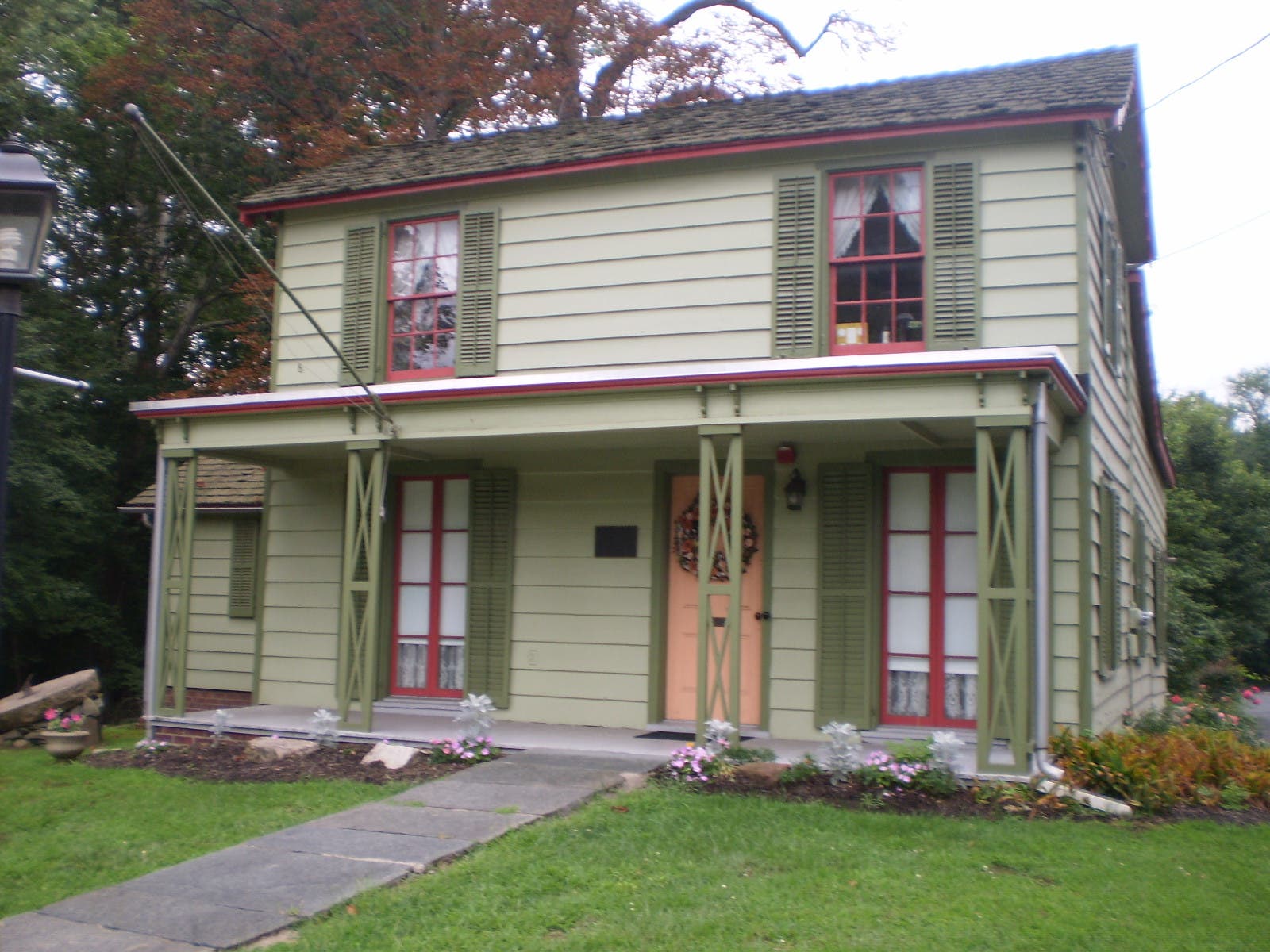
Cranford participant, the Crane-Phillips House Living History Museum, is a small Victorian-style house built in 1840 by Joseph Crane as a honeymoon cottage for his son Josiah Jr. In 1867, it was sold to Henry and Cecelia Phillips, who built additions to the property. The house depicts the architectural style of Andrew Jackson Downing, the first real American architect, and houses a collection of antiques, Revolutionary and Civil War artifacts, old tools and farm equipment.