Seasonal & Holidays
Stay Fire Safe This Halloween By Checking Your Smoke Detectors
Fire departments are on high alert on Halloween because for the last several years, property fires have been fairly common.

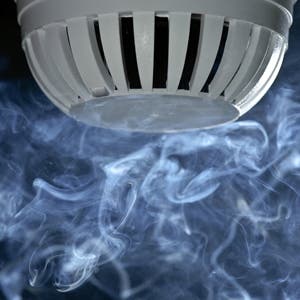

Clark, NJ October 14th, 2015 - Halloween is approaching, and over the next several weeks, millions of Americans will look to make memories and draw up the spirits of All Hallows’ Eve past by attending costume parties, touring corn mazes or experiencing bone-chilling thrills with a haunted house visit. But for hundreds - potentially thousands - of Halloween revelers, Oct. 31 will be one to remember for all the wrong reasons.
Fire departments are on high alert on Halloween throughout the United States, because for the last several years, property fires have been fairly common. For instance, between 2009 and 2011, an estimated 11,300 fires were reported to local emergency response departments in the days leading up to Halloween, according to data from the U.S. Fire Administration. Of these, nearly three-quarters - 73% - were either outdoors or residential in nature. Insurance losses totaled $96 million, 30 people lost their lives and 175 were injured.
Many of these tragedies could have been avoided, however, had a working fire alarm been in place.
Find out what's happening in Cranfordfor free with the latest updates from Patch.
These past seven days have been a part of Fire Prevention Week. Organized by the National Fire Protection Association, the goal of the awareness period is to remind homeowners and families about how easily fires can start when the appropriate precautions aren’t taken. It’s also about ensuring that any losses experienced are kept to a minimum.
‘Hear The Beep Where You Sleep’
Each awareness period has a theme and this year’s is “Hear The Beep Where You Sleep,” meaning that in addition to having at least one smoke alarm on every floor of the house, there should also be one installed outside each bedroom in the home. According to NFPA’s statistics, roughly 50% of home fire deaths reportedly happened between the hours of 11 p.m. and 7 a.m., the time period in which most people are sleeping.
Find out what's happening in Cranfordfor free with the latest updates from Patch.
When smoke detectors are properly installed, however, the risk of injury or death is cut in half, based on NFPA’s estimates.
Before the month is out, make sure you take the following safety precautions to ensure you and your family’s safety in the months ahead, as the cold weather season is the most common period for structure fires:
Perform a spot check
Go throughout your house and count how many smoke alarms you have. If your house is sizeable, you may want to install more than you currently have to ensure that everyone can hear the beep when smoke is detected.
Replace batteries
When is the last time you replaced your detectors’ batteries? Generally speaking, batteries should be swapped out for a fresh set once a year, ideally at the same time. Many people do it semi-annually when the clocks are turned back and ahead.
Use both types of smoke alarms
The two most common kinds of smoke detectors are ionization and photoelectric. The former respond best when there’s flame, while the latter are quick to pick up smoke. NFPA recommends using both kinds to enhance their effectiveness, as each home fire has a different composition.
Make note of when you install alarms
Smoke detectors, like most other things, have a shelf-life, meaning that they’re effective for only so many years. If you’ve just installed your fire alarms, they should be good for 10 years. Have them replaced a decade from now.
Roughly 60% of fire deaths occur in homes without smoke detectors or those that have some but are not working, according to NFPA’s estimates. Be sure to keep yourself and your family safe this year by taking these precautions seriously.
For more information on homeowners insurance and how it can protect your financial well-being after a loss, please visit The Insurance Centers site. Or contact Zita Santos-Martinez at 732-832-4132.
Typically, a home insurance policy provides coverage for residential fires, both for structural damage as well as the replacement of belongings. Your coverage professional will point you toward the policy that’s best for you.
Photo and article courtesy of Selective Insurance Group, Inc.