Politics & Government
Deflating Debating
Republican political debates are everywhere these days, which can mean only one thing: The next presidential election is right around the corner. (And by "right around the corner," I actually mean "about a year away.")
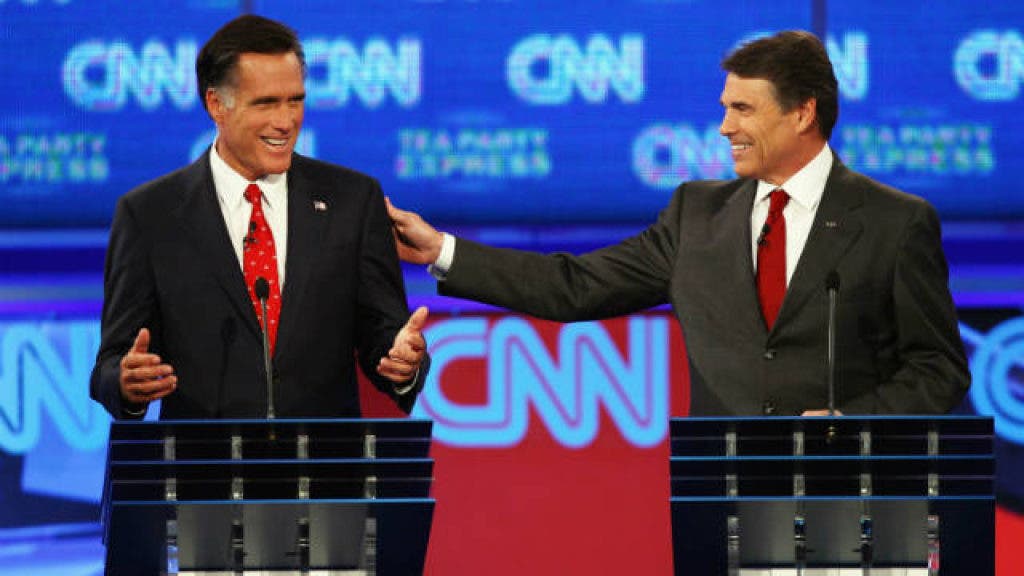
It’s impossible to channel-surf these days without stumbling onto some sort of political discussion show. Fox News, MSNBC and CNN all have some version of these chatter-fests. Comedy Central’s Jon Stewart even hosts one, proving that the public prefers well-written comedy to journalistic integrity. (The overwhelming popularity of this column is further proof of this, and might also be a good indication that East Brunswick Patch readers have somewhat questionable taste.) Over the last few weeks, however, it’s become difficult to avoid a different kind of political silliness – debates. Turn the tube to any channel even remotely related to politics at any time of the day and you’re bound to encounter either a live debate or a replay of a debate or a minute-by-minute breakdown of a debate or a reenacting of a debate with puppets replacing the actual participants. (This last one is how Comedy Central chooses to cover these events. As a journalist, I’m offended that they discuss serious political stories using felted puppets and bad ventriloquists. The puppets they use are so darn cute, however, that I can’t muster up the proper amount of anger. You win this round, Stewart.)
Unable to avoid the vast debate coverage, I sat down in front of my television and, being the mediocre reporter I am, grabbed a pen and paper to take notes on the issues the candidates were guaranteed to discuss. I was prepared for a series of pointed questions followed by clear-cut answers. That isn’t what I got. In fact, I wasn’t even watching the debate I thought I was going to see. Apparently this current round of debates is for the Republican primaries, something that became evident just a few minutes into the telecast because a) there were no Democrats on the stage and b) the bottom of the screen said “2012 Republican Primary Debate.” I hurriedly checked the calendar on my phone (because, really, who has a wall calendar anymore?) and realized that the election these people were fighting to win was the one to see who would eventually run against President Obama in November of 2012, 15 or so months from now.
Can this be possible? I realize I haven’t been a voting American for very long, but it strikes me as strange that our political structure has become beholden to an arbitrary and protracted campaigning period. Maybe I just never noticed it before or, and this is possible, maybe I’m the only one who gets exhausted by the silly ceremonial touches that undermine the offices these people strive so hard to attain. At what point do these people stop running for office and actually govern?
Find out what's happening in East Brunswickfor free with the latest updates from Patch.
(Side Note: How overblown and ridiculous is the introduction the president gets when he enters Congress for speeches. One person loudly announces his entrance at the doorway and then everyone mauls the commander-in-chief as he walks down the aisle. After everyone finally sits down, the speaker of the house yells his name again and everyone jumps out of his or her chair as though they didn’t know it was coming. This entrance feels more like it should be reserved for Hulk Hogan than the president of the United States. Can’t they just give him a polite “golf clap” and then take their seats?)
The worst part of the debates I’ve watched over the last few weeks is easily the exclusion of New Jersey’s fearless leader, Gov. Chris Christie. Is it possible that he’s actually not running for president like he’s claimed all along? That would mean all those campaign jokes I’ve already written for Christie's 2012 race will be wasted. Gems like “Obama’s Too Iffy, Vote for Chris Christie” and “Chris Christie – Hungry for Change” might never get to see the light of day.
Find out what's happening in East Brunswickfor free with the latest updates from Patch.
Ultimately, this current round of premature debates is an exercise in futility. Occasionally these intra-party events have minor kerfuffles (like the very entertaining Hillary Clinton/Barack Obama feud that boiled over during a few 2007 Democratic debates), but more often than not the candidates dance around not only the issues, but also their opponents. So far, the only real fireworks from these debates have been Rick Perry’s claims that social security is a “Ponzi scheme” and Ron Paul’s refusal to answer a question about whether a man without health insurance should receive life-saving care funded by the state.
“That's what freedom is all about. Taking your own risks,” said Paul, who is both a medical doctor and strongly opposed to all sorts of government intervention. He shook his head while adding: “ This whole idea that you have to take care of everybody…”
Is it just me, or is it a little disheartening to hear a doctor publicly admit disapproval over providing medical treatment to a single patient because the costs won’t be covered? Paul eventually relented and said the state should not let the man die, which – while nice – undermines the larger issue. It’s simply not enough for Paul to hypothetically save a life. That’s easy to do. (For example, I just imagined myself diving into the ocean and saving some stranger from drowning.) In that situation, Paul shouldn’t respond solely to some story the interviewer fabricated to make a point, but should rather explain why the concept associated with the story concerns him.
Maybe this is the fault of the interviewer – in this case CNN’s Wolf Blitzer – who should have avoided nebulous hypotheticals and questioned the topic itself. Or maybe it’s the fault of Ron Paul himself, who chose to half-heartedly rescue a fictionally uninsured guy instead of speaking in larger terms about healthcare and his views on personal responsibility and “taking your own risks.” In truth, both are probably to blame, but no more than the very nature of these pointless debates, which cater more to rhetoric and the galvanization of one’s supporters than they do to an actual dialogue on the issues.