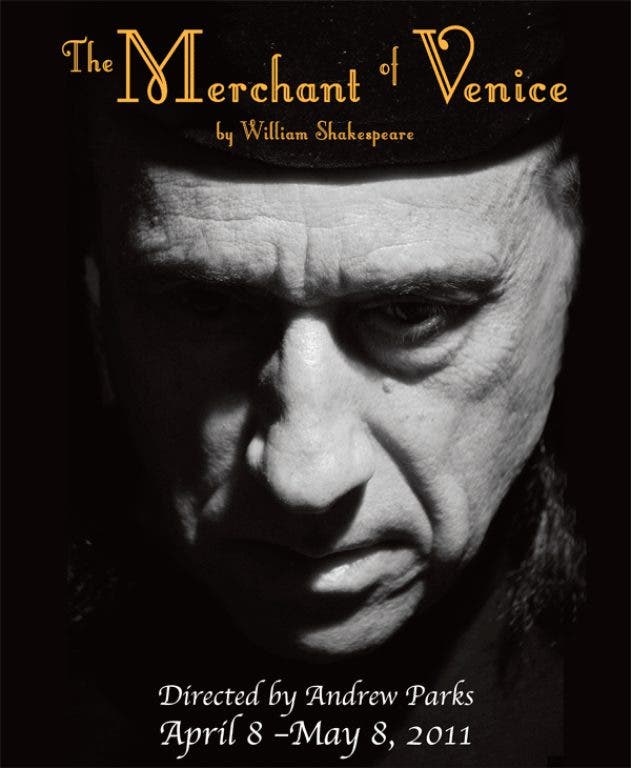
The Merchant of Venice, directed by Andrew Parks, is one of Shakespeare’s most popular and memorable plays. It tells the tale of Bassanio, a young aristocrat who has squandered his money and now seeks the means to woo Portia, the renowned heiress of Belmont. Bassanio seeks the aid of Antonio, a wealthy merchant and his dear friend. Although Antonio’s wealth is currently engaged at sea, he agrees to borrow the needed money from Shylock, a Jewish moneylender and Antonio’s mortal enemy in Venice. Shylock agrees to lend the money on one condition: if the money is not returned on time, the forfeit shall be a pound of the merchant’s flesh, nearest his heart.
Parks was drawn to direct the play because of its powerful characters and timely themes. “What makes The Merchant of Venice so unique is that it is a comedy with a tragedy embedded within," says Parks. “The story features Shylock, a Jew tormented by his society and betrayed by his own daughter. Although Shylock is the villain of the play, his anger is justified due to his mistreatment by the other characters. By the end of the play, the audience will inevitably feel sympathy for his fate, even though he sought to take the life of another man.”
“Despite this tragic undercurrent, the main plot of the story is more light-hearted,” asserts Parks, “and the rich characters of Venice and Belmont will certainly delight and entertain modern audiences.” Parks believes in making Shakespeare accessible for everyone, especially those who are not used to it. The play is cut to run in under two hours, and the actors are trained to speak Shakespeare's verse with a conversational, easy to understand tone.