Politics & Government
Fair Lawn Finance 101: The Competivization Commitee
Team of volunteers explores ways to cut the borough's costs, bring in new revenue



The CEO of a construction consulting firm, Lou Weiss, previously volunteered his services to help Fair Lawn save $1.7 million during the building of its community center.
These days, he's leading a team of volunteers trying to close the borough's $1.2 million budget gap.
Weiss chairs the Competivization Committee, a group of professionals–many of whom are certified public accountants–who work to come up with recommendations to cut costs for the borough and bring in new revenue.
Find out what's happening in Fair Lawn-Saddle Brookfor free with the latest updates from Patch.
Putting in heavy volunteer hours is a reflex for Weiss, who over the last 38 years living in Fair Lawn has served in the Police Reserve, helped re-start the Rescue Squad, and been the president of the Rotary Club and Radburn Association.
"People ask me recently 'What do I do for a hobby?' and I say 'volunteer and help people,'" Weiss, head of WFM Projects and Construction in Hackensack, said.
Find out what's happening in Fair Lawn-Saddle Brookfor free with the latest updates from Patch.
Given Fair Lawn's finances, finding volunteers was the only way to make the Competivization Committee a reality in January 2009.
"The beauty of your committee is we can't afford you," Mayor Joseph Tedeschi told Weiss at a borough council worksession Sept. 7, when the committee updated the council on its research.
The 10-member committee also includes professionals in public relations, facility use, marketing, and technological advancement, but with a heavy dose of CPAs, it's no surprise that it views Fair Lawn's antiquated accounting software as a major area that needs fixing. Without up-to-date tools, the borough can't fully diagnose it's problems, let alone solve them, Weiss explained.
"How could you afford not to?" Weiss said of upgrading the software. "How are [borough employees] making decisions? How do we know [the] $1.2 million [budget gap] is correct?"
An ongoing project for the committee is evaluating whether Fair Lawn should privatize the water system, recycling services, and park maintenance. Fair Lawn has a strong water system, but that doesn't mean it has to stay put, Weiss said. The committee has met with United Water to discuss selling the system to them. The loss of control over personnel is one potential drawback, Weiss said.
"The [water] system is very good, but it also has a value," Weiss said.
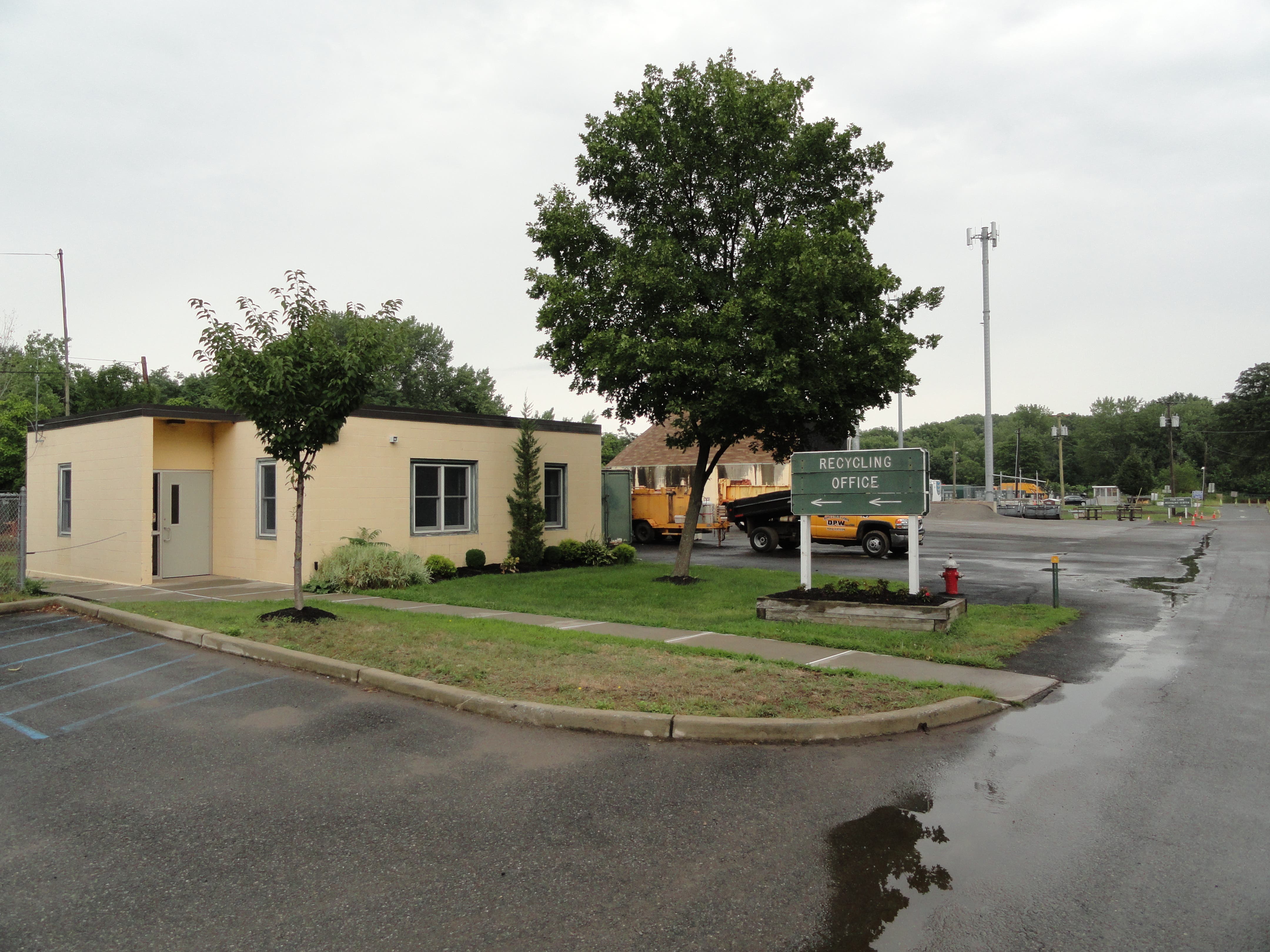
Possible cost-cutting measures include tying the borough's recycling into garbage pickup, meaning the money spent on spent on trucks, personnel, and property could be used on something else, Weiss said. It might also be worthwhile to experiment with changing twice a week summer garbage pickup to once a week, he said. As far as privatization of these services goes, the committee still needs to gather more information to form its recommendations.
"As a group, we all feel that privatization is important and there are certain items that can be privatized," Weiss said. We're not sure as a group that that's the case on all three of these."
Whether it's the water system or other areas, the committee can make recommendations to the borough but cannot make any final decisions or implement any programs, Weiss said. Another important factor is the committee's apolitical nature, he said.
"We will not get involved on any kind of political issue, we're not pushed or judged by politics at all," Weiss said.
While the committee's initial focus was on cutting costs, finding new sources of revenue for Fair Lawn has come to the forefront because, "You can only cut so much before it finally starts hurting," Weiss said. New revenue can come from selling advertising space on garbage trucks and other town vehicles, or offering the borough's human and material resources to other municipalities.
"We have a tremendous organization of people here in town from different departments, maybe we could outsource to Glen Rock, to Elmwood Park, to towns around us," Weiss said. "Maybe we could be doing some of their stuff. We have the equipment, we have the people, we have the knowledge. Rather than cutting people here, maybe we should be helping [other towns]."
With Fair Lawn's industrial park off Route 208 not the bustling commerce center that is used to be, and no guarantee of Nabisco keeping its antiquated facility there in the long run, the borough needs to attract new businesses to that area, Weiss said. A perfect fit would be a 100-acre biotech campus, he said, because of the area's proximity to hospitals, highways, and New York.
"It has a lot of jobs, but what would take its place?" Weiss said of Nabisco, if it were to leave Fair Lawn. "That whole area [off 208], there are some empty buildings there now."
Besides for Weiss, the committee's members Mazen Alwai, Peter Briskin, Tod Christianson, Raymond Hallock, Howard Hyde, Kevin Porzio, John Mancinelli, Raymond Vuoncino and Charles Wrubel.
Once borough employees weren't being replaced after leaving or retiring, Weiss said department managers realized the gravity of Fair Lawn's economic dilemma.
"Everybody right now is working a lot leaner and meaner, and it's happened here in the town too," he said.
Tedeschi said the committee is about "making systemic changes and changing the way we are doing business." As a longtime Fair Lawn resident who is close with many public employees, Weiss sees his chairmanship as an important personal duty.
"I feel I have an obligation to do something for the town, to try and number one save jobs as well as bring in revenue and see if there are some cuts that need to be made," he said.
Get more local news delivered straight to your inbox. Sign up for free Patch newsletters and alerts.