Schools
Health Care Savings Were Sticking Point in Teachers' Negotiations
The Teachers Union and the Board of Education will be back at it in November negotiating the next teachers' contract


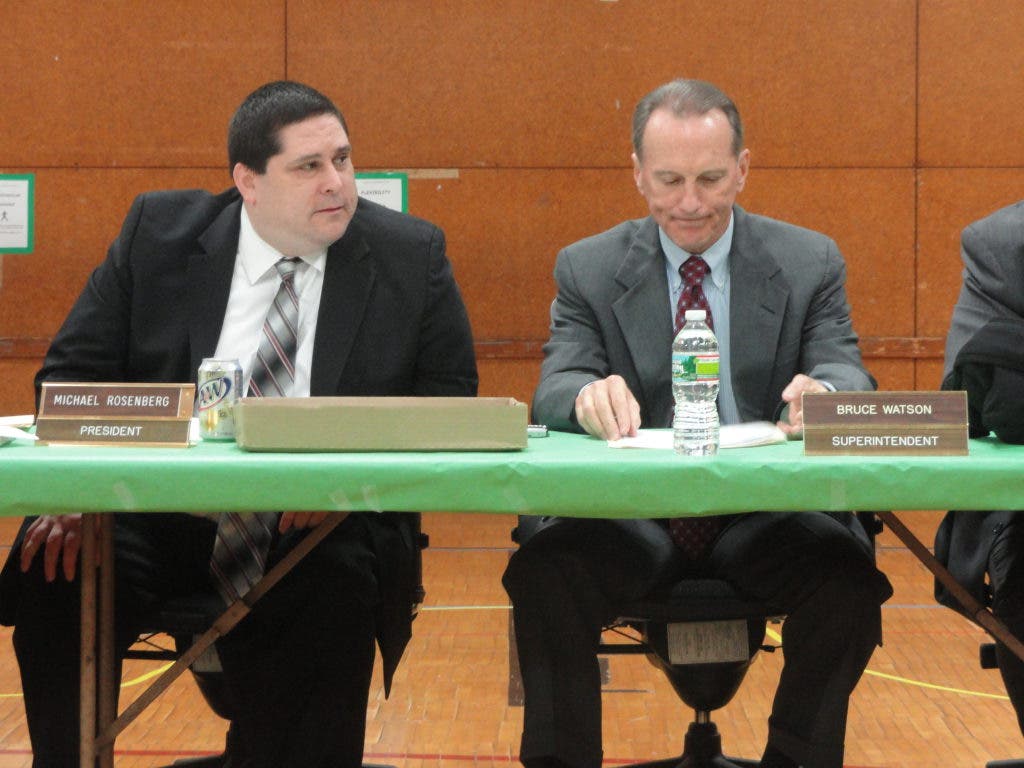
It took some two years of negotiations, but the Fair Lawn Education Association and the finally .
“It’s been a tough two years,” union president Gene Kuffel said following the board’s ratification of the agreement.
John Mancinelli, who has negotiated five teachers’ contracts in his board tenure, said this was the longest set of talks he’d endured, characterizing it thusly:
Find out what's happening in Fair Lawn-Saddle Brookfor free with the latest updates from Patch.
“When the people across the table from you don’t want to hear what you’re saying and you can’t accept what they want.”
Mancinelli said there were many nights when negotiation talks stalled entirely, forcing the board to switch tactics.
Find out what's happening in Fair Lawn-Saddle Brookfor free with the latest updates from Patch.
“We changed the way we negotiated and we changed the personalities of the people we negotiated with…and finally, we hammered it out.”
The already tricky prospect of negotiating a fair contract was made more difficult by the onslaught of economic reform legislation coming out of the statehouse.
“Unfortunately, the realities of some of our challenges in this negotiation weren’t necessarily with the board,” Kuffel said. “It was everyone responding to what was going on in Trenton and the lawmakers and the hand that they’ve been playing in really disrupting negotiations across the state.”
Public employees statewide face the prospect of paying more for healthcare benefits while suffering cuts to pensions and sick leave payouts.
“Public employees are worried,” said board president Michael Rosenberg, himself a teacher in the Hillsdale School District. “And that played into the negotiations, because if you’re in the middle of negotiations and all this is coming down from the state, that’s something that the board has no control over.”
A number of sticking points prolonged negotiations, but it ultimately came down to the amount of savings that would be generated by switching teachers from a private to a state health benefits plan.
Teachers touted over $1 million in savings as a result of the move; the board disagreed with the numbers, and still doesn’t anticipate quite that level of savings.
But the turning point in negotiations came when the savings the union was claiming got close enough to the board’s estimates that a deal could be struck.
“When we both saw the change as being pretty much real numbers,” Mancinelli said, “we were able to put the last pieces together in one night.”
In the end, both sides came away with what they believe is a fair contract.
“I think it was a win-win for everybody,” said Kuffel, who acknowledged that there’s no such thing as a perfect settlement.
“Nothing is perfect anymore,” he said. “But it’s about the give and take and what’s the best package overall at that time.”
In this case, the winning package calls for teachers to switch from private to state health insurance and receive an annual 2.47 percent salary bump on average over three years. In givebacks, elementary teachers will lose five minutes per day of lunch/prep time that will be converted to classroom instructional time.
Both the board and the teachers agree that the health insurance switch is a major cost savings move that comes at no loss in coverage quality.
“If you can get the same quality…for less money, then you go for that” Kuffel said. “This plan is just as good as the private plans. Everyone will be taken care of with their insurance needs and be able to do it in a more cost-effective manner.”
Another benefit of the state health plan, both sides agree, is that it gives teachers choices.
“People can pick what best meets their needs,” Kuffel said. “If someone needs more coverage, they can pay for that."
Since the state’s School Employees’ Health Benefits Programs requires that all bargaining units – teachers, secretaries, custodians and administration – enter the system simultaneously, the health insurance switch won’t occur until July 1. Until that time, teachers will be covered by a private Direct Access plan.
The cost savings recouped by transferring health plans will be returned to the teachers via a retroactive salary increase of 2.5 percent for the 2010-2011 school year and subsequent increases of 2.2 percent for the 2011-2012 school year and 2.7 percent for the 2012-2013 school year.
The teachers’ 2.47 percent average annual pay bump bests the state average for teachers’ contracts that have been settled since Oct. 1, 2010, New Jersey School Boards Association spokesman Michael Yaple said.
“For contracts settled since Oct. 1, 2010 – shortly after the 2 percent tax cap went into effect – the average settlement rate is 2.11 percent for 2011-12, and 2.24 percent for 2012-13,” Yaple wrote in an email.
The final piece of the contract puzzle rested on elementary teachers’ willingness to provide more daily instructional time to students at the expense of lost lunch and prep time.
The teachers’ giveback – 25 minutes per week of additional classroom time – was not as much as the board had hoped for, but was important for the kids nonetheless, Rosenberg said.
Now instead of an hour and five minutes for lunch and prep time daily, elementary school teachers will only have one hour.
“We had the lowest amount of time of teacher contact with students in all of Bergen County,” Mancinelli said, explaining the board's rationale for pushing to increase instructional time. “And for us to constantly have to stuff more into the curriculum without more time to present it to the children in the classroom, it was really starting to strain having the elementary curriculum pass on the knowledge that had to be dealt with higher up.”
With negotiations now concluded, Rosenberg praised teachers for maintaining their educational focus during the lengthy talks.
“Besides , which the teachers ultimately wrote” he said, “the teachers were doing their job and the students were getting educated.”
The proof of that, Rosenberg said, was in how teachers responded after .
“The best plan, if the teachers weren’t on board with it and doing what they do, would have failed,” he said. “It shows what kind of district this is.”
Kuffel said he's proud of how the teachers persevered throughout the negotiation process, calling it a testament to their love of teaching.
"For teachers, this is that calling," he said. "There is such a passion we have for what we do, that it is for some people the oxygen for their soul."
Once officially signed, the teachers’ hard fought three-year contract will extend only through June 30, 2013, because most of its first two years were taken up in negotiations.
“Unfortunately we start negotiating in November again for the next round,” said Kuffel, who's looking forward to a relaxing spring and summer before talks begin again in nine months. “Hopefully it’s a smoother ride the next time around.”
Get more local news delivered straight to your inbox. Sign up for free Patch newsletters and alerts.