Schools
School Board Mulls Moving Elections
The board is split over whether or not to hold future elections in November following the passage of a new law that would allow them to do so.


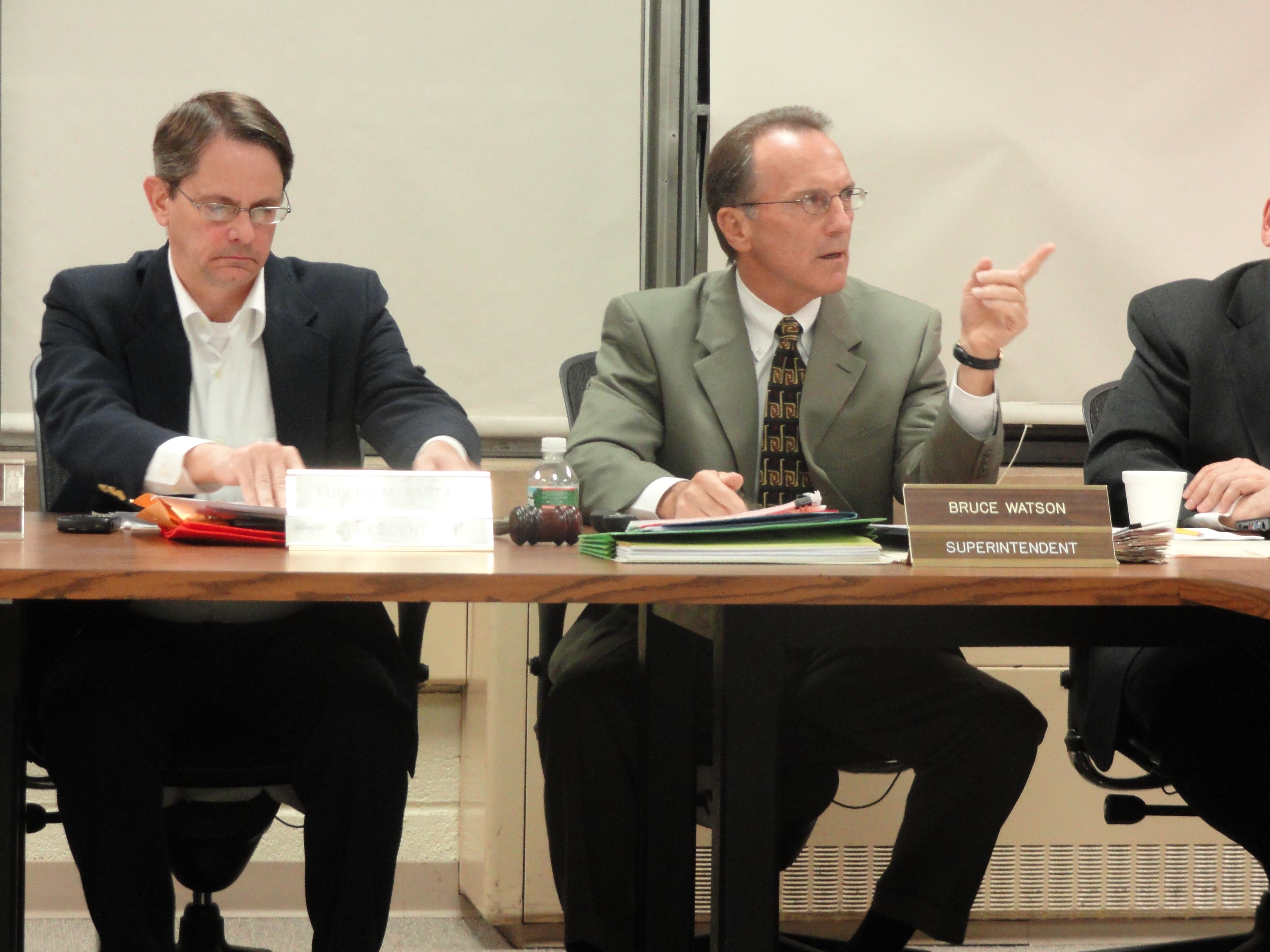
A discussion Thursday about the left members torn over how to proceed.
The discussion came on the heels of last week's of a state bill that lets school districts, municipalities, or public voters decide whether they want to move school board elections from April to November. In addition to the change of date, districts that make the move eliminate the public's right to vote on school budgets within the state's 2 percent cap on tax increases.
At Thursday's meeting, superintendent Bruce Watson and each board member took turns sharing their personal stance on whether they believed the move should be made.
Find out what's happening in Fair Lawn-Saddle Brookfor free with the latest updates from Patch.
By the end of the open discussion, the board appeared more torn on the issue than ever, as members who moments before had spoken forcefully against moving the election softened their stance after hearing the other side.
The decision boiled down to whether the benefit of eliminating the public's ability to vote down school budgets within the 2 percent tax cap outweighed the potential partisanship that might infect the school board if elections coincided with those of municipal, county and state politicians.
Find out what's happening in Fair Lawn-Saddle Brookfor free with the latest updates from Patch.
If a school budget is voted down, the borough council is then responsible for selecting a dollar amount that the board must cut from its budget. The board must abide by the amount of money council asks it to cut, but can decide what specifically it will defund.
In the past two decades, the superintendent said the budget had been voted down just three times out of 20. But prior to 1992, he added, the budget had passed a public vote less than a quarter of the time.
Board member Eugene Banta said he understood the argument in favor of eliminating the public's ability to vote, but opposed moving the elections for fear that politicians would field school board candidates who didn't have the best interest of Fair Lawn's school children in mind.
"People like us, who do this purely because we want to do the right thing by children, I see five years from now, 10 years from now, I see us getting pushed out," Banta said. "No matter the candidate, no matter how strong, no matter how well-known that person is, I don't know that we'd be able to stand up to 5 or 6,000 people coming out and voting for a slate of candidates."
Board member John Mancinelli agreed with Banta and expressed concern over a politicized school board. He said a public vote on the budget did not threaten him.
"I know boards that are aligned to the political parties in their town, and they don't have the philosophy of children first, anywhere close to what we have," Mancinelli said. "They use the board of education individually as stepping stones to political positions. It is a small price to pay to have my budget voted on by the public not to get involved in that, because we do a great job putting together our budgets."
Board member Mary Wallace said that while the body's politicization concerned her, she wasn't certain it outweighed the stress associated with the budget vote.
"I'm going to play devil's advocate because I do share exactly the same feelings that all of you do," she said. "But another side of me looks at every year how we agonize and hold our breath and run from building to building and hold meeting upon meeting and shake our heads saying, 'What if it fails? What are we going to have to cut?' This is a yearly dance that we do and it's gotten worse and worse with the economy."
Elyss Frenkel, who was the only board member to come out completely in favor of the move, echoed Wallace's sentiments about the budget.
"I think that would be a great burden lifter if we didn't have to have that option of people saying no to the budget," Frenkel said. "It's the only thing in the state that people can vote against, so even if it's the best thing in the world, people vote against it just because they can."
Frenkel added that she didn't foresee November elections resulting in as severe a politicization of the board as other members expressed and also said she worried that if the board didn't move the elections this year, that it might be forced by the legislature to do so in the future anyways.
Board president Michael Rosenberg said he was conflicted because he felt that on one side, an enormous amount of human capital could be saved if the board didn't have to spend time selling the budget to the public.
But on the other side, he said, "That's democracy. And we should be held to the fire a little bit because...it's the only budget that can be voted on and it's the largest budget that Fair Lawn taxpayers pay."
Whatever the board ultimately decides, Rosenberg said he wants to ensure that the choice remains in their hands.
As it stands, a vote by either the school board, the borough council or the public – by way of a referendum requested by 15 percent of the voters in the previous presidential election – can compel the election's move to November.
"If the town council decides that's what they want to do next month, they could put a resolution forward and we'd have to abide by it," said Rosenberg, who plans to discuss the issue with Mayor Jeanne Baratta. "I just hate to see it being taken out of our control."
The board will continue its discussion of the matter at its next meeting in February, where a vote may be taken.
A decision to move elections to November is at least a four-year commitment, and if made, would mean that current serving board members would have their terms extended until this November.
Get more local news delivered straight to your inbox. Sign up for free Patch newsletters and alerts.