Health & Fitness
New Hope for Liver Tumors: Groundbreaking, Non-Invasive Treatment
A new, non-invasive procedure liquefies liver tumors, offering hope for patients, including those who are high-risk.
This is a paid post contributed by a Patch Community Partner. The views expressed in this post are the author's own, and the information presented has not been verified by Patch.
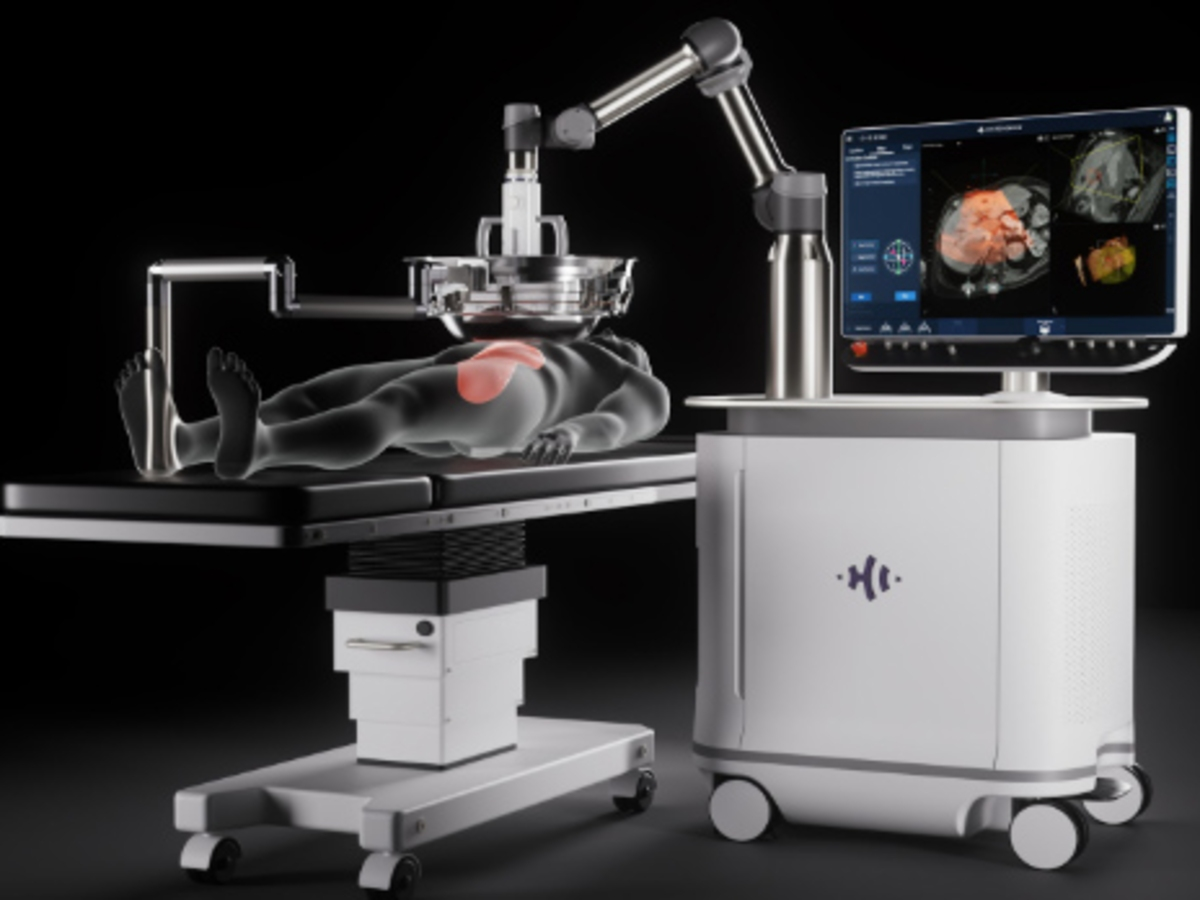
A groundbreaking, non-invasive treatment for liver tumors is offering new hope to patients, called histotripsy. “This is one of the most fascinating technologies I’ve seen in my career,” said Gregory Tiesi, MD, FACS, FSSO, chief of surgical oncology at Jersey Shore University Medical Center. “Histotripsy uses a specialized device to focus ultrasound waves precisely on the targeted tumor, liquefying the tissue without damaging surrounding healthy structures. This precision allows us to preserve vital structures, without the risk of spreading cancer cells, and can be used in patients who might not otherwise have options like surgery.” This procedure, approved by the U.S. Food and Drug Administration, provides a new option for individuals with liver cancer or cancers that have spread to the liver.
Histotripsy is a significant advancement in cancer treatment. It utilizes a robotic platform to deliver precise sound waves through the skin and tissue directly to the liver tumor. These sound waves create tiny bubbles within the tumor that rapidly expand and collapse, breaking down the tumor cells without the need for incisions, needles, or radiation. This process is gentle on the surrounding healthy tissue, preserving vital structures like major blood vessels and bile ducts.
One of the key advantages of histotripsy is its broad applicability. It can be used to treat primary liver cancers, such as hepatocellular carcinoma, as well as cancers that have metastasized to the liver from other parts of the body. The procedure is also a viable option for some benign liver tumors, which can sometimes become cancerous or rupture over time.
This is particularly relevant for women who have used oral contraceptives long-term. Studies have shown that long-term use of oral contraceptives is associated with an increased risk of developing benign liver tumors, such as hepatic adenomas and focal nodular hyperplasia. In fact, women who take oral contraceptives over a long period have a 30% to 40% increased risk of developing these benign liver tumors, which can negatively impact liver health. The risk of developing these tumors has been found to increase with the duration of pill use. While these tumors are typically benign, they can lead to complications such as rupture and bleeding.
Histotripsy offers a promising alternative for these patients, as well as for those who may not be candidates for traditional treatments like surgery, chemotherapy, or radiation due to the tumor's location or other health risks. The treatment is performed as an outpatient procedure under general anesthesia and typically takes about an hour, with most patients able to return home the same day. Recovery is generally quick, with less pain compared to surgery.
Clinical trials have demonstrated a high success rate for histotripsy in treating liver tumors. It can be used as a primary treatment, in combination with other therapies, or as a standalone option, and can be administered multiple times if necessary.
Read more about how histrotripsy can benefit you or a loved one.
This post is an advertorial piece contributed by a Patch Community Partner, a local brand partner. To learn more, click here.