Politics & Government
Battle Over Prayer Continues in Galloway Township
A three-person committee will help determine how prayer will be presented in the township in the future.


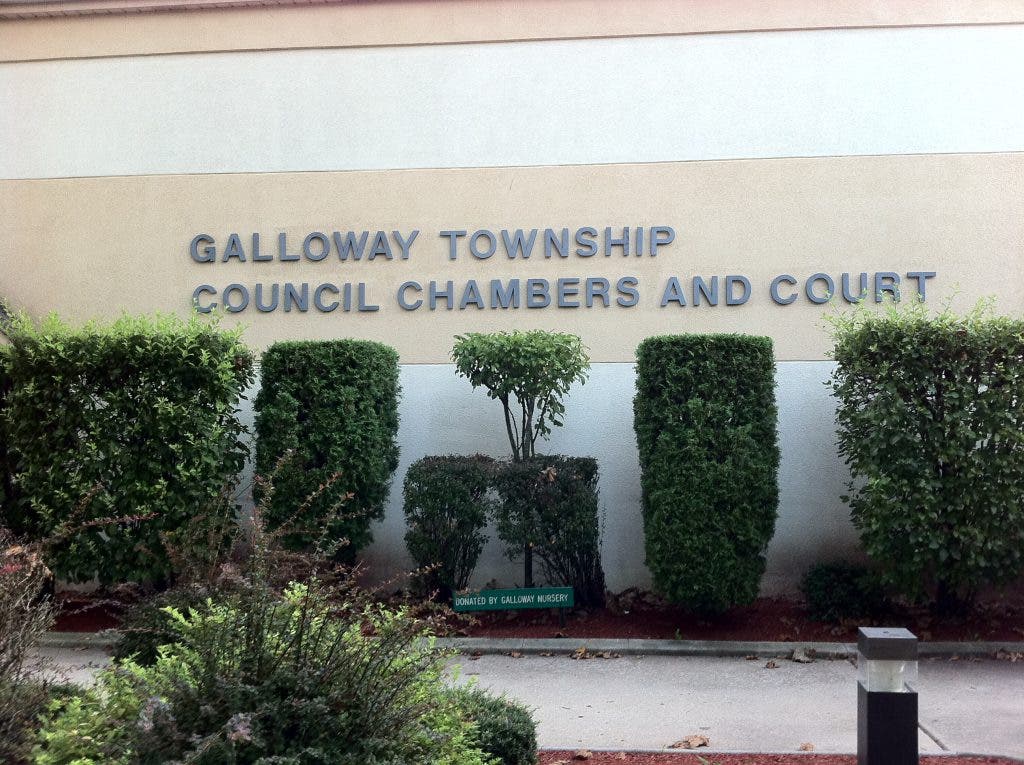
Galloway Mayor Don Purdy has tasked a three-person committee with the job of helping to decide how prayer will be presented at council meetings moving forward. The committee, appointed Tuesday night, Nov. 27, will consist of Deputy Mayor Tony Coppola, Councilwoman Whitney Ullman and newly-elected councilman Jim McElwee.
The committee was designated in response to the recent outcry from Galloway residents over the decision to discontinue invocations prior to council meetings. In recent months, council has skipped the invocation and held only a moment of silence.
The issue came to the forefront at the council meeting on and the township received a letter from the Anti-Defamation League on the issue prior to Tuesday’s meeting.
Find out what's happening in Gallowayfor free with the latest updates from Patch.
“Their suggestion was to have a council member do a prepared non-sectarian prayer or a moment of silence,” Township Manager Arch Liston said.
“I met with the county executive, and he said the county has a list of prayers done by freeholders on a rotating basis,” Purdy said. The prayer is agreed upon ahead of time. They’ve been doing this for years.”
Find out what's happening in Gallowayfor free with the latest updates from Patch.
Prior to Tom Bassford’s term as mayor, council meetings began with a non-denominational prayer led by a council member. On Tuesday night, Solicitor Mike Fitzgerald reiterated that particular practice is constitutional.
Democratic Club President Kevin Krumaker also pointed to the practice as a possible solution for the township following the Nov. 13 meeting.
I was happy to hear that the mayor and council appear to be leaning in the direction of my suggestion … regarding a return to a non denominational invocation that was practiced prior to the Bassford and (Keith) Hartman administrations,” Krumaker said Tuesday night.
Bassford introduced the idea of an invocation, and Hartman championed a policy of inviting every religious institution, regardless of belief, to give an invocation. If any religion was not represented by an institution in the township, Galloway would contact institutions at the county level in an effort to get a fair representation, according to Hartman.
On Tuesday night, pastors from some of those institutions commented during the public portion of the meeting, including Pastor Tom Douglass, of the Highland Community Church, who led a prayer for council during his comments.
“We need to welcome diversity and allow people to pray based on their convictions,” Douglass said. “Some of those invited haven’t come and prayed, and some of us have come here more often. So what? I encourage you to search your heart and find the best way to show diversity and welcome the community.”
“I love Galloway, and I continue to pray for each of you,” Pastor Al Syvertsen of the Beacon Evangelical Free Church told council. “At this time, Galloway is in need of prayer. Prayer is important.”
The township has maintained that pastors didn't abide by guidelines set forth to keep invocations non-sectarian, leading to the end of the policy. However, the pastors in attendance Tuesday night claimed they stuck by what they were asked to do when they appeared before council.
“I feel there was behind the scenes manipulation,” Pastor Dean Bult of Mainland Baptist Church said. “I feel a great injustice has been made for the state to say they can’t take a couple of minutes for a prayer.”
Bult isn’t the only person to state he believed there was more at work behind the scenes. Resident Anna Jezycki brought with her a set of closed session minutes from a previous council discussion of the issue, stating that if she chose to read them out loud, it would cause a lot of problems.
“When this policy was implemented, there was no argument and nothing was said about it,” Jezycki said. “The resolution says prayers are permissible. Why is this a big issue? Because someone was offended. Well (the residents) are offended and they are more than one person.”
Jezycki was referring to Councilwoman Whitney Ullman. Ullman was named by resident Tom Mitchell at the Nov. 13 meeting, and she was appointed to the committee on Tuesday night.
Initially, Councilman Brian Tyrrell was appointed, but Coppola suggested Ullman should be nominated. She ended up replacing Tyrrell.
“We’re going to come up with a fair solution and be respectful of everyone’s rights and religious beliefs,” Ullman said. “We need to protect the township from unnecessary litigation. We also need to be thankful for all that we have, and that we have loved ones to go home to.”
Ullman said that while all members of council agreed the resolution passed during Hartman’s administration, they saw that it was not working. She said all council members had input when discussing the issue.
“We have a responsibility to protect the taxpayers,” McElwee said. “We have to protect their money and their property taxes. We’re trying to come up with a compromise, but it’s a tricky balance.”
“The primary purpose of government is to protect the people, not only personally, but financially as well,” Krumaker said. “Jim McElwee reinforced this ideal by explaining that reinstituting the non-denominational prayer led by a council member is the best way to protect the taxpayers from any further lawsuits.
“The policy of having a council member lead the prayer should have never been changed. Why fix what was not broken?”
While other residents, including a disabled Vietnam War veteran, were in support of keeping invocations, others were not completely on board. One resident described the discussion as “bullying,” those with different religious beliefs, while another posed a simple question: “If Jesus comes back tomorrow, will you be safe?”
In addition to returning to a non-denominational prayer or continuing with a moment of silence, Fitzgerald said any pastor who wished to lead a prayer during the public comment portion of meetings would be protected by the First Amendment. He also said a brief public comment portion could be held at the beginning of the meeting, for any pastor who wishes to say a prayer before government begins to conduct its business.
Get more local news delivered straight to your inbox. Sign up for free Patch newsletters and alerts.