Politics & Government
2 Affordable Housing Developments Proposed In Gloucester Township
Gloucester Township Council presented legislation for 2 mixed-use developments on Chews Landing Road and in the Lakeland Redevelopment area.


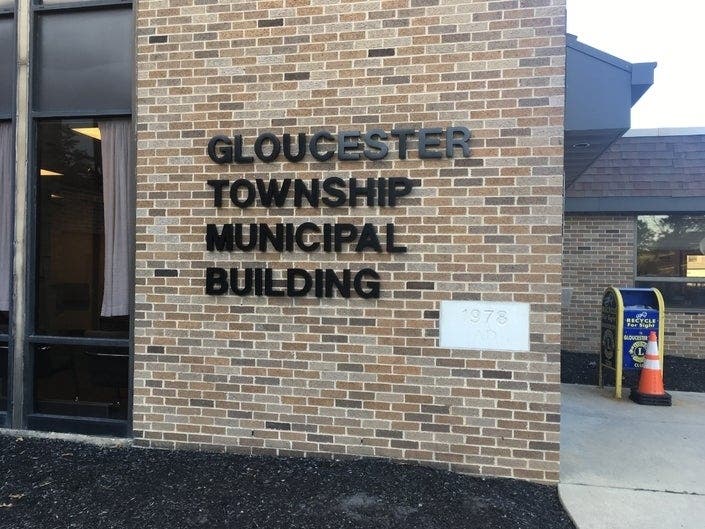
GLOUCESTER TOWNSHIP, NJ — Gloucester Township Council introduced two more pieces of legislation on Monday that will go toward helping the township satisfy its affordable housing obligation.
The first proposed ordinance calls for a mixed-use overlay district on Chews Landing Road that will incorporate commercial properties with a residential town home component.
The second proposal calls for a mix of commercial property and apartments on 8 acres of land in the Lakeland Redevelopment area.
Find out what's happening in Gloucester Townshipfor free with the latest updates from Patch.
Both proposals were approved on introduction, were sent to the planning board for consistency review and will return to council for a public hearing and final approval.
Some residents expressed their frustration that an agenda for Monday night’s meeting was not posted on the township’s website until Sunday afternoon, which resulted in members of the public not knowing about the proposals and not showing up to voice an opinion.
Find out what's happening in Gloucester Townshipfor free with the latest updates from Patch.
The first proposal is designated for Little Pond Village, 1110 Chews Landing Road. Only commercial property is permitted to front Chews Landing Road, and the plan calls for 23,000 square feet of single-story commercial buildings.
The residential component will include town homes, a community center, a community swimming pool, outdoor recreation and off-street and garage parking, among other amenities common to residential buildings.
The proposal labelled as the Lakeland Redevelopment Area (Phase 3) will be located next to a mixed-use development in Washington Township. When the Gloucester Township component is completed, it will all look like one uniform area, officials said.
Before the introductions, resident Ray Polidoro suggested the proposals should be tabled because the public notice was inadequate.
“Many people would want to speak on these issues,” Polidoro said.
Council President Orlando Mercado and the township clerk said they communicated about the agenda on Thursday, with Power submitting the final agenda to the company the township uses to issue their public notices shortly before 5 p.m. that day. On Sunday, they realized it never got posted and contacted the company, at which point it went live.
Mercado took responsibility, said the issue has been resolved and said it would not happen again.
Township Solicitor David Carlamere also said it was important to introduce the legislation because of pressure from the courts to get affordable housing legislation in not just Gloucester Township, but all of New Jersey, moving.
The township is required to add 1,014 affordable housing units by 2025 under its third round obligations, according to information previously provided by Business Administrator Tom Cardis. It has already met its prior round obligation of 359 units, and is in the process of rehabilitating 135 units by 2025, Cardis said.
To meet its third round obligation, the township is implementing zoning changes that will allow it to build affordable housing in the township, Cardis said.
The obligation is set forth by the Superior Court. Affordable housing was formerly overseen by the Council on Affordable Housing (COAH) after the state Supreme Court ruled it was unconstitutional for any town to zone in a way that made it impossible to build affordable housing in that town in 1975.
COAH set quotas for each town under the Fair Housing Act in the 1980s, and towns fulfilled their obligations over multiple rounds. However, COAH stopped acting on its oversight obligations in the late 1990s.
The number of required affordable housing units in municipalities statewide has been in dispute, and often in litigation, since 1999. In 2015, authority concerning setting affordable housing requirements for municipalities throughout the state fell on the courts. Municipalities often reach agreements for the number of affordable units they need to build before a decision is handed down by the courts.
On Monday night, Mercado emphasized that although affordable housing brings with it a negative connotation, many diverse groups of people qualify for affordable housing. This includes students, people first entering the workforce and seniors, among others.
Both items approved on introduction Monday night were scheduled to be discussed at Tuesday night’s planning board meeting at the municipal building, 6 p.m. Council is next scheduled to meet on July 27.
Get more local news delivered straight to your inbox. Sign up for free Patch newsletters and alerts.