Crime & Safety
County Touts Track Record In Fight Against Addiction Following Governor's State Of The State Address
Gov. Christie said he will focus on the fight against drug addiction during his final year in office. Camden County touted its own efforts.


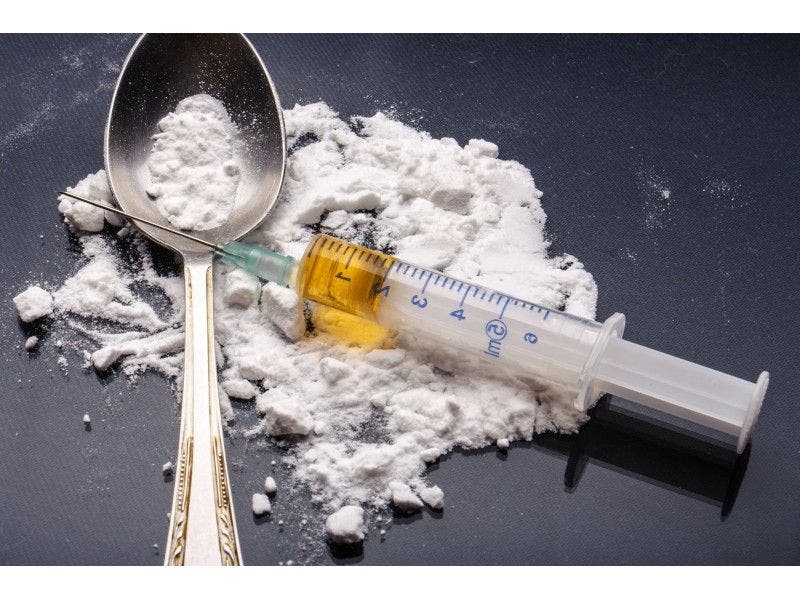
In his State of the State Address Tuesday afternoon, Gov. Chris Christie addressed the growing epidemic of drug addiction.
Calling addiction an illness, Christie announced a series of initiatives he would like to see taken to stamp out the disease in New Jersey.
Shortly after his address, Camden County Freeholder Director Louis Cappelli addressed the governor’s concerns and pointed to some of the things Camden County is doing to deal with the epidemic.
Find out what's happening in Gloucester Townshipfor free with the latest updates from Patch.
“I want to commend Gov. Chris Christie on his dedication to addressing the national opioid epidemic that is silently suffocating our community and the nation,” Cappelli said. “For more than two years the Board of Freeholders has been taking proactive measures to stop the exponential increase of this deadly disease across the county through education, treatment and supporting sobriety for individuals in recovery.”
He pointed to the formation in 2014 of the Addiction Awareness Task Force, a group of community members, law enforcement and medical professionals whose goal it is to help law enforcement officials educate the public and spread awareness.
Find out what's happening in Gloucester Townshipfor free with the latest updates from Patch.
“Since that time, we have embarked on progressive policies that will have long-term significance against the battle of opioid addiction,” Cappelli said. “Whether it is getting Narcan in the hands of every police department in the county or setting up pill drop-offs in every town, to properly dispose of prescription narcotics, we are working to break the hold of this deadly disease.”
According to Cappelli, police administered Narcan 337 times in Camden County in 2015, and the Camden County Police Department has saved more than 260 people just in the city since May of 2014, including 90 times last year.
He said the goal is to provide more access to Narcan with school districts and residents living with an afflicted loved one, so that an overdose does not end in a fatality or traumatic brain injury from the loss of oxygen.
“We are happy to have a partner in the Black Horse Pike Regional School District and hope other school boards see the value in having it in-house this year,” Cappelli said.
He then cited Operation SAL, the county’s program designed to help overdose victims with intensive outpatient treatment after they are saved using Narcan. The county dedicates $150,000 to direct funding for treatment for residents who overdose.
He also spoke about the recent decision to allow a rehabilitation center to be built on Cuthbert Road in Cherry Hill.
He praised Gloucester Township for its Save Advocate Program, which provides a counselor in the courtroom for lower-level drug offenders who are arrested, but were not previously offered help. That program recently expanded to allow for a counselor to be available on an on-call basis whenever an addict needs help.
“As a matter of policy this should be considered a model for every local court system in the state. As a regional governing body we have made large strides in pushing back against this issue, but looking forward we need more help from Congress and the President to move this ball forward and act on this epidemic,” Cappelli said.” … In addition, we are supporting our friends and neighbors who have recovered from addiction by having Camden County College host sober recreational events, so we can, one, create a community of like minded individuals and, two, erase the stigma that has been carried for too long by those afflicted by addiction.
“That said, education is also a core principle and the number one resource when we talk about prevention. This does not stop with just kids and students, but also encompasses the education of medical professionals on identifying someone abusing opioids and looking at alternatives to prescribing narcotics for pain relief. Again, this dialogue within our own medical community will have long-term advantages, since we know that legal prescriptions of opioids are a common gateway to heroin. Amending the conventional wisdom of doctors and pharmacists will have a big impact on the future of this issue. Also, we continue to work with our state and federal officials on securing more resources for programming, treatment and initiatives to stem the tide of overdoses.”
Cappelli concluded by saying the county takes a “holistic approach” to the epidemic.
“We do not want to continue to witness the ongoing carnage that families throughout the county are going through on a regular basis,” Cappelli said. “Again, I commend Gov. Christie on putting a spotlight on this disease and promise to continue to work with my colleagues and community to end it.”
In his speech, Christie said he had a comprehensive plan to combat addiction.
“There is nothing more important that I could do in my last 373 days as Governor,” Christie said. “Let’s work to save lives together and let’s start today.”
He announced the implementation of a website and a hotline designed to make it easier to access treatment. The hotline is 1-844-REACH-NJ and the website is REACHNJ.GOV.
Last year, more than $127 million dollars was dedicated to healthcare providers in the fight against addiction, and Christie said that money will be dedicated once again.
He announced his intention to allocate another $12 million to make beds available to treat 18-and 19-year-olds, who are unable to be treated as children under current regulations Christie said he intends to change.
“This expansion by the Department of Children and Families to allow their licensed residential facilities to treat 18-and 19-year olds will open another 200 beds to hundreds of young people seeking help,” Christie said. “We must do everything we can to keep our children off of waiting lists for treatment. The wait may be more than they can bear.”
He also proposed specific school curriculum concerning opioid abuse; the allocation of $1 million for housing programs to assist college students in recovery; the establishment of Cooperative Sober Living Homes throughout the state for those who are in the early stages of recovery; and an additional $5 million to help pediatricians spot possible abuse among children.
He also called on the state legislature to push a proposed law to mandate that no citizen with health insurance can be denied coverage for the first six months of in-patient or outpatient drug rehabilitation treatment.
Christie said that in March, there will be an Employment Opportunity Summit that will bring together business, legal and human resources executives to ensure that New Jersey is at the forefront of helping people get back to work and become productive citizens and taxpayers.
He called for a limit on the supply of opioid based medications doctors can prescribe. This has been an issue recently in Cherry Hill and Marlton, among other areas. He is also calling on the Attorney General’s Office to create a task force on drug abuse control to mount a coordinated attack on drug abuse by working with all areas of state government to fight this complex problem together.
The task force will spearhead a multi-pronged, multi-agency attack on the addiction crisis in an effort to deter narcotics trafficking, drug diversion, drug abuse and drug addiction.
“Finally, we need some help from our federal partners to address this crisis. We need the federal government to remove outdated barriers to substance abuse care that limit access to the neediest. Federal Medicaid funds cannot currently be used for people who are receiving inpatient substance abuse treatment in a facility with more than 16 beds,” Christie said. “The feds call these facilities ‘Institutes for Mental Diseases’ and make us use only state funds for this type of treatment. This is ridiculous and antiquated thinking. If we remove this barrier and utilize the federal match, we could double the Medicaid beds available for drug abuse treatment.
“I am directing Commissioner Connolly to call upon new CMS Administrator Seema Verma, a state innovator in Indiana and someone we worked closely with during the Trump transition, to remove this roadblock to care and call upon our congressional delegation to lead this fight in the Congress. Eligibility for drug abuse treatment should not be determined by how many beds are in the facility where you seek treatment.
“That is what public service is for me and what I will dedicate my final year as Governor to for all of New Jersey’s families. Nothing could personify God’s work here on earth more than saving lives—each and every life we can save.
Get more local news delivered straight to your inbox. Sign up for free Patch newsletters and alerts.