Politics & Government
No New Tax Increases, Fees For NJ Amid COVID, Gov. Murphy Says
Gov. Murphy gave his annual budget address Tuesday and spoke about how NJ is trying to boost its economy despite the challenges of COVID.


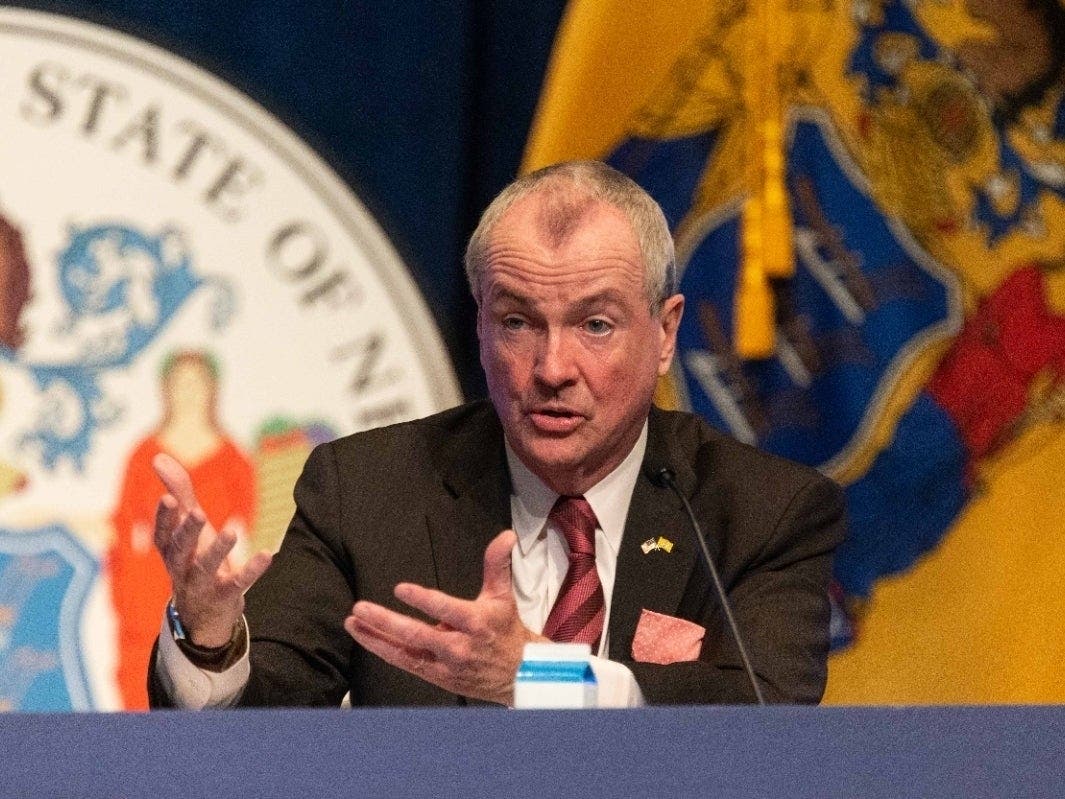
NEW JERSEY — New Jersey residents will not see any tax increases or new fees over the next year as the state continues to navigate its way through the coronavirus pandemic, Gov. Phil Murphy said while presenting his $44.8 billion budget in a virtual address Tuesday afternoon (you can watch it below).
New Jersey will also see the highest amount of school aid in history, with $18.1 billion in funding for pre-K to 12 education, an increase of $1.740 billion over the previous year. This includes an increase in direct payments for education for pension and health benefits payments.
Murphy presented an optimistic budget that he hopes will boost the state's economy as New Jersey tries to move beyond the COVID crisis, saying the Garden State is trying to get there by providing more vaccines.
Find out what's happening in Gloucester Townshipfor free with the latest updates from Patch.
Murphy said nearly 2 million doses have been put into the arms of New Jerseyans. He's hopeful that the latest vaccine, from Johnson & Johnson, will soon receive its emergency use authorization from the federal government and become "our third potent weapon against COVID."
"Because of these positive advances against the pandemic, we’ve been able to responsibly roll back more of the restrictions we had to put in place," he said. "Today, for example, our restaurants can serve more patrons, and our houses of worship can welcome more congregants. Today, the overwhelming majority of our schools are open for in-person instruction, and more parents can once again cheer on our high school athletes."
Find out what's happening in Gloucester Townshipfor free with the latest updates from Patch.
Murphy also acknowledged, however, that vaccine demand still far outnumbers supply.
"We know many people still find it challenging to get an appointment. We work hard every single day to improve and make our system better," he said. "Even though we make strides every day, we know this pandemic is not done with us, and the emergence of new variants means we must remain vigilant."
Here is Murphy's address:
Murphy said he cannot allow New Jersey to "be pulled backward," which is why nearly half of the budget includes $19.6 billion in state aid. That includes property tax relief through school aid to districts, or municipal aid payments to towns and cities across New Jersey, according to the governor's budget-in-brief posted online.
"Grants-in-aid, "used by the state to purchase services that directly benefit residents in need, makes up $12.9 billion. These services include health care coverage for low-income residents and community-based support for those with disabilities.
There will be $3.1 billion in debt service, and $4 billion for executive operations, which represents the various direct costs of running the state government. The state anticipates $40.86 billion in revenue.
Property tax relief will be broken down like this:
- School Aid: $17,232,400 (11.2 percent increase);
- Municipal Aid: $1,590,700 (flat);
- Other Local Aid: $1,096,000 (7.5 percent increase); and
- Direct Property Tax Relief: $1,248,300 (4.5 percent increase).
New Jersey expected to be in a better financial position before the coronavirus pandemic, but the recovery has already begun, Murphy said. The second wave of the virus took a devastating toll on the state's health, but didn't impact the economy as much as the first wave.
On Tuesday, Murphy noted that the second wave is coming to an end.
"The numbers of patients in our hospitals, and of those requiring intensive care and ventilators, are all down. Almost every day, more patients leave our hospitals than are admitted," Murphy said.
The state's improving health compelled the governor to propose an additional $50 million to expand pre-K education, including $26 million for 30 new districts that are ready to launch programs.
When the pandemic began last March, unemployment levels initially spiked to a record 16.8 percent, and it was predicted that the state would see a tax revenue shortfall of about $9.9 billion over the next two years.
However, the federal stimulus package pumped money back into the economy, with residents receiving about $7 billion in stimulus checks and businesses seeing about $17.4 billion, according to the Murphy Administration.
The unemployment rate at the end of the year was significantly lower than earlier in the year, falling back to 7.6 percent, but was double the 3.5 percent the state had seen at the end of 2019.
Unemployment remains high in some low-wage sector jobs, including a loss of just shy of 260,000 in hospice jobs.
For the fourth straight year, there will be no fare hike for NJ Transit riders. The mass transit system is projected to spend $2.65 billion, or 9 percent more than the revised forecast and 15 percent over 2019. The pandemic has been devastating for mass transit, Murphy said. NJ TRANSIT’s train ridership declined by approximately 75 percent, and bus ridership declined by about 50 percent.
Murphy said he’s committed to helping all residents recover and move forward. Part of that includes an additional $1.6 billion into the state's pension. Murphy said this helps him meet his goal of contributing 100 percent of the Actuarially Determined Contribution (ADC) a year earlier than initially planned.
The proposed $6.4 billion pension payment, which includes contributions from the State lottery, would mark the first time the State has made a full contribution since 1996. Murphy said the 100 percent contribution will substantially reduce the State’s obligation in the coming years, saving taxpayers $861 million over the next 30 years.
The combined pension contributions by the Murphy Administration in four years will roughly total an unprecedented $18 billion, which is $9.4 billion more than the previous eight years, Murphy said.
Jack Ciattarelli, who is pursuing the Republican nomination for this year's gubernatorial election, was critical of the address.
"The Governor says he wants to 'get our economy moving forward,'" Ciattarelli said. "One out of three New Jersey businesses have closed forever. Our schools aren’t open, preventing parents from getting back to work. You can’t get vaccinated, unless you’re an inmate or a smoker. Unemployment benefits are painfully delayed for months. And yet, Governor Murphy casts himself as the state's savior today. It’s an insult. An insult to working families fighting to keep their business afloat. An insult to the parents watching their children suffer through another lost school year. An insult to the millions of New Jerseyans struggling to pay their bills and hold onto their jobs. Governor Murphy isn't going to save New Jersey. What will save New Jersey is a new Governor come January 2022."
Other Republicans were critical of Murphy's plan.
“We must remember where we started, fiscally, before the pandemic mayhem because that’s exactly where we’re going to end up when it’s over," State Sen. Declan O'Scanlon (R-13) said. "Except, the hole will be deeper, the debt our children owe will be even more massive and the path to true solvency even more insurmountable."
“Let’s be perfectly clear. Governor Murphy’s election-year budget is about protecting one job, his own," State Sen. Steven Oroho (R-24) said. “Senate Republicans have been warning since last June and July that the Murphy Administration was peddling a false doom-and-gloom financial picture despite clear evidence that New Jersey’s finances had rebounded quickly as lockdowns eased."
“Over the past year, millions of New Jerseyans have suffered due to broken and outdated State computer systems that are responsible for unemployment benefits, MVC transactions, and scheduling vaccine appointments,” State Sen. Anthony Bucco (R-25) said. “When Governor Murphy is sitting on a multi-billion budget surplus, it’s beyond disappointing that he was unwilling to detail any planned investments in upgrading these critical systems that people depend upon.”
Others praised Murphy, including Assembly Majority Leader Louis Greenwald (D-6).
“The Governor’s announcement that revenues from our state sales, income and corporation nusiness taxes are outperforming expectations is certainly welcome news," Greenwald said. "It is now incumbent upon the Legislature to ensure we responsibly prioritize how we fund programs that are critical to our State’s nine million residents as we seek to recover from the COVID-19 pandemic. Job creation and developing a pathway for our children to safely return to the classroom is paramount to getting back to a state of normalcy. We must do all we can with the resources we have to ensure we put our friends and neighbors back to work as we strive to boost our economy and protect families in need."
“The Governor’s proposed budget includes things to be encouraged by: the State’s revenues are strong and positive revenue is expected going forward; the proposal does not include any new taxes or increased fees; and focus is placed on property tax relief including the funding of the Homestead Rebate and Senior Freeze Programs as well as increasing aid to our schools," Assembly Speaker Craig Coughlin (D-6) said. “I am also encouraged the budget proposal includes funding of the middle-class tax rebate which will provide relief to roughly 760,000 New Jersey families; recognizes the need to support New Jersey businesses; and fully funds the State’s pension obligations for the first time in 25 years – achieving a 10-year goal one year early, honoring the State’s commitment to our current and past workforce and demonstrating sound fiscal policy."
“Nearly one year after the coronavirus pandemic upended life as we knew it, New Jersey’s economic outlook appears more promising than we could have anticipated just a few short months ago," Assemblywoman Eliana Pintor Marin (D-29) said. “In crafting the Fiscal Year 2022 budget, we must be cognizant of the current challenges we face due to COVID-19 and make investments to help our economy and residents recover. I, along with my colleagues on the Budget Committee, look forward to examining what was put forth today. We appreciate the breadth and positivity of the Governor's proposals, and we share his goal of moving New Jersey forward."
“NJBIA welcomes Governor Murphy’s efforts to prepare a state budget that contains no taxes or raised fees," New Jersey Business and Industry Association President and CEO Michele Siekerka said. "This decision is as appropriate as it is appreciated, given the increased tax burdens on businesses and residents over recent years which have greatly contributed to New Jersey’s current surplus."
"After a nine-month budget filled with borrowing and revenue raisers, this budget presents an opportunity to make responsible decisions," New Jersey Society of CPAs (NJCPA) CEO and Executive Director Ralph Albert Thomas said. "With a sizable budget surplus, many tax sources outperforming projections and potentially more than $6 billion in federal stimulus support soon on its way, it’s crucial that the state make smart decisions and be strategic about how the budget dollars are deployed. And we urge the governor to also pursue spending reforms that could produce long-term savings. Now is the time to address our long-term structural debts by making the tough choices that lawmakers have avoided for so long."
“With a strong revenue forecast on the horizon, we are now beginning to see the benefits of the sound fiscal policy decisions we’ve made over the last three budget cycles," Assembly Budget Vice-Chair and Appropriations Chair John Burzichelli (D-3) said. "Continued funding for property tax relief programs, the addition of the $500 Middle Class Rebate, and a full payment made to the state’s pension system will go a long way toward rebuilding financial resiliency for New Jersey seniors and families."
After last year's millionaires tax enactment, this year's budget includes $319 million in direct tax relief for middle-class families, which will provide up to a $500 rebate to over 760,000 couples and individuals with qualified dependents. The budget also includes $1.25 billion in funding to support various property tax relief programs. Additionally, it includes funding to:
- Expand the Veterans’ Property Tax Deduction to those who served in peacetime;
- Make the Child and Dependent Care Credit refundable and expand eligibility to families making up to $150,000, more than doubling eligibility to aid 148,000 taxpayers; and
- Expand eligibility for the Earned Income Tax Credit to roughly 70,000 senior citizens without dependents.
The proposed budget also includes a new multi-departmental economic growth initiative designed to boost economic recovery in New Jersey communities, provide access to capital for minority-owned businesses, and help government support sustainable economic growth. This roughly $200 million investment initiative includes:
- $100 million allocated from the recently passed Economic Recovery Act Main Street Recovery Finance program ($50 million is available in FY2021 and an additional $50 million is proposed for FY2022);
- $25 million for EDA’s lending programs such as Premier Lender and Microbusinesses;
- $20 million for the NJRA’s Urban Site Acquisition Fund and Redevelopment Investment Fund, the first State investment in the NJRA since 2002;
- $15 million for Permit Modernization across State departments and for local governments;
- $13.5 million for the Department of Transportation’s Local Aid and Economic Development Grants, including the Transit Village, Safe Streets to Transit, and Bikeways programs;
- $10 million for EDA’s Black and Latinx Seed Fund initiative;
- $6.5 million for DCA’s Neighborhood Preservation Program and Main Street New Jersey, allowing each to expand to significantly more communities;
- $5 million for the Department of State’s Business Marketing Initiative;
- $3.2 million for the Commission on Science, Innovation and Technology;
- $1 million for EDA’s NJ Ignite; and
- $500,000 to double funding for EDA’s Small Businesses Bonding Readiness Assistance program
The governor is also proposing significant direct appropriation investments, including:
- $200 million for the Offshore Wind Port and $200 million for current Schools Development Authority (SDA) projects to reduce debt issuance;
- $75 million for the SDA’s Capital Maintenance and Emergent Needs Grant program;
- $60 million to support the continuation of the Drinking Water and Clean Water Infrastructure Fund; and
- $86.6 million for critical capital improvements, including emergent life safety and IT projects.
Murphy has a focus on improving the state's criminal justice system, including funding to:
- help lessen the burden on individuals seeking expungement of criminal records;
- equip local police officers with body-worn cameras; develop software to make law enforcement forfeiture actions more transparent;
- allow incarcerated individuals placed in isolated confinement to undergo daily examinations by health professionals; and
- support implementation of the “Earn Your Way Out” law.
The proposed budget includes both new and increased investments for the Juvenile Justice Commission (JJC) and the Department of Corrections (DOC):
- $5 million to improve internet infrastructure for DOC’s incarcerated population to access education, employment, and legal materials;
- $4.2 million more for county Youth Services Commissions to reduce juvenile delinquency;
- $3 million to help fund non-profits that facilitate re-entry;
- $2.25 million for the Scholarship and Transformative Education in Prison Program; and
- at least $2 million in support for a new career training program at JJC and an apprenticeship program and other career services for DOC inmates.
Finally, the proposed budget also includes:
- Investing an additional $25 million in NJ Health Plan Savings subsidies;
- Launching the "Cover All Kids" initiative with the ultimate goal of ensuring affordable, accessible health coverage is available to nearly 88,000 children without coverage;
- Raising the income threshold by $10,000 for the Pharmaceutical Assistance for the Aged and Disabled and Senior Gold programs, which will benefit over 20,000 seniors;
- $19 million to support the new Reproductive Health Care Fund, which will cover costs for contraceptive, prenatal, labor, and delivery care for those without access to medical assistance;
- $19.5 million for Family Planning Services, bringing the total the Governor will have provided over four years to nearly $74 million, after years of defunding by the prior administration;
- $8.5 million to expand Medicaid coverage for 365 days postpartum and $2 million to create a new pilot program to support rental assistance for expecting mothers, both of which will advance the First Lady’s Nurture NJ initiative; and
- $20 million for the Housing and Mortgage Finance Agency’s Down Payment Assistance program, providing nearly 2,000 mortgages for first time homebuyers.
Get more local news delivered straight to your inbox. Sign up for free Patch newsletters and alerts.