Business & Tech
The Goddess of Faux Food
Sandy Levins' creations add life to historic displays in museums throughout the nation.
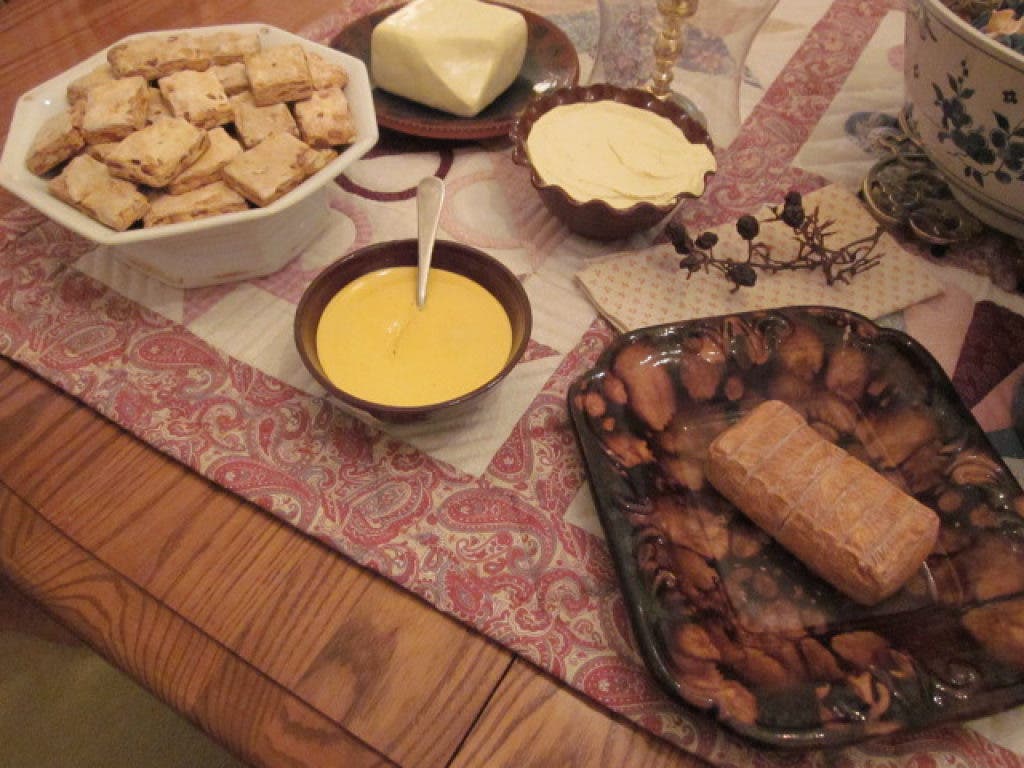


Sandy Levins easily concedes she doesn’t like to cook. But she can turn out an everlasting supply of culinary specialties. Just don’t eat them, any of them.
Levins, known to many local history buffs for her volunteer post as president of the Camden County Historical Society, manufactures faux food. Not bagels or muffins or even sushi. She creates historically precise faux food that is displayed in museums across the country, including Mount Vernon in Virginia and George Washington’s White House in the Germantown neighborhood of northwest Philadelphia, Historic Deerfield in Massachusetts, and Telfair Historic Museum in Savannah, GA.
She’s currently working in her Redman Avenue home in Haddonfield on stocking the open kitchen in one of the living spaces at the Tenement Museum on Manhattan’s Lower East Side. That’s a museum opened to tell the story of immigrants to America. “They’re old tenements, not refurbished, not fancied up,” said Levins.
Find out what's happening in Haddonfield-Haddon Townshipfor free with the latest updates from Patch.
She’s working on a portion of the museum due to open in November, a beer lager saloon that housed the proprietor’s family. Her assignment is to fill the kitchen with representations of food from the day. “It’s Mrs. Schneider’s kitchen,” said Levins, and items will include sauerbraten, cabbage, breads, cheeses, pretzels, pigs’ feet, and “lots and lots of sausages.”
Levins, who began to volunteer with the Historical Society 16 years ago, says her entrepreneurial talent can be traced back to her first contacts with Pomona Hall in Camden and a meeting with Jane Ann Hornberger, who works in the education department of Winterthur.
Find out what's happening in Haddonfield-Haddon Townshipfor free with the latest updates from Patch.
“Pomona Hall is a beautiful 18th-century mansion, with lots of period pieces, but it really didn’t seem to have a life. The dining room table held a dried flower arrangement, but families lived there and cooked there and ate there.
“Nothing ever happened on an empty stomach,” she said, adding that meals were determined by what was growing locally and what was available in the Philadelphia markets.
“Pomona Hall was home to families, children, slaves, servants. People were eating there and cooking there, but we didn’t show any of that,” said Levins.
“Every year, (her husband) Hoag and I went to Winterthur where they had wonderful exhibits of period foods. I sought out Jane Ann and she was kind enough to invite me and some others from the Historical Society down to show us how the food was made,” said Levins.
The fake food items actually must be free of all food content, because it could bring contamination and deterioration to period dining pieces and linens. “You just can’t use anything that will attract bugs, get moldy or will mildew.”
Items stored and protected in Pomona Hall and other museums include textiles and paper along with china, porcelain and glass. “Any kind of bug would be death to the collections,” she said.
Eventually only Levins among the group from Camden County pursued the recreation of food items, and since 2001, it’s been her business. “Done well, it becomes part of a collection. It’s an investment,” she said, walking through her “studio,” which includes her dining room, living room, kitchen, and porch. “It’s always here around me, reminding me of deadlines. It’s calling out, ‘Sandy, I need to be painted.”
She said it was Hornberger who put her in touch with curators at Mount Vernon. “Another curator would be happy with my work and refer someone else to my website.”
The first food items she created were oysters on the half shell. “We collected bags of shells from a raw bar at the shore. Brought them home, boiled them, soaked them in bleach, scrubbed them with a toothbrush, then sealed them,” she said.
The oyster itself is made from a clay product manufactured by Crayola. “You have to be careful not to use anything that sends out gasses, like rubber, PVC and adhesives. That can damage porcelain and just eat into a collection,” she said.
Crayola Model Magic does it, she says, and it’s almost odor-free. Once shaped, the oysters were painted and coated. Liquid sealer was poured into the shell to mimic the liquor of the shellfish.
They don’t sell for the happy hour prices you’ll find at some local taverns. Each oyster has a $12 price.
A roasted potato will cost a museum $5; carrots are $10 a dozen, a single serving of butter $10. A dessert serving of blueberries in cream has a “menu” price of $30.
Assembled in a bowl on one of Levins’ work spaces in a bowl holding onion skins, fruit cores, and a crunk of old cabbage that will be the models for the “slop tray” that will be on view in the Tenement Museum’s saloon section.
Officials at Historic Speedwell Village in Morris County asked Levins to help prepare faux foods for an Oct. 28 exhibit on death and mourning in a traditional 19th-century setting. She’s started making round shortbread-type cookies stamped with a cross. The cookies then were wrapped in white paper and sealed with black wax.
To make items like replicas of sauerbraten or fowl, Levins will roast or otherwise cook the item, then make a mold by covering it with multiple, at least 10, layers of resin. The mold then is cast in plaster.
Acrylic paints are applied because they are odorless, safe and water soluble. The item then is sealed with an acrylic spray, available in matte, satin or gloss finishes.
“I keep notes on my progress, so I know what colors I’ve used. There aren’t a lot of people who do this” said Levins, who can be reached through her website, HistoricFauxFoods.com. She’s been featured in the 26th Directory of Traditional American Crafts.
“I learn so much doing this,” she said.
Levins, 63, grew up in Barrington and met her husband at Haddon Heights High School. She attended Rowan University (“when it still was Glassboro (College)”), but left before she earned an education degree. “I had no artistic training but I have a good eye for color and detail,” she said.
When the Levins moved to their home on Redman Avenue from Voorhees in 1988, she began to look for an organization that could use her interest in volunteering.
“I met the most welcoming group in Camden, at the Historical Society. I didn’t have to be sponsored, or attend a specific number of meetings or be groomed. I was willing to help with anything and they needed me.”