Health & Fitness
Meeting the Needs of Visually Impaired Students
My expertise in understanding special needs helps me to actively promote inclusion at Temple Beth-El in Hillsborough where we run an extensive special education program within our religious school.

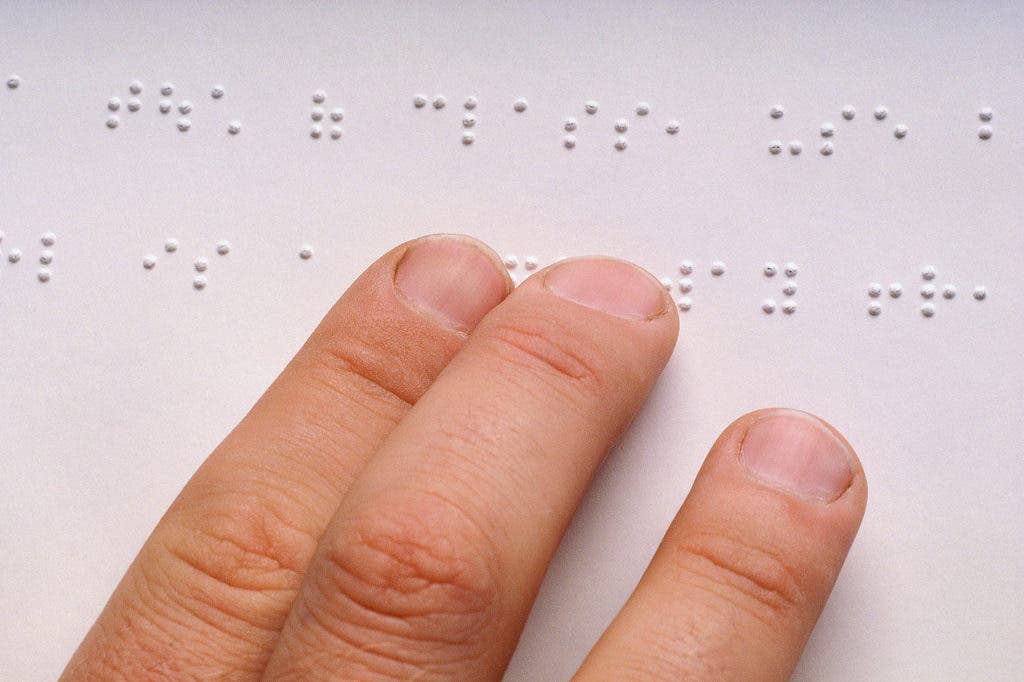
I am very fortunate to have a student in our program that is blind. Braille is one of the coolest things I have ever seen (no pun intended) and Hebrew Braille is even cooler. (And if you don’t already know that the Jewish Braille Institute, JBI, will put ALL of your materials, including textbooks, into Braille for free…you should…they rock!) Facilitating my student’s Jewish Education enables me to revisit my commitment to inclusion over and over again….and I couldn’t appreciate it more!
More than anything else, I have learned that simply accommodating a student’s needs is not inclusion. Don’t get me wrong, making appropriate accommodations is an essential strategy in working with all students who have special learning needs. But there’s more to inclusion.
Let me give you an example:
A class of students is going to break into chevruta (partner) groups to study a Jewish text. A written copy of the text is given to each student. The teacher decides that since this is a discussion-based activity, the text can be read aloud to the student that is blind and he/she can still fully participate.
Find out what's happening in Hillsboroughfor free with the latest updates from Patch.
What’s wrong with this?
Put yourself in the scenario. Are you typically the one who says (when something is read aloud), “Let me see that, I missed half of what you said.”? If so, you are probably a visual learner. (For more about discovering your own learning style, visit http://www.learning-styles-online.com/overview/) This is how Braille can function for a student that is blind; it’s her way of “seeing” the text for herself.
Having the text read aloud is a reasonable accommodation, but it is not fully inclusive.
Find out what's happening in Hillsboroughfor free with the latest updates from Patch.
Here is another example:
Students will be working in groups to explore leadership and community building. The activity is almost entirely visual, based on students observing one another as they engage in the task. Adding a listening role to the group with the student who is blind is a reasonable accommodation, but adding that same role to every group is inclusive.
Inclusion isn't always easy. Sometimes it takes trial and error. And it takes both intentionality and planning. But as we learn from Rabbi Tarfon in Pirkei Avot: "It is not your responsibility to finish the work [of perfecting the world], but you are not free to desist from it either" (2:16).